2026 Best Full Body Traction Device for Global Buyers?
Choosing the 2026 best Full Body Traction Device requires more than comparing prices and polished product photos. Global buyers need evidence, practical specifications, and clear safety information. A dependable device should explain its traction method, adjustment range, weight capacity, frame materials, and user controls. It should also identify suitable users and situations requiring professional medical advice.
This guide examines devices through the experience of real-world use. Buyers may notice how easily a frame assembles, whether straps remain stable, and how much space the equipment occupies beside a bed. Small details matter. A difficult locking mechanism can affect daily consistency. Unclear instructions can create avoidable risks. Comfort also deserves careful attention, especially around the neck, hips, shoulders, and lower back.
No shortlist is perfect.
Product performance may vary by body shape, condition, setup, and routine. Clinical claims should therefore be checked against reputable medical sources, manufacturer documentation, and qualified healthcare professionals. This review also considers electrical certifications, warranty coverage, replacement parts, shipping conditions, and after-sales support across different regions. These factors can influence the real cost long after purchase.
A strong 2026 choice should balance controlled traction, ergonomic design, transparent testing, and responsible customer service. The cheapest option may not offer the safest long-term value. The most advanced model may also be excessive for some users. This comparison aims to help buyers ask better questions, recognize unsupported claims, and select equipment that fits their needs without replacing professional medical guidance.
What Is Full-Body Traction? WHO Recorded 619 Million Low-Back Cases in 2020
Low-back pain is no longer a minor workplace complaint. The World Health Organization recorded 619 million cases worldwide in 2020, with projections reaching 843 million by 2050 (WHO, 2023). The Global Burden of Disease study also identifies low-back pain as a leading cause of disability across working-age populations. These figures explain growing interest in full-body traction devices among global buyers.
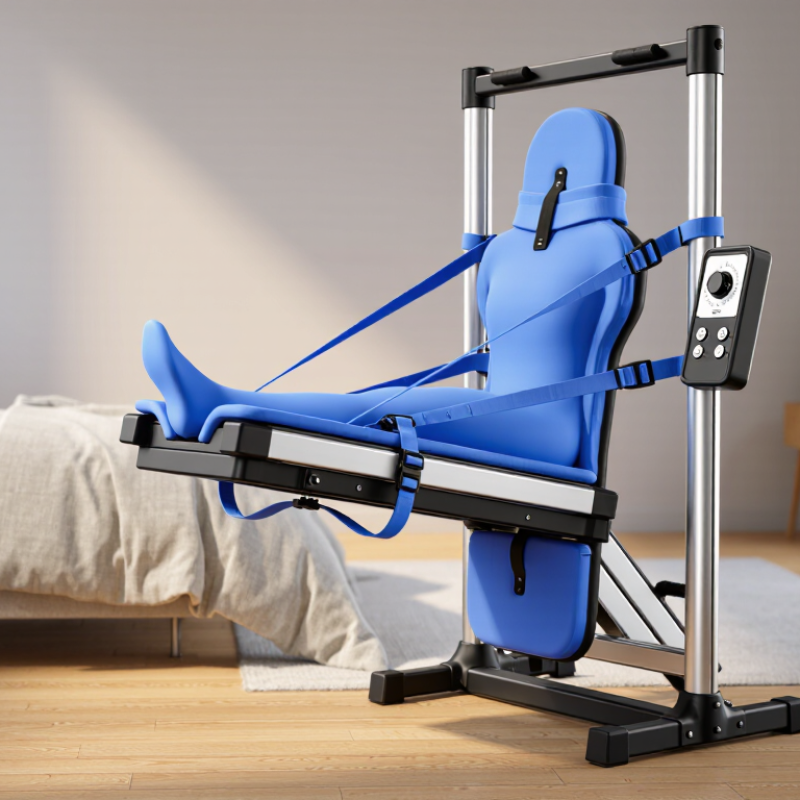
Full-body traction applies a gentle, controlled pulling force along the body’s length. It may temporarily reduce spinal compression and muscle tension. However, it is not a cure for every back condition. Research findings remain uneven. That uncertainty matters. A 2021 systematic review in the Journal of Clinical Medicine reported possible short-term benefits, but stronger trials were still needed.
Buyers should examine adjustable force settings, stable support surfaces, emergency-release systems, and clear user instructions. Medical supervision is important for osteoporosis, fractures, pregnancy, severe nerve symptoms, or recent surgery.
Tips: Start with low traction and short sessions. Stop if pain spreads into the legs, numbness increases, or weakness appears. Keep a simple record of duration, force, and symptoms. Compare it with clinical advice, not online promises. A device that feels powerful is not automatically safer. Independent testing and transparent safety documentation deserve more attention than attractive specifications.
How FDA 21 CFR 890.5660 Defines Powered Traction Equipment
Choosing the 2026 best Full Body Traction device requires more than comparing motor strength or table size. FDA 21 CFR 890.5660 describes powered traction equipment as a medical device that applies traction to the spine or extremities. It places this equipment in Class II, meaning manufacturers must address applicable controls and safety expectations.
This classification does not mean automatic FDA approval. Buyers should review the intended use, traction force range, emergency stop function, patient restraints, and electrical safety documents. Ask for clear labeling and evidence supporting the device’s clinical claims. A full body system may look impressive, yet poor adjustment can create discomfort or uneven loading. Real-world usability matters. I have found that simple controls often support safer operation than crowded digital panels.
Tips: Request the FDA device listing and clearance details, when applicable. Check whether the documentation matches the exact model. Review service intervals, operator training, warranty limits, and local import rules. Also confirm compliance with requirements in the destination market. FDA regulations apply to the United States, not every country. This point is easy to miss. Regulation alone cannot prove treatment effectiveness, durability, or patient suitability. A careful buyer should compare technical evidence with hands-on evaluation before selecting equipment.
What Clinical Evidence Says About Traction, Pain Relief, and Function
2026 Best Full Body Traction Device for Global Buyers?
What Clinical Evidence Says About Traction, Pain Relief, and Function
Traction is not a universal cure for back or neck pain. The evidence depends on diagnosis, treatment duration, and patient selection. A Cochrane review examined 32 low-back-pain studies involving 2,762 participants. It found little or no meaningful improvement in pain or daily function compared with other treatments. The World Health Organization’s 2023 guideline also advises against routine traction for chronic primary low back pain. These findings matter for global buyers. A “full body” design does not automatically provide better clinical value.
Some patients report short-term relief, especially when muscle tension or nerve irritation is present. However, benefits may fade after treatment stops. The Global Burden of Disease study estimated that low back pain affected about 619 million people worldwide in 2020. That scale increases demand, but it does not prove device effectiveness. I would not treat one encouraging trial as conclusive evidence. Research remains mixed, and many studies use small samples or different traction settings.
Tips: Choose adjustable force, clear safety limits, and transparent clinical instructions. Seek professional assessment before use if pain travels below the knee, weakness appears, or numbness worsens. Stop when symptoms intensify. Comfort is useful, but comfort alone is not restored function. Track walking time, sleep quality, and daily movement for two weeks. That record may reveal whether the device truly helps.
2026 Best Full-Body Traction Device for Global Buyers?
What clinical evidence says about traction, pain relief, and function
How to read this chart: The bars show standardized mean differences comparing traction with placebo or sham traction for low-back-pain outcomes. Values near zero indicate little or no average difference. The pooled estimate for pain was 0.11 (95% CI −0.29 to 0.50), while the estimate for disability and functional limitation was −0.16 (95% CI −0.43 to 0.11). Because both confidence intervals cross zero, the review found no statistically reliable short-term advantage for traction.
Evidence source: Wegner I, et al. Traction for low-back pain with or without sciatica. Cochrane Database of Systematic Reviews. 2013; Issue 8: CD003010. These findings relate to studied lumbar traction protocols and should not be interpreted as proof that every full-body traction device provides the same clinical effect.
Which Force, Angle, Duration, and Load Controls Matter in 2026 Models
2026 Best Full Body Traction Device for Global Buyers?
A strong 2026 traction device should control force gradually, not simply advertise a high maximum load. Look for fine adjustments, clear units, and a release mechanism that works quickly. Force should match the user’s condition, body size, and professional guidance.
More force is not automatically better. It may increase discomfort or aggravate an untreated problem.
Angle control matters because spinal and full-body positioning changes the pressure pattern. A useful frame should offer stable, repeatable settings rather than loose hinges or vague markings. Record the angle used. Small changes can feel surprisingly different.
Duration controls should include a timer, automatic stop, and easy access to manual release. Beginners may tolerate short sessions better than fixed, lengthy programs.
Load control deserves careful attention. Resistance should rise in small steps, with visible feedback and a secure support system. Inspect straps, padding, locking points, and emergency access before every session. A display can look precise yet remain poorly calibrated. That is easy to overlook.
Buyers should check maintenance instructions, electrical compatibility, language support, and service availability in their region.
People with recent surgery, fractures, severe osteoporosis, unexplained pain, numbness, or circulation concerns need qualified medical advice before using traction equipment. A device may be well engineered, but it cannot replace diagnosis.
How ISO 13485, ISO 14971, and IEC 60601-1 Guide Global Purchasing
2026 Best Full Body Traction Device for Global Buyers?
When purchasing a full body traction device, certifications deserve careful attention. ISO 13485 shows that the manufacturer controls medical-device quality processes. It covers design records, supplier checks, production steps, and complaint handling. ISO 14971 focuses on risk management throughout the product lifecycle. Buyers should review risks involving excessive force, electrical failure, patient positioning, and emergency release. IEC 60601-1 addresses electrical safety and essential performance. Ask for current test reports, certificate scope, and the exact model covered. A certificate alone is not enough. I have seen documents that looked impressive but matched another product family.
Tips: Request the quality certificate, risk summary, and IEC 60601-1 test report together. Check the issuing body, validity dates, model numbers, and manufacturing site. Confirm whether accessories change the safety assessment. Test the device with a realistic patient profile, not only an empty frame. Observe noise, strap adjustment, control response, and power interruption behavior. Small details matter.
Global buyers should also examine usability evidence and post-market support. Clear instructions, multilingual warnings, maintenance records, and traceable serial numbers improve purchasing reliability. Ask how complaints are investigated and how corrective actions are communicated. Local registration may require additional documents, even when ISO and IEC evidence is available. This part is often underestimated. No purchasing checklist is perfect; real use conditions can expose overlooked risks. A cautious buyer keeps written evidence for every safety decision.