Skip to content

2026 Top TCU Equipment Types for Global Buyers

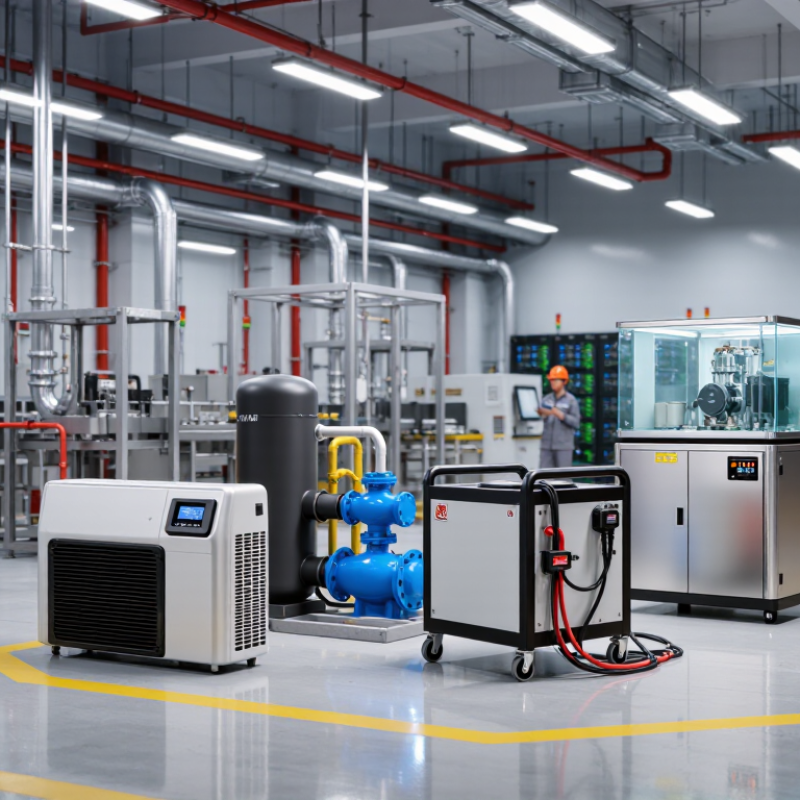
Global buyers are entering 2026 with stronger expectations for efficient, measurable temperature control. Tcu Equipment now supports manufacturing lines, data centers, laboratories, food processing, and electric vehicle production. The purchase is no longer based on cooling capacity alone. Buyers compare temperature stability, energy use, controls, service access, and lifecycle cost.

The International Energy Agency reports that buildings consume about 30% of global final energy. Its Energy and AI report estimates that data centers used approximately 415 TWh of electricity in 2024. These figures show why efficient cooling and heating systems matter. ASHRAE TC 9.9 guidance also stresses controlled thermal conditions for reliable data-center operation. In practice, a poorly selected unit can create hot spots, unstable processes, or unnecessary power demand. Small details matter.

This 2026 overview examines major Tcu Equipment types, including air-cooled and water-cooled temperature control units, portable systems, process chillers, and high-precision units. It considers operating range, heat-load response, refrigerant choices, monitoring functions, and maintenance requirements. Market forecasts differ between research firms. That is worth remembering. Vendor claims may also present ideal laboratory results rather than factory performance. Global buyers should verify test conditions, local support, certifications, spare-parts availability, and total ownership cost before approval. The best equipment is not always the largest. Often, it is the unit that holds a stable temperature beside a noisy production line, with clear data and practical service support.

2026 Top TCU Equipment Types for Global Buyers

TCU Equipment: Definition, Purpose, and Core Operating Principles

TCU Equipment: Definition, Purpose, and Core Operating Principles

A Temperature Control Unit, or TCU, regulates process temperature within a selected range. It circulates water, oil, or another approved heat-transfer medium through connected equipment. Common units provide heating, cooling, or both. Their purpose is consistent production, safer operation, and fewer temperature-related defects. A typical TCU includes a pump, heater, cooler, heat exchanger, sensors, valves, and a digital controller. The controller compares actual temperature with the target and adjusts heating or cooling output. Many systems use proportional-integral-derivative control for smoother correction.

TCU equipment types differ by medium, capacity, cooling method, and circuit design. Water units suit moderate temperatures and fast heat transfer. Oil units support higher operating temperatures but need careful fluid management. Air-cooled systems simplify installation where cooling water is limited. Water-cooled systems often remove heat more efficiently. In practical commissioning, technicians should check flow, pressure, sensor placement, and hose compatibility. A stable reading does not always prove stable process conditions. Poor insulation or trapped air can still create uneven temperatures. That detail is easy to miss.

Tips: Confirm the required temperature range, flow rate, pressure, and heat load before purchasing. Ask for test data at your actual operating conditions. Keep maintenance access clear around filters, pumps, and electrical panels. Record startup readings. Small changes often reveal larger problems. A perfectly tuned loop is rare, so review performance after production begins.

Main TCU Types by Temperature Range and Heating or Cooling Method

2026 Top TCU Equipment Types for Global Buyers

Main TCU Types by Temperature Range and Heating or Cooling Method

Temperature control units differ mainly by operating range and thermal method. Low-temperature TCUs often serve laboratory, battery, pharmaceutical, and food processes from about -40°C to 90°C. They usually combine a compressor refrigeration circuit with electric heating. Medium-temperature water or glycol units commonly operate from 0°C to 150°C. High-temperature oil systems can reach 300°C or higher, depending on fluid stability and equipment design. The boundary is not always clean.

Heating-only units use electric immersion heaters, while cooling-only systems depend on refrigeration compressors, heat exchangers, or chilled water. Reversible TCUs switch between heating and cooling during one production cycle. This flexibility can reduce changeover time, but it may increase controls complexity. The U.S. Department of Energy identifies industrial heat pumps as an important efficiency option, especially where waste heat can be recovered. The International Energy Agency reported that industry represented about 37% of global final energy consumption in 2022. That figure makes thermal efficiency more than a purchasing detail.

Tips: Match the TCU range to the actual process curve, not the advertised maximum. Check fluid viscosity, pump flow, ambient temperature, and heat-loss data. ASHRAE Handbook—HVAC Systems and Equipment, 2024, stresses load calculation and control stability. Buyers should also request test conditions and energy data. A small mistake here can become a costly operating habit.

Key Components and Technical Specifications of TCU Systems

2026 Top TCU Equipment Types for Global Buyers

Key Components and Technical Specifications of TCU Systems

For global buyers, a TCU is more than a heating or cooling box. Its core assembly includes a circulation pump, heater, heat exchanger, temperature sensors, control valves, and an expansion tank. The pump maintains stable fluid movement through the process loop. The heater raises temperature, while the heat exchanger removes excess heat. Stainless steel piping improves durability and fluid compatibility.

Small details matter.

Technical selection starts with the working fluid and process temperature. Buyers should specify the temperature range, control accuracy, flow rate, pressure rating, and heating capacity. Some systems control water near ambient conditions, while others manage thermal oil at elevated temperatures. A stated accuracy of ±0.5°C may be suitable for many applications, but actual stability depends on load changes and sensor placement. Electrical voltage and frequency must match the installation site.

Check this early.

From commissioning experience, poor service access often creates longer downtime than component failure. Pressure relief devices, flow switches, filters, and emergency shutdown circuits deserve careful review. Controllers should display actual temperature, outlet pressure, alarm status, and pump condition. Communication ports can support factory monitoring, but compatibility should be verified before purchase.

I once treated a higher flow rate as automatically better; it was not. Excessive flow can increase pressure loss and energy use. A practical specification balances process demand, maintenance space, safety margins, and future operating changes.

How to Select TCU Equipment for Different Industrial Applications

How to Select TCU Equipment for Different Industrial Applications

Selecting TCU equipment starts with the process, not the catalogue. Define the required temperature range, heating load, cooling load, flow rate, and fluid compatibility. For injection molding, fast response and stable oil or water circulation protect cycle consistency. Heat exchangers and reactors often need tighter control, corrosion resistance, and cleanable circuits. Food and pharmaceutical lines demand hygienic materials and documented traceability.

Energy use deserves equal attention. The U.S. Department of Energy’s Industrial Decarbonization Roadmap identifies process heating as about 51% of industrial energy use.

An oversized TCU may reach temperature quickly, but it can cycle inefficiently and increase maintenance. Check pump efficiency, insulation, standby consumption, and heat recovery options. Measure real load profiles when possible. Estimates can mislead.

Installation conditions also change the correct choice. A dusty workshop may require protected electrical enclosures. High-altitude sites need careful pump and cooling calculations. Shared production lines may benefit from modular units, while one reactor usually needs dedicated control.

Review pressure limits, alarm functions, sensor accuracy, and service access before approval. I have seen technically capable units fail because operators could not clean filters easily. That detail is easy to miss.

Industry guidance from the ASHRAE Handbook and ISO 50001 practices supports documented measurement, commissioning, and continuous energy review. Test the unit under actual production conditions, not only at no-load settings.

Global Buyer Considerations: Safety, Efficiency, Standards, and Support

For global buyers, TCU selection starts with the process, not the catalog. Air-cooled units suit sites with limited water access. Water-cooled units often deliver steadier performance in hot, dusty plants. Electric and oil-temperature TCUs support different heating and cooling demands. Each type needs verified flow, pressure, temperature range, and material compatibility.

Safety must remain visible during procurement. Look for emergency shutoff, over-temperature protection, leak detection, guarded moving parts, and clear alarm records. ISO 12100 supports risk-based machine safety design. IEC 60204-1 addresses electrical equipment on machinery. These standards do not replace local requirements. They create a useful technical baseline.

Efficiency also affects long-term cost. The IEA reports that industry uses about 37% of global final energy. Small pump losses can become substantial across continuous production. The Global Cooling Watch 2023 report warns that cooling demand could more than triple by 2050 without stronger efficiency measures. Buyers should request seasonal performance data, standby consumption, heat recovery options, and service intervals. Do not trust one impressive efficiency number. Actual output may change with ambient temperature, fouled filters, or unstable voltage. That part is often overlooked.

Support is more than a hotline. Ask for commissioning records, spare-part availability, remote diagnostics, operator training, and response times in your region. A cheaper TCU can become expensive after one unavailable sensor stops production. My practical concern is simple: specifications are often precise, but maintenance assumptions are not. Allow room for that weakness.

2026 Top TCU Equipment Types for Global Buyers - Global Buyer Considerations: Safety, Efficiency, Standards, and Support

General comparison of industrial Temperature Control Units (TCUs) for process heating, cooling, and precise thermal management. Actual performance depends on the process fluid, heat load, ambient conditions, installation, and control strategy.

TCU Equipment Type Typical Operating Range Main Heat-Transfer Medium Typical Applications Efficiency Considerations Key Safety Features Relevant Standards and Documentation Support Priorities
Water-Based TCU Approximately 5°C to 95°C, depending on system pressure and design Water or treated water Injection molding, die casting, laboratory equipment, food-processing machinery, and general process temperature control High heat-transfer capacity
Low fluid viscosity and generally low pumping energy; heat loss increases with higher operating temperatures.
Over-temperature protection, low-level detection, pressure monitoring, flow monitoring, leak detection, and automatic shutdown IEC 61010-1 may apply to laboratory and measurement equipment; electrical protection, pressure documentation, and regional conformity records should be provided. Water-quality guidance, descaling procedures, spare sensors, and remote troubleshooting
Pressurized Water TCU Typically above 95°C and commonly up to approximately 160°C, subject to pressure-vessel and system design Pressurized water High-temperature injection molding, composite processing, rubber processing, and applications requiring rapid heat transfer without thermal oil Excellent heat transfer and fast response; pressurization can reduce fluid degradation but requires correctly sized pumps and pressure controls. Pressure relief valve, expansion control, high-pressure switch, temperature limiter, safety interlock, and guarded hot surfaces Applicable pressure-equipment rules vary by destination; buyers should review PED requirements in the European market and local pressure-equipment regulations elsewhere. Pressure-test records, inspection intervals, qualified service personnel, and replacement safety valves
Thermal-Oil TCU Approximately 80°C to 350°C, depending on the selected heat-transfer oil Synthetic or mineral thermal oil Composites, chemical processing, plastics, pharmaceutical equipment, coating lines, and high-temperature production systems Suitable for high temperatures at relatively low system pressure; insulation, correct oil selection, and prevention of unnecessary circulation reduce energy use. Low-flow protection, oil-level monitoring, maximum-temperature limiter, expansion-tank protection, leak detection, and fire-risk controls Thermal-oil safety data sheet, electrical safety documentation, pressure and piping records, and applicable local fire-safety requirements Oil analysis, fluid replacement planning, seal inspection, and heater-element availability
Air-Cooled TCU Commonly used for low-to-medium process temperatures; exact range depends on heating and cooling configuration Process water or thermal oil with ambient-air heat rejection Facilities without cooling towers or chilled-water infrastructure, modular production cells, and standalone machinery Simplifies installation and avoids cooling-water consumption; fan energy and performance can be affected by high ambient temperature and blocked filters. Fan guard, airflow monitoring, over-temperature protection, motor overload protection, and enclosure thermal management Electrical safety and electromagnetic-compatibility documentation should be aligned with the destination market; ventilation clearances should be specified. Filter cleaning, ambient-temperature limits, fan and motor spares, and clear installation instructions
Water-Cooled TCU Broad process range; cooling performance depends on cooling-water temperature, pressure, and flow Process water or thermal oil with facility-water heat rejection High-duty production lines, densely installed equipment, factories with central cooling systems, and continuous manufacturing Usually provides efficient heat rejection in controlled facilities; requires water treatment, adequate flow, and protection against scale and corrosion. Flow switch, inlet-pressure monitoring, heat-exchanger protection, leak detection, over-temperature protection, and automatic shutdown Water-quality specifications, piping diagrams, electrical conformity documents, and local requirements for backflow prevention may be relevant. Water-treatment guidance, heat-exchanger cleaning, flow verification, and spare valves
Refrigerated Cooling TCU Often capable of cooling process fluid below ambient temperature; practical limits commonly range from approximately -30°C to +20°C Refrigerated water-glycol mixture or another compatible process fluid Low-temperature molding, pharmaceutical and laboratory processes, laser systems, chemical processes, and temperature-sensitive testing Variable-speed compressors, electronic expansion control, adequate insulation, and correct glycol concentration can improve seasonal efficiency. Refrigerant pressure protection, freeze protection, low-flow detection, compressor overload protection, and fluid-level monitoring Refrigerant regulations differ by region; buyers should request refrigerant type, charge information, leakage-control records, and electrical EMC documentation. Refrigerant service capability, glycol maintenance, compressor support, and local parts availability
Heating-and-Cooling TCU Commonly from approximately 5°C to 180°C; some specialized systems operate outside this range Water, pressurized water, or thermal oil Processes requiring rapid changeover between heating and cooling, including plastics, composites, die casting, and pilot production Reduces separate equipment requirements and can shorten cycle times; energy recovery and independent control of heating and cooling improve operating efficiency. Independent high-temperature limit, cooling-flow protection, pressure monitoring, fluid-level control, emergency stop, and interlocked operating modes Functional descriptions, electrical schematics, risk assessment, control-system documentation, and applicable regional conformity declarations should be supplied. Control-parameter backup, commissioning support, operator training, and preventive-maintenance plans
High-Precision Laboratory TCU Often approximately -80°C to 200°C, depending on the application and heat-transfer medium Water, water-glycol, silicone oil, or another specified laboratory fluid Research, calibration, material testing, pharmaceutical development, analytical instruments, and pilot-scale processing High-quality sensors, stable circulation, calibrated control loops, and minimized heat loss support repeatable results and lower energy waste. Independent temperature limiter, sensor-failure alarm, low-level protection, over-pressure protection, spill containment, and emergency shutdown IEC 61010-1 is commonly relevant to laboratory electrical equipment; calibration certificates and measurement uncertainty data may be required. Calibration service, traceability records, software updates, validation documents, and application engineering
Explosion-Risk-Managed TCU Application-specific; the operating range is determined by the process fluid, enclosure design, and hazardous-area classification Water, thermal oil, or another approved process fluid Chemical, solvent, pharmaceutical, paint, and other processes where flammable vapor or combustible dust may be present Efficiency depends on the selected protection concept; correct enclosure, motor, heater, and instrumentation selection is more important than nominal output alone. Area-appropriate electrical equipment, grounding and bonding, leak detection, temperature limitation, pressure protection, and documented risk controls Hazardous-area classification and local rules must be confirmed before purchase; ATEX or IECEx documentation may be relevant for applicable installations. Certified service technicians, inspection records, replacement-part certification, and site-specific commissioning
Modular Multi-Zone TCU Typically selected for multiple independent temperature zones; each zone may use water, pressurized water, or thermal oil Dedicated circuit per zone or a shared central thermal-fluid loop Multi-cavity molding, multi-zone tooling, battery and electronics production, coating lines, and complex process skids Independent zone control can reduce overheating and improve product consistency; hydraulic balancing and coordinated controls are essential. Zone-level temperature limits, flow monitoring, isolation valves, alarm management, emergency stop, and communication-failure response Buyers should request zone diagrams, control logic, alarm lists, communication protocols, and electrical documentation for the complete assembly. Centralized diagnostics, spare-zone modules, software backups, and structured preventive maintenance

Buyer checklist: Confirm the required temperature range, heating and cooling capacity, process-fluid compatibility, flow and pressure requirements, ambient conditions, electrical supply, noise limits, local safety rules, conformity documentation, remote communications, spare-parts lead time, commissioning scope, warranty terms, and service coverage before placing an international order.

“Guardian has been a tremendous help in providing storage and distribution solutions for AIR Global. We came to Guardian with a need, and they quickly found a solution for us at a very reasonable price. Our business is very demanding, especially during busy periods, and Guardian has been flexible and able to accommodate all requests with less than 48 hours’ notice. April, our main contact, has been extremely helpful in making sure our orders are shipped on time and that our inventory is accurate. I highly recommend using Guardian and look forward to continuing our relationship for many years to come.”

Matt Buffington
Director of Supply and Operations
Americas

“The Guardian Logistics Team is responsive and helpful on a consistent basis.  This removes a tremendous amount of stress and gives us incentive to route cargo that will touch your dock. Thanks for all that you do!!!”

Charles Reel
Branch Manager
Scan Global Logistics

“I recommend with great confidence, Guardian Logistics Solutions and owner, Brent Smith to whomever needs top shelf deliveries including Last Mile, White Glove, Residential and Commercial.

I have known GLS since its inception. Guardian is always looking for the right answer to solve the customer’s problem. I can, without hesitation, recommend Guardian Logistics to any company that is looking for the best service in their coverage area. They will team with you to create a solution that suits your needs and ensure you are satisfied with the outcome.”

Steven T. Nelson

“I highly recommend Guardian Logistics Solutions. The professionalism and communications offered by the team, along with speediness, cost saving solutions and attitude is a testament to the fact that this is one of the most important partners you can have in the freight movement business.

The company offers exemplary service, they continuously exceed our expectations and that of the importers, they help us service, Guardian Logistics Solutions is the best solid business partner you should add to your company.”

Ubaldo Sierra
Maersk Customs Brokers
General Manager

“Guardian Logistic Solutions is one of those rare companies who under-promise-and-over-deliver EVERY single time!”

James Burke
Manager, Sales Team
OLIMP Warehousing

“I want to thank the team at Guardian for the excellent service we have received.
The shipments have been professionally handled and freight arrives timely and in good order at a fair price. Communication is a very important part of the handling and Guardian does a great job of communication through the delivery.”

Cheri Zetrouer
Access Worldwide
Customs Brokers & Freight Forwarders

“I am very lucky to have found Guardian Logistics to help with our freight needs.  Our business is a bit unique in that we only receive a shipment every 2-3 months and we have to stick to a very strict time schedule in order to unload the delivery.  We found it virtually impossible to consistently coordinate with logistics companies to have shipments arrive on time and when they were expected. After multiple frustrating scenarios, our broker introduced us to Guardian Logistics who handled all of our shipments recently to perfection. Our shipments have arrived on time, when expected, with friendly and helpful drivers.  We will only be using Guardian moving forward for all of our shipping and freight needs. I couldn’t recommend them strongly enough!”

Trey Conrad
Owner
Patriot Power Source

“We have been working with the Guardian company for several years now and I can say without a doubt that their entire team cares about the service they provide. Their personal interest in their customers’ success makes them a standout in the world of final mile delivery.

I highly recommend Guardian for anyone requiring outstanding services in warehousing and final mile delivery programs.”

Frank Ianucilli
Director of Final Mile Operations
Werner Enterprises

“At WeFixFreight.com, client satisfaction is our main priority.  We are proud to partner with the top notch team at Guardian to bring our customers nothing but the best service when it comes to freight reworks, cross docking services, and final mile delivery.”

Bill Carlin
CEO
WeFixFreight.Com

“The Guardian Logistics staff has always been exceptional, and these days, with all the competition out there, it’s the service that matters. We appreciate all they do and look forward to continuing our business with GLS.”

Cathy Avolio
Ocean Import Manager
Mallory Alexander Int'l Logistics (NY), LLC
Back To Top