
Skip to content

7 Tips for Buying Decorative Veneer Plywood

Decorative Veneer Plywood is no longer chosen only for attractive grain. Buyers now assess appearance, stability, emissions, sourcing, and long-term performance. The FAO’s Global Forest Products Facts and Figures 2022 reported nearly 400 million cubic metres of global wood-based panel production. That scale creates more choices, but it also increases quality differences between suppliers.

The details matter.

A walnut-look panel may use a natural veneer, reconstructed veneer, or printed surface. Each option changes color consistency, repairability, and price. The USDA Forest Products Laboratory’s Wood Handbook explains that moisture movement affects wood products differently across grain directions. That principle helps explain why core construction and balancing layers deserve careful inspection. A beautiful face cannot compensate for warping.

Certification also requires attention. FSC chain-of-custody documentation can support responsible sourcing, while laboratory test reports can clarify formaldehyde emissions and bonding performance. In the United States, EPA TSCA Title VI establishes emissions requirements for composite wood products. Other markets may apply different standards, so assumptions can become expensive.

This guide presents seven practical buying tips for Decorative Veneer Plywood. It covers veneer species, grade, thickness, core quality, surface defects, certification, and supplier verification. Look closely at sample edges, not just showroom faces. Check for open joints, telegraphing, delamination, and uneven sanding under side lighting.

One point deserves reflection. The lowest quotation may not represent the lowest total cost. Rejected panels, color mismatch, and installation delays can quickly outweigh a modest saving. Reliable decisions come from comparing documented specifications with real samples, while admitting that one sample cannot predict every production batch.
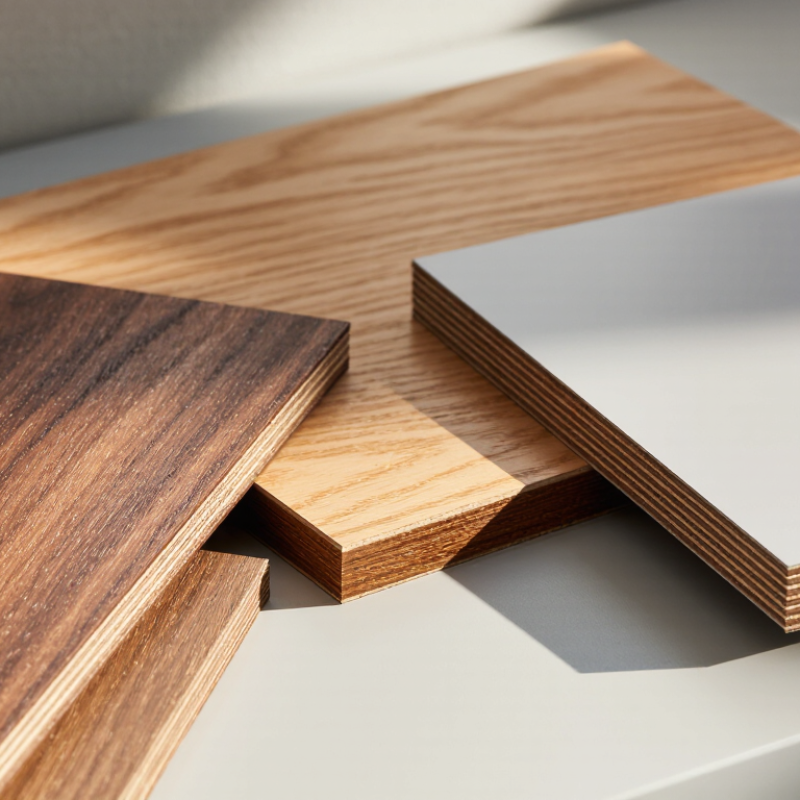
7 Tips for Buying Decorative Veneer Plywood

Define Your Project’s Purpose, Style, and Performance Needs

7 Tips for Buying Decorative Veneer Plywood

Define Your Project’s Purpose, Style, and Performance Needs

Start with the room. Define what the panel must do before judging its grain. A cabinet door needs a stable, smooth face and clean edges. Wall cladding may prioritize warmth, acoustic backing, or easy maintenance. A dining table demands resistance to abrasion, spills, and repeated wiping. During project planning, a quick sketch with dimensions prevents attractive but unsuitable purchases. Measure openings twice. Looks deceive.

Style should support the room, not overpower it. View veneer samples in daylight, warm lamps, and near existing flooring. Grain direction changes the perceived width of a door or wall. Book-matched faces look formal, while straight grain often suits smaller spaces. Ask for a full-size sample when possible. Small samples hide knots, color shifts, and joint lines. I once underestimated this difference; the installed panel looked darker than expected.

Performance depends on construction, not appearance alone. Check the plywood thickness, veneer quality, core uniformity, edge condition, and intended use in dry or humid areas. Confirm moisture guidance and indoor air-emissions documentation from the supplier. Seal exposed edges, especially around sinks or floor-level cabinets. Use compatible adhesives and finishes, then allow the panels to acclimate as directed. Do not expect a glossy coating to fix poor substrate preparation. That shortcut often fails. For unusual loads, ask a qualified professional to verify the specification before cutting.

7 Tips for Buying Decorative Veneer Plywood

Define Your Project’s Purpose, Style, and Performance Needs

Panel thickness should match the project’s structural and visual requirements. These commonly used thickness ranges provide a practical starting point for decorative interior applications.

Buying reminder: Treat these thicknesses as common starting points rather than universal specifications. Confirm the required span, load, moisture exposure, veneer appearance, core quality, and formaldehyde-emission rating before purchase.

Choose the Right Veneer Species, Grain Pattern, and Finish

Decorative veneer plywood should begin with the veneer species, not the price. Oak offers visible pores and a familiar, durable appearance. Walnut creates deeper color and a calmer visual rhythm. Maple looks clean, but its pale surface reveals stains and sanding marks easily. Match the species with the room’s lighting, moisture level, and daily use. A kitchen panel needs more practical judgment than a sample board suggests.

Grain pattern changes the entire surface. Plain-sliced veneer gives cathedral shapes and a warmer, more traditional feel. Quarter-sliced veneer produces straighter lines with a restrained, architectural look. Rotary-cut veneer can appear broader and more dramatic. Hold several sheets together before buying. Check whether the grain flows across adjacent panels. Small mismatches become obvious on tall cabinet doors. I once trusted a single sample and regretted it.

Finish affects both color and maintenance. View the plywood under natural daylight, then inspect it under warm indoor light. A clear matte finish preserves a soft, natural appearance. Satin finishes add depth without creating excessive glare. High-gloss coatings highlight unevenness, fingerprints, and surface repairs. Confirm that the finish suits the veneer’s porosity. Test an offcut when possible. Sand lightly, because decorative veneer can be surprisingly thin. Check the panel edges and core for voids, loose layers, or uneven construction. These details often matter more after installation than they did in the showroom.

Check Plywood Grade, Core Quality, Thickness, and Panel Stability

7 Tips for Buying Decorative Veneer Plywood

Check the face grade before admiring the color. A clear face can still hide open knots, repaired splits, or uneven veneer joints. Ask for the grading standard and inspect both sides under angled light. APA PS 1 separates veneer quality by knot size, splits, patches, and surface defects. That detail matters when panels become cabinet doors or wall features.

Core quality deserves equal attention. Look at the cut edge for voids, overlaps, and uneven layers. Tap the panel lightly; hollow sounds may indicate internal gaps. Compare the measured thickness with the stated size. Small differences can disrupt grooves, edge bands, and door alignment. The USDA Forest Products Laboratory’s Wood Handbook notes that wood-based panels respond to moisture changes, even when factory-made. Decorative plywood is not perfectly inert.

Panel stability depends on storage and construction, not only the label. The same handbook reports typical indoor equilibrium moisture content near 6–14%, depending on climate and heating. Let panels acclimate in the installation room, with spacers between sheets. Check flatness using a straightedge across the face. A slight bow may disappear; a twisted panel usually will not. I would also recheck the core after cutting, because a good-looking surface can conceal weak support. This step is often skipped. That is a mistake. (USDA Forest Products Laboratory, Wood Handbook, 2021; APA PS 1)

Compare Suppliers, Certifications, Pricing, and Available Sizes

Tip 1: Compare suppliers using identical specifications. Request face species, core composition, thickness tolerance, formaldehyde class, and recent production samples. Decorative plywood can look similar online but perform differently under changing humidity. The FAO Forestry Production and Trade database reported global plywood output above 170 million cubic metres in 2022. That scale creates wide quality differences.

Tip 2: Verify certifications directly. Look for FSC or PEFC chain-of-custody documentation when responsible sourcing matters. Also request test reports for emissions, bonding strength, and surface durability. A certificate logo alone proves little.

Tip 3: Compare complete pricing, not only the sheet price. Include cutting, packaging, freight, taxes, minimum orders, and replacement allowances. The U.S. Bureau of Labor Statistics tracks plywood price movements, but its index does not isolate decorative veneer grades. Actual quotations may vary sharply by species and finish.

Tip 4: Confirm available sizes before designing furniture or wall panels. Common formats include 1220 × 2440 mm and 1525 × 3050 mm, but regional stock differs.

Tip 5: Ask suppliers to reserve matching veneer lots. Natural grain changes between batches.

Tip 6: Inspect edges, flatness, patching, and veneer seams under bright light.

Tip 7: Order a sample panel first. I once underestimated color variation between samples and full production. That mistake was avoidable. Supplier comparison should include responsiveness, documentation quality, and how clearly problems are handled.

Inspect Samples and Plan for Proper Storage, Cutting, and Installation

When buying decorative veneer plywood, inspect full-size samples under the room’s actual lighting. Small samples can hide color shifts, open veneer joints, or uneven grain. Check the face for bubbles, sanding marks, patches, and loose edges. Examine the core too. Tight, consistent plies usually indicate better machining stability. The USDA Forest Products Laboratory’s Wood Handbook reports that indoor wood commonly reaches 6–8% moisture content. Ask suppliers for moisture data when possible.

Storage matters immediately after delivery. Keep sheets flat, fully supported, and away from concrete floors, heaters, and direct sunlight. Cover the stack, but allow limited air circulation. Do not lean panels against a wall for several days. That shortcut can create permanent bowing. Acclimate plywood in the installation room, especially before cabinet or wall work. The APA Engineered Wood Association identifies moisture exposure and unsupported storage as major causes of panel movement and surface defects.

Cut from a stable table using a sharp, fine-tooth blade. Support both sides of the cut to reduce splintering. For veneered faces, test the cutting direction on an offcut first. Leave the manufacturer’s recommended expansion space during installation, even when the room seems dry. Seal exposed edges where moisture may enter. Even careful inspection is not foolproof; one overlooked flatness problem can become a visible joint after installation. Conforming to local building requirements and the panel’s technical data remains essential.

Article Source:

“Guardian has been a tremendous help in providing storage and distribution solutions for AIR Global. We came to Guardian with a need, and they quickly found a solution for us at a very reasonable price. Our business is very demanding, especially during busy periods, and Guardian has been flexible and able to accommodate all requests with less than 48 hours’ notice. April, our main contact, has been extremely helpful in making sure our orders are shipped on time and that our inventory is accurate. I highly recommend using Guardian and look forward to continuing our relationship for many years to come.”

Matt Buffington
Director of Supply and Operations
Americas

“The Guardian Logistics Team is responsive and helpful on a consistent basis.  This removes a tremendous amount of stress and gives us incentive to route cargo that will touch your dock. Thanks for all that you do!!!”

Charles Reel
Branch Manager
Scan Global Logistics

“I recommend with great confidence, Guardian Logistics Solutions and owner, Brent Smith to whomever needs top shelf deliveries including Last Mile, White Glove, Residential and Commercial.

I have known GLS since its inception. Guardian is always looking for the right answer to solve the customer’s problem. I can, without hesitation, recommend Guardian Logistics to any company that is looking for the best service in their coverage area. They will team with you to create a solution that suits your needs and ensure you are satisfied with the outcome.”

Steven T. Nelson

“I highly recommend Guardian Logistics Solutions. The professionalism and communications offered by the team, along with speediness, cost saving solutions and attitude is a testament to the fact that this is one of the most important partners you can have in the freight movement business.

The company offers exemplary service, they continuously exceed our expectations and that of the importers, they help us service, Guardian Logistics Solutions is the best solid business partner you should add to your company.”

Ubaldo Sierra
Maersk Customs Brokers
General Manager

“Guardian Logistic Solutions is one of those rare companies who under-promise-and-over-deliver EVERY single time!”

James Burke
Manager, Sales Team
OLIMP Warehousing

“I want to thank the team at Guardian for the excellent service we have received.
The shipments have been professionally handled and freight arrives timely and in good order at a fair price. Communication is a very important part of the handling and Guardian does a great job of communication through the delivery.”

Cheri Zetrouer
Access Worldwide
Customs Brokers & Freight Forwarders

“I am very lucky to have found Guardian Logistics to help with our freight needs.  Our business is a bit unique in that we only receive a shipment every 2-3 months and we have to stick to a very strict time schedule in order to unload the delivery.  We found it virtually impossible to consistently coordinate with logistics companies to have shipments arrive on time and when they were expected. After multiple frustrating scenarios, our broker introduced us to Guardian Logistics who handled all of our shipments recently to perfection. Our shipments have arrived on time, when expected, with friendly and helpful drivers.  We will only be using Guardian moving forward for all of our shipping and freight needs. I couldn’t recommend them strongly enough!”

Trey Conrad
Owner
Patriot Power Source

“We have been working with the Guardian company for several years now and I can say without a doubt that their entire team cares about the service they provide. Their personal interest in their customers’ success makes them a standout in the world of final mile delivery.

I highly recommend Guardian for anyone requiring outstanding services in warehousing and final mile delivery programs.”

Frank Ianucilli
Director of Final Mile Operations
Werner Enterprises

“At WeFixFreight.com, client satisfaction is our main priority.  We are proud to partner with the top notch team at Guardian to bring our customers nothing but the best service when it comes to freight reworks, cross docking services, and final mile delivery.”

Bill Carlin
CEO
WeFixFreight.Com

“The Guardian Logistics staff has always been exceptional, and these days, with all the competition out there, it’s the service that matters. We appreciate all they do and look forward to continuing our business with GLS.”

Cathy Avolio
Ocean Import Manager
Mallory Alexander Int'l Logistics (NY), LLC
Back To Top