
Skip to content

10 Best Marine Fenders for Boats in 2026

A safe docking often begins with a quiet detail: the rubber cushion between a hull and a hard quay. The right Marine Fenders can help limit impact damage, but “best” depends on vessel size, berth layout, tidal range, and expected contact energy. No single shape fits every boat.

UNCTAD’s Review of Maritime Transport 2024 reports that global maritime trade grew by 2.4% in 2023, reaching about 12.3 billion tons. That scale highlights why dependable port equipment matters, even though cargo volumes alone cannot tell boat owners which fender to buy. PIANC’s MarCom Working Group 33 guidance centers fender design on absorbing berthing energy while protecting both vessel and berth. A practical takeaway. Match the fender to the conditions, not just its price or appearance.

This guide compares 10 Marine Fenders for boats in 2026, including inflatable, cylindrical, and specialty designs. It considers impact protection, material durability, installation, maintenance, and value. Look for details that matter at the dock: reinforced seams, secure valves, UV-resistant surfaces, and attachment points that suit your rail or cleat. Still, rankings simplify a complicated choice. A highly rated fender may be wrong for a narrow slip or frequent rough-water docking. Use the list as a starting point, then check dimensions and manufacturer guidance against your boat and berth.
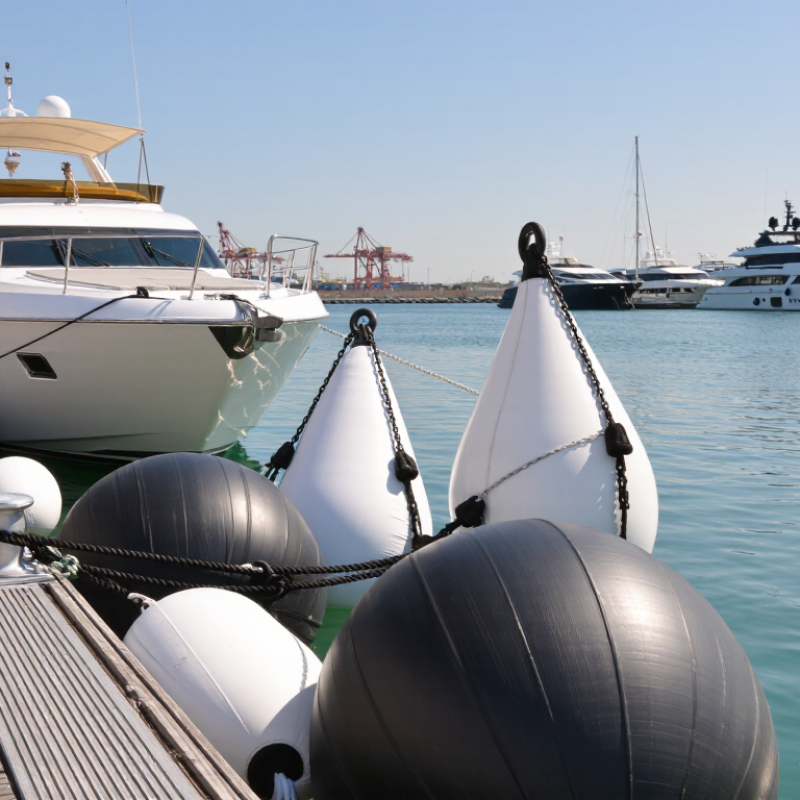
10 Best Marine Fenders for Boats in 2026

Understanding Marine Fenders and Their Role in Boat Protection

Marine fenders are energy-absorbing cushions between a boat and a dock, piling, or another vessel. They help reduce scratches, pressure marks, and impact loads on the hull. They are not magic, though. A fender that is too small, poorly positioned, or allowed to swing above the contact point may offer little protection. Cylindrical, spherical, and flat fenders suit different hull shapes and berthing conditions. Choose size and quantity with boat length, weight, freeboard, and local exposure in mind.

The U.S. Coast Guard’s 2023 Recreational Boating Statistics recorded 3,844 reported recreational boating accidents. The report does not isolate dock-contact incidents or measure fender performance, so it cannot establish that one style prevents damage better than another. That distinction matters. Practical selection still depends on the boat, berth, and expected movement. A narrow slip with wake exposure may need a different arrangement than a calm, protected dock.

Tips: Place fenders where the hull is widest and likely to meet the dock; check their height after the boat settles. Secure lines so fenders stay in position, then inspect for cracks, leaks, or worn attachment points. I’d check spacing twice; it can feel fussy, but gaps invite hard contact.

10 Best Marine Fenders for Boats in 2026 - Understanding Marine Fenders and Their Role in Boat Protection

No. Fender Type Typical Construction Common Use Main Advantage Selection Consideration
1 Cylindrical fender Inflatable, elongated body with one or more attachment points Everyday protection alongside docks and neighboring boats Easy to position vertically or horizontally Choose a size and quantity suited to the boat’s length, weight, and docking conditions.
2 Spherical fender Round inflatable body, often with a reinforced attachment point Larger vessels, exposed berths, and situations with changing contact angles Provides cushioning over a broad contact area Its size can make storage and handling less convenient on small boats.
3 Flat fender Flat or panel-shaped foam or inflatable design Narrow gaps and areas where a round fender may roll out of position Broad, low-profile protection against flat surfaces Check that its shape matches the hull and the surface being protected.
4 Low-freeboard fender Compact inflatable or foam body designed to sit close to the waterline Boats with low hull sides or limited clearance beneath the rail Can protect areas that taller fenders may not cover well Position it to protect the hull without allowing it to become trapped under a dock edge.
5 Pontoon fender Broad, often flat-sided design made for pontoon rails or fencing Pontoon boats docking alongside piers or other boats Covers a wider section of the boat’s side Check attachment method and coverage against the rail layout.
6 Corner fender Angled or shaped body intended to sit around a corner Boat transoms, dock corners, and other exposed edges Helps shield areas that standard cylindrical fenders may not cover evenly Match its shape to the corner and confirm it can be secured in place.
7 Inflatable rafting fender Inflatable body designed to sit between boats Boats tied alongside one another Creates separation and cushioning between adjacent hulls Use secure attachment points and check that the fender stays between the hulls.
8 Foam-filled fender Closed-cell foam core, usually enclosed in a protective outer layer Frequent use or settings where maintaining air pressure is inconvenient Does not rely on inflation to provide cushioning Consider its weight, bulk, and the condition of its outer covering.
9 Dock wheel fender Rotating wheel or roller mounted to a dock edge or piling Fixed dock corners, pilings, and approach areas Can guide a hull along a fixed contact point while reducing direct impact Confirm the mount is suitable for the dock structure and expected contact loads.
10 Strip or rail fender Long protective strip attached along a boat rail or dock edge Repeated contact along a predictable, extended surface Provides continuous coverage over a longer section Measure the mounting area and choose a material compatible with the surface.

Selection note: These are common marine fender styles, not a ranked product list. The right size, number, and placement depend on boat dimensions, hull shape, freeboard, berth conditions, and the manufacturer’s guidance.

Comparing Fender Types, Materials, and Boat-Size Compatibility

Marine fender choice starts with the space between hull and dock, not color. Cylindrical fenders suit many side berths and can be hung vertically or horizontally. Spherical fenders handle concentrated contact at corners, while flat fenders fit narrow gaps. They are not interchangeable. A round fender can roll away from a steep hull flare.

The NMMA’s Recreational Boating Statistical Abstract reports that about 95% of boats on U.S. waters are under 26 feet. That broad fleet profile makes compact fenders common, but boat length alone is a blunt sizing guide. Check displacement, freeboard, and exposure to wake. A heavy, tall-sided boat may need larger or more fenders than a longer, lighter craft. Small details matter.

Material changes handling and durability. Inflatable PVC fenders are light and easy to stow, but need pressure checks and protection from sharp edges. Molded rubber resists abrasion and suits repeated contact, though it is heavier to handle. Foam-filled models cannot deflate, but add bulk. I would compare each maker’s sizing chart against the boat’s actual hull height and berth conditions. Charts simplify real docks; that caveat is easy to miss.

10 Best Marine Fenders for Boats in 2026

Comparing Fender Types, Materials, and Boat-Size Compatibility

These approximate diameter ranges reflect common sizing rules of thumb for inflatable boat fenders. The right choice also depends on freeboard, docking conditions, fender style, and material; check the fender maker’s guidance before buying.

How to Choose the Right Marine Fender for Your Needs in 2026

Choosing a marine fender starts with your boat’s size, weight, and usual docking conditions. A light runabout at a calm marina needs less cushioning than a heavy cruiser facing wake and current. Measure the freeboard, too. A fender that hangs too high may miss the rub rail, while one that drags can wear quickly. Fit matters.

Match the fender shape to the contact point. Cylindrical fenders suit many side-on berths, while spherical models can help where boats meet at awkward angles. Flat fenders work well against broad, even surfaces. Check the material for UV resistance and saltwater durability, and inspect seams or valves if the model is inflatable. Easy to clean helps.

Consider how you will secure and store each fender. The line should hold firmly without rubbing against sharp edges, and the fender should sit at the height of likely contact. On a short test docking, watch where the hull actually touches. It may surprise you. Reposition or add protection if needed. Fender choice is not exact science; boat loading, tide, and berth shape can change the fit, so review it after real use. A small amount of scuffing can reveal a poor placement before it becomes costly damage.

Ten Marine Fenders to Consider for Boats in 2026

Choosing among ten marine fenders starts with your hull, berth, and usual conditions. Cylindrical fenders suit many boats and hang vertically or horizontally. Round fenders offer broad contact on exposed corners. Hole-through designs can fit narrow spaces, while twin-eye styles allow flexible tie-off positions.

For low-freeboard boats, compact fenders can sit closer to the waterline. Pontoon fenders are shaped to protect broad, flat sides. Rafting fenders cushion boats tied alongside each other. Inflatable models pack away easily, though they need periodic pressure checks. Foam-filled fenders resist punctures but can be bulky. Heavy-duty commercial fenders are built for harder contact and heavier loads. Shape matters.

Before buying, compare fender diameter with the gap between hull and dock. Check attachment points, available storage, and whether the fender can be repositioned quickly. A small boat at a sheltered finger dock may need a different setup from a larger boat facing wake and tide. Measure twice. Even a well-sized fender can shift if its line is too loose. Inspect seams, valves, and surface wear during the season; damage is easier to spot before a busy docking day. There is no perfect shape for every berth, and my first choice would not always be the most practical one.

How to Position, Maintain, and Store Boat Fenders

Position fenders before entering a slip, not while the hull is already scraping the dock. Place them along the widest part of the boat, then add one near each end when wind or current could swing the bow or stern. Adjust their height to the dock face and expected water level. On a fixed pier, a fender may need to hang lower as the tide changes; check again after mooring. Secure lines to strong cleats or dedicated fittings, not rails that are not designed for load. Keep fenders just clear of the water when practical. Less grime, less drag.

The U.S. Coast Guard’s 2023 Recreational Boating Statistics report recorded 3,844 recreational boating accidents and 2,126 injuries. Those figures do not measure fender effectiveness, but they underline why controlled docking and sound equipment matter. Before each outing, check for cuts, flattened spots, cracked valves, and worn lines. A fender that looks fine can still lose pressure. Inflate only to its maker’s guidance; overinflation can stress seams in heat. Rinse off salt and grit, then dry fenders fully before storage. Keep them out of direct sun and away from sharp tools or fuel. I would not trust a single spacing rule for every hull; dock height, tide, and loading change the fit.

Article Source:

“Guardian has been a tremendous help in providing storage and distribution solutions for AIR Global. We came to Guardian with a need, and they quickly found a solution for us at a very reasonable price. Our business is very demanding, especially during busy periods, and Guardian has been flexible and able to accommodate all requests with less than 48 hours’ notice. April, our main contact, has been extremely helpful in making sure our orders are shipped on time and that our inventory is accurate. I highly recommend using Guardian and look forward to continuing our relationship for many years to come.”

Matt Buffington
Director of Supply and Operations
Americas

“The Guardian Logistics Team is responsive and helpful on a consistent basis.  This removes a tremendous amount of stress and gives us incentive to route cargo that will touch your dock. Thanks for all that you do!!!”

Charles Reel
Branch Manager
Scan Global Logistics

“I recommend with great confidence, Guardian Logistics Solutions and owner, Brent Smith to whomever needs top shelf deliveries including Last Mile, White Glove, Residential and Commercial.

I have known GLS since its inception. Guardian is always looking for the right answer to solve the customer’s problem. I can, without hesitation, recommend Guardian Logistics to any company that is looking for the best service in their coverage area. They will team with you to create a solution that suits your needs and ensure you are satisfied with the outcome.”

Steven T. Nelson

“I highly recommend Guardian Logistics Solutions. The professionalism and communications offered by the team, along with speediness, cost saving solutions and attitude is a testament to the fact that this is one of the most important partners you can have in the freight movement business.

The company offers exemplary service, they continuously exceed our expectations and that of the importers, they help us service, Guardian Logistics Solutions is the best solid business partner you should add to your company.”

Ubaldo Sierra
Maersk Customs Brokers
General Manager

“Guardian Logistic Solutions is one of those rare companies who under-promise-and-over-deliver EVERY single time!”

James Burke
Manager, Sales Team
OLIMP Warehousing

“I want to thank the team at Guardian for the excellent service we have received.
The shipments have been professionally handled and freight arrives timely and in good order at a fair price. Communication is a very important part of the handling and Guardian does a great job of communication through the delivery.”

Cheri Zetrouer
Access Worldwide
Customs Brokers & Freight Forwarders

“I am very lucky to have found Guardian Logistics to help with our freight needs.  Our business is a bit unique in that we only receive a shipment every 2-3 months and we have to stick to a very strict time schedule in order to unload the delivery.  We found it virtually impossible to consistently coordinate with logistics companies to have shipments arrive on time and when they were expected. After multiple frustrating scenarios, our broker introduced us to Guardian Logistics who handled all of our shipments recently to perfection. Our shipments have arrived on time, when expected, with friendly and helpful drivers.  We will only be using Guardian moving forward for all of our shipping and freight needs. I couldn’t recommend them strongly enough!”

Trey Conrad
Owner
Patriot Power Source

“We have been working with the Guardian company for several years now and I can say without a doubt that their entire team cares about the service they provide. Their personal interest in their customers’ success makes them a standout in the world of final mile delivery.

I highly recommend Guardian for anyone requiring outstanding services in warehousing and final mile delivery programs.”

Frank Ianucilli
Director of Final Mile Operations
Werner Enterprises

“At WeFixFreight.com, client satisfaction is our main priority.  We are proud to partner with the top notch team at Guardian to bring our customers nothing but the best service when it comes to freight reworks, cross docking services, and final mile delivery.”

Bill Carlin
CEO
WeFixFreight.Com

“The Guardian Logistics staff has always been exceptional, and these days, with all the competition out there, it’s the service that matters. We appreciate all they do and look forward to continuing our business with GLS.”

Cathy Avolio
Ocean Import Manager
Mallory Alexander Int'l Logistics (NY), LLC
Back To Top