Skip to content

10 Best RF Coaxial Connectors for Global Buyers

Global connectivity is becoming denser, faster, and less forgiving. RF systems now support 5G networks, satellite links, automotive radar, medical equipment, and automated factories. In these environments, one loose coupling nut can create measurable return loss, signal reflection, or unexpected downtime. That small failure can become expensive.

Industry reports show sustained demand. MarketsandMarkets’ recent RF connector research forecasts continued market growth through 2029, driven by wireless infrastructure, aerospace systems, and high-frequency testing. Grand View Research also identifies telecommunications and data transmission as major demand areas in its coaxial cable market analysis. These findings matter to global buyers. However, market projections vary by methodology, region, and connector definition. Numbers are useful, but they are not absolute.

Dr. David M. Pozar, author of Microwave Engineering, states, “A transmission line is a two-conductor device that is used to transport electrical energy from one point to another.” His principle explains why connector selection cannot rely on appearance alone. Impedance, frequency range, insertion loss, shielding, plating, mating cycles, and environmental sealing deserve close inspection. The best Rf Coaxial Connector may be a 50-ohm SMA for a compact instrument, an N-type connector for outdoor infrastructure, or a 2.92 mm connector for millimeter-wave testing. There is no universal winner. That is the uncomfortable part.

This guide compares ten widely used options for global buyers. It considers technical performance, supply reliability, documentation, compatibility, and practical installation details. Some rankings may change after real-world testing. That is worth remembering. A connector that performs well on a laboratory bench may disappoint beside vibration, moisture, dust, or repeated field maintenance.
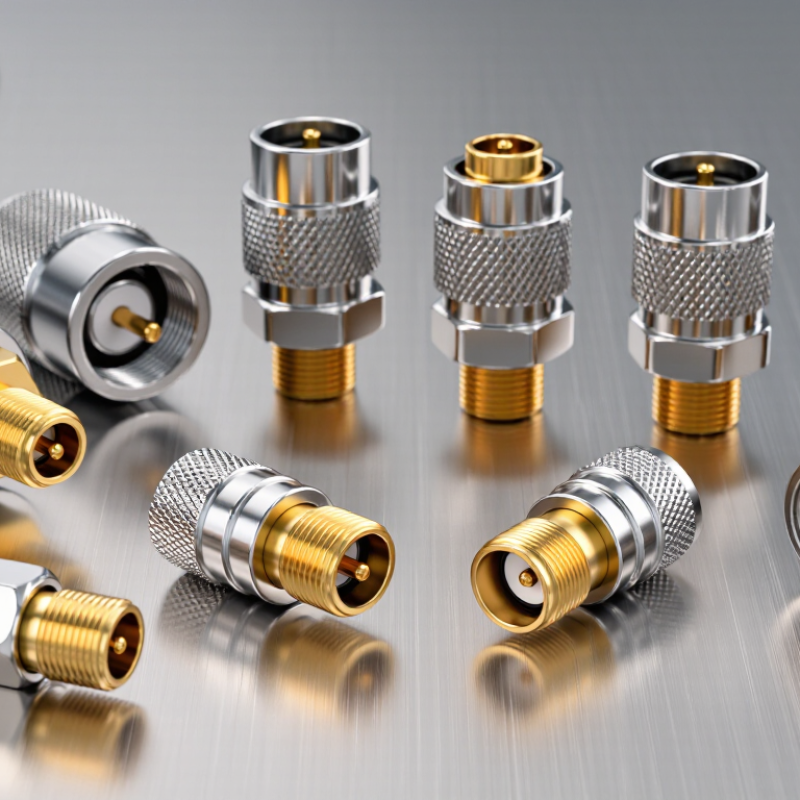
10 Best RF Coaxial Connectors for Global Buyers

RF Connector Families Explained: 50 Ω, 75 Ω, and IEC 61169 Standards

10 Best RF Coaxial Connectors for Global Buyers

RF connector selection starts with impedance. A 50 Ω connector suits wireless infrastructure, test equipment, and radar systems. A 75 Ω connector fits broadcast video and many television networks. Mixing them can create reflections, signal loss, and unstable measurements. Short cables can hide the problem.

The 2024 RF Connector Market analysis by MarketsandMarkets identifies telecommunications as a leading demand sector. It also highlights automotive and aerospace growth. These sectors increasingly require compact connectors and higher frequency performance. IEC 61169 provides a common framework for connector dimensions, interfaces, and electrical requirements. Buyers should check the relevant IEC 61169 part, not only the connector’s family name. Compliance claims need test evidence. A catalogue statement is not enough.

Tips: Confirm impedance, frequency range, return loss, mating cycles, and environmental sealing. Ask for dimensional drawings and inspection reports. Keep cable, connector, and equipment impedance consistent. Remember that adapters can introduce another interface fault. This is often overlooked. A practical incoming check should include visual inspection and network-analyzer testing. The method is not perfect, especially with low-cost fixtures. Still, it exposes loose interfaces, poor termination, and unexpected mismatch before installation.

Selection Metrics: Frequency, VSWR, Insertion Loss, Power, and IP Ratings

Choosing the ten best RF coaxial connectors for global buyers requires more than comparing product photos. Frequency range comes first. A connector rated to 6 GHz may perform poorly near its upper limit. Check test data at your actual operating frequency.

VSWR reveals impedance matching quality. Lower VSWR usually means less reflected energy, especially in sensitive measurement or communication systems.

Insertion loss shows how much signal disappears through the connection. Compare values in dB, using identical cable lengths and test conditions.

Small mismatches matter. Do not trust a single headline number.

Power ratings need careful interpretation. Continuous power, peak power, and frequency-dependent limits are not interchangeable.

Heat buildup can reduce safe performance inside a crowded enclosure. IP ratings describe resistance to dust and water, but sealing depends on proper installation and mating torque.

Inspect the interface. A field evaluation should include repeated connections, vibration, temperature changes, and visual checks for plating wear.

Use accredited test reports when available, and verify whether ratings follow recognized measurement standards. I have seen selection tables look precise while hiding different test methods. That weakness deserves attention.

A slightly more expensive connector may offer better consistency, but only documented data can prove it. Record every assumption before ranking the ten candidates.

Ten Global-Buyer Choices: SMA, N, BNC, TNC, F, MMCX, and More

Global RF connector selection starts with the application, not appearance. SMA connectors suit compact equipment and stable microwave links. N connectors offer stronger outdoor performance and better resistance to moisture. BNC connectors provide quick bayonet locking for instruments and test benches. TNC connectors add threaded security where vibration may loosen BNC fittings. F connectors remain practical for television, satellite, and broadband assemblies.

Smaller systems need different options. MMCX connectors save space inside wireless modules and compact devices. MCX connectors support similar miniature designs with easier push-on access. SMB connectors provide reliable subminiature connections in controlled equipment. UHF connectors handle many lower-frequency radio applications, although their impedance control can be less consistent. 7/16 DIN connectors suit high-power infrastructure and demanding outdoor installations.

Check the details.

Experienced buyers compare impedance, operating frequency, insertion loss, shielding, and mating life. A connector may fit mechanically but fail electrically. That mistake is common. For outdoor use, inspect sealing methods, plating quality, cable compatibility, and corrosion resistance. Threaded interfaces usually need careful torque control. Over-tightening can damage the connector or distort the cable.

Ask for test data from the manufacturer. Verify return loss across the complete frequency range, not only at one attractive point. I also recommend testing a small sample before approving a large order. In practice, packaging can disappoint even when the specification looks excellent. Supply continuity, regional standards, and traceable inspection records matter for global buyers. No connector wins every case.

Performance Benchmarks: DC to 67 GHz, 1.20:1 VSWR, and 2 kW Power

For global buyers, an RF coaxial connector should be judged by measured performance, not catalog language. The DC-to-67 GHz range demands controlled impedance, stable plating, and careful assembly. IEC 61169-1 and IEEE 287-2006 emphasize dimensional accuracy, repeatability, and calibration quality. These details become critical above 40 GHz.

A 1.20:1 VSWR equals a reflection coefficient of roughly 0.091. It also represents about 20.8 dB return loss. That is a strong benchmark for test fixtures, phased-array modules, and millimeter-wave instruments. However, one clean laboratory result can mislead. Cable bending, torque variation, contamination, and adapter stacking may worsen field performance. I would request full-frequency plots, not a single headline value.

The 2 kW claim needs even more scrutiny. In a 50-ohm system, 2 kW equals approximately 316 volts RMS and 6.3 amps RMS. Those stresses can heat the center contact, deform dielectric materials, and increase mismatch. NIST microwave power-measurement guidance treats mismatch, calibration, and connector repeatability as separate uncertainty sources. Buyers should therefore confirm frequency, duty cycle, ambient temperature, and cooling conditions. A connector rated for 2 kW at lower frequencies may require substantial derating near 67 GHz. The specification is useful, but incomplete without test conditions.

10 Best RF Coaxial Connectors for Global Buyers - Performance Benchmarks: DC to 67 GHz, 1.20:1 VSWR, and 2 kW Power

Rank Connector Interface Nominal Impedance Typical Frequency Range Typical Maximum VSWR Indicative CW Power at 1 GHz Coupling Method Best-Fit Applications Key Buying Consideration
1 1.0 mm 50 Ω DC to 67 GHz ≤1.20:1, precision configurations Up to approximately 10 W Threaded coupling Millimeter-wave test systems, calibration assemblies, high-frequency instrumentation Excellent performance at extreme frequencies; delicate interface requires careful handling
2 1.85 mm 50 Ω DC to 67 GHz ≤1.20:1, precision configurations Up to approximately 20 W Threaded coupling 5G and satellite measurements, radar, semiconductor characterization Strong 67 GHz capability with better mechanical robustness than smaller interfaces
3 2.4 mm 50 Ω DC to 50 GHz ≤1.20:1, precision configurations Up to approximately 30 W Threaded coupling High-frequency test equipment, phased-array development, microwave modules Good balance between bandwidth, strength, and measurement repeatability
4 2.92 mm 50 Ω DC to 40 GHz ≤1.20:1, precision configurations Up to approximately 30 W Threaded coupling Ka-band systems, vector network analysis, microwave backhaul and radar Widely used for reliable measurements through 40 GHz; compatible with selected smaller interfaces
5 SMP 50 Ω DC to 26.5 GHz ≤1.30:1; precision versions may reach ≤1.20:1 Up to approximately 50 W Push-on or limited-detent coupling Compact RF modules, aerospace electronics, blind-mate assemblies Very compact and fast to mate; retention style must match vibration requirements
6 SMA 50 Ω DC to 18 GHz; precision versions up to 26.5 GHz ≤1.30:1; precision versions may reach ≤1.20:1 Up to approximately 100 W Threaded coupling General microwave equipment, antennas, filters, test cables and modules Broad availability and strong mechanical retention; verify the exact frequency grade
7 Type N 50 Ω or 75 Ω DC to 11 GHz; precision versions up to 18 GHz ≤1.30:1; precision versions may reach ≤1.20:1 Up to approximately 300 W Threaded coupling Base-station antennas, outdoor radio, instrumentation and high-power RF links Weather-resistant and comparatively high-power; confirm impedance and sealing class
8 7/16 DIN 50 Ω DC to 7.5 GHz ≤1.20:1, quality precision assemblies Up to approximately 2 kW Threaded coupling Cellular infrastructure, broadcast transmitters, high-power feeder systems Best choice for high continuous power; power rating falls with frequency, temperature and VSWR
9 TNC 50 Ω DC to 11 GHz ≤1.30:1; precision versions may reach ≤1.20:1 Up to approximately 100 W Threaded coupling Mobile radio, vehicle antennas, outdoor wireless equipment and rugged test setups Threaded version of the bayonet-style form factor; suitable for vibration-prone installations
10 BNC 50 Ω or 75 Ω DC to 4 GHz; high-performance versions may extend beyond 4 GHz ≤1.50:1; selected precision versions may reach ≤1.20:1 Up to approximately 50 W Bayonet coupling Laboratory instruments, video systems, control equipment and general-purpose RF cabling Fast quarter-turn mating; select the correct 50 Ω or 75 Ω version to avoid mismatch

Engineering note: Values are representative benchmarks for properly terminated, mated connector pairs under controlled conditions. Actual VSWR and power capability depend on connector construction, cable type, frequency, ambient temperature, duty cycle, altitude, mating condition and allowable return loss. Power figures are indicative CW values at 1 GHz and must not be treated as universal ratings.

Compliance and Sourcing: RoHS, REACH, UL, ISO 9001, and MOQ Criteria

Choosing the ten best RF coaxial connectors requires more than checking impedance and frequency. Compliance documents should match the exact part number, plating, insulator, and cable assembly. RoHS Directive 2011/65/EU restricts hazardous substances, while REACH requires disclosure of substances of very high concern. Ask for current declarations, not recycled website files. The European Chemicals Agency regularly updates its Candidate List, so old statements can become unreliable.

UL evaluation can support fire and electrical safety claims, but the evaluation scope matters. Check whether it covers the connector, cable, or complete assembly. ISO Survey 2022 recorded more than 1.2 million ISO 9001 certificates worldwide. That figure shows broad adoption, but certification does not guarantee perfect RF performance. Request audit scope, calibration records, and inspection data. A supplier should also provide return-loss, insertion-loss, mating-cycle, and environmental test results. Small omissions matter.

Tips: Compare MOQ with forecast demand, tooling cost, and safety stock. A low MOQ may hide higher unit pricing. A high MOQ can create obsolete inventory. Confirm samples before production, and inspect the marking on each bag. In sourcing reviews, I would challenge unclear certificates, even when the paperwork looks polished. Human error remains possible. RF connectors deserve that uncomfortable question: does this document prove compliance for this exact configuration?

10 Best RF Coaxial Connectors for Global Buyers — Compliance and Sourcing

Representative maximum frequency ranges for widely used RF coaxial connector families.

The frequency values are representative industry specifications and can vary by interface design, cable assembly, dielectric, and manufacturer. During global sourcing, buyers should also verify RoHS and REACH declarations, UL recognition or listing when required by the application, ISO 9001 quality-management certification, and the supplier’s MOQ, lead time, inspection plan, and traceability documents.

“Guardian has been a tremendous help in providing storage and distribution solutions for AIR Global. We came to Guardian with a need, and they quickly found a solution for us at a very reasonable price. Our business is very demanding, especially during busy periods, and Guardian has been flexible and able to accommodate all requests with less than 48 hours’ notice. April, our main contact, has been extremely helpful in making sure our orders are shipped on time and that our inventory is accurate. I highly recommend using Guardian and look forward to continuing our relationship for many years to come.”

Matt Buffington
Director of Supply and Operations
Americas

“The Guardian Logistics Team is responsive and helpful on a consistent basis.  This removes a tremendous amount of stress and gives us incentive to route cargo that will touch your dock. Thanks for all that you do!!!”

Charles Reel
Branch Manager
Scan Global Logistics

“I recommend with great confidence, Guardian Logistics Solutions and owner, Brent Smith to whomever needs top shelf deliveries including Last Mile, White Glove, Residential and Commercial.

I have known GLS since its inception. Guardian is always looking for the right answer to solve the customer’s problem. I can, without hesitation, recommend Guardian Logistics to any company that is looking for the best service in their coverage area. They will team with you to create a solution that suits your needs and ensure you are satisfied with the outcome.”

Steven T. Nelson

“I highly recommend Guardian Logistics Solutions. The professionalism and communications offered by the team, along with speediness, cost saving solutions and attitude is a testament to the fact that this is one of the most important partners you can have in the freight movement business.

The company offers exemplary service, they continuously exceed our expectations and that of the importers, they help us service, Guardian Logistics Solutions is the best solid business partner you should add to your company.”

Ubaldo Sierra
Maersk Customs Brokers
General Manager

“Guardian Logistic Solutions is one of those rare companies who under-promise-and-over-deliver EVERY single time!”

James Burke
Manager, Sales Team
OLIMP Warehousing

“I want to thank the team at Guardian for the excellent service we have received.
The shipments have been professionally handled and freight arrives timely and in good order at a fair price. Communication is a very important part of the handling and Guardian does a great job of communication through the delivery.”

Cheri Zetrouer
Access Worldwide
Customs Brokers & Freight Forwarders

“I am very lucky to have found Guardian Logistics to help with our freight needs.  Our business is a bit unique in that we only receive a shipment every 2-3 months and we have to stick to a very strict time schedule in order to unload the delivery.  We found it virtually impossible to consistently coordinate with logistics companies to have shipments arrive on time and when they were expected. After multiple frustrating scenarios, our broker introduced us to Guardian Logistics who handled all of our shipments recently to perfection. Our shipments have arrived on time, when expected, with friendly and helpful drivers.  We will only be using Guardian moving forward for all of our shipping and freight needs. I couldn’t recommend them strongly enough!”

Trey Conrad
Owner
Patriot Power Source

“We have been working with the Guardian company for several years now and I can say without a doubt that their entire team cares about the service they provide. Their personal interest in their customers’ success makes them a standout in the world of final mile delivery.

I highly recommend Guardian for anyone requiring outstanding services in warehousing and final mile delivery programs.”

Frank Ianucilli
Director of Final Mile Operations
Werner Enterprises

“At WeFixFreight.com, client satisfaction is our main priority.  We are proud to partner with the top notch team at Guardian to bring our customers nothing but the best service when it comes to freight reworks, cross docking services, and final mile delivery.”

Bill Carlin
CEO
WeFixFreight.Com

“The Guardian Logistics staff has always been exceptional, and these days, with all the competition out there, it’s the service that matters. We appreciate all they do and look forward to continuing our business with GLS.”

Cathy Avolio
Ocean Import Manager
Mallory Alexander Int'l Logistics (NY), LLC
Back To Top