
Best Third Party Warehousing Companies in 2026
Choosing among the best third party warehousing companies in 2026 takes more than comparing storage rates. The right partner can shape inventory accuracy, order speed, and the customer experience. The wrong fit may leave a business paying for capacity it rarely uses. Details matter.
The 2024 State of Logistics Report, produced by the Council of Supply Chain Management Professionals with Kearney, put U.S. business logistics costs at $2.3 trillion in 2023, or 8.7% of GDP. That figure covers logistics broadly, not warehousing alone. Still, it shows why businesses scrutinize the cost and performance of their supply chains. For a practical comparison, look beyond headline pricing. Check warehouse locations, contract flexibility, order cut-off times, inventory reporting, and how a provider handles seasonal peaks. Ask for measurable service commitments, too.
This guide examines third-party providers through those operational details, alongside their technology, industry experience, and network reach. A useful evaluation starts with your own order profile: pallet storage, each-pick fulfillment, returns, or some mix. A warehouse near a major customer may save transit time, but not if its systems cannot share reliable inventory data. No provider suits every business. Rankings can simplify a shortlist, but they cannot replace a site visit or candid customer references. That is worth remembering. The comparison ahead aims to help readers ask sharper questions before signing.
What Third-Party Warehousing Means in 2026
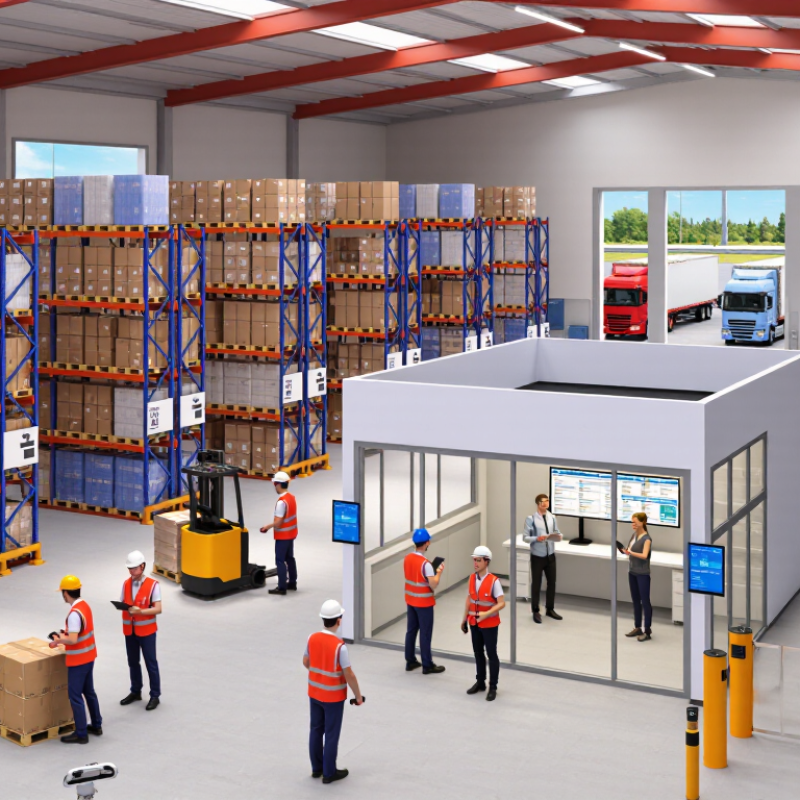
In 2026, third-party warehousing means more than renting space. A provider may receive pallets, scan cartons, track stock, pick and pack orders, and manage returns. Warehouse software can connect with a shipper’s order system, giving teams clearer inventory visibility. Still, a dashboard cannot prevent every error. A mislabeled carton may sit behind the wrong rack. It happens.
The 2024 CSCMP State of Logistics Report estimated U.S. business logistics costs at $2.3 trillion in 2023, equal to 8.7% of GDP. That scale makes warehouse performance a real cost and service issue. The 2024 Third-Party Logistics Study also found that 90% of shipper respondents said 3PLs improved customer service. Results vary by operation, though; a provider’s average performance may not match your busiest week. In practice, staffing, order cut-off times, inventory accuracy, and exception handling matter as much as available floor space.
Tips: Ask for sample inventory reports and written service targets. Check how quickly the provider flags a short pick, late inbound load, or damaged carton. Confirm peak-season capacity before signing, not after the first backlog.
Best Third Party Warehousing Companies in 2026 - What Third-Party Warehousing Means in 2026
Third-party warehousing means outsourcing some or all storage and warehouse operations to an independent logistics provider. The comparison below covers common service models rather than individual companies. Availability, pricing, and service levels vary by location, inventory, contract, and provider.
| Warehouse service model | How it works | Common cost structure | Best suited for | Services to confirm | Key consideration |
|---|---|---|---|---|---|
| Shared or public warehousing | Multiple customers use space and warehouse resources in the same facility. | Often based on storage used, handling activity, and selected services. | Businesses with variable, seasonal, or relatively modest storage needs. | Receiving, put-away, inventory reporting, picking, packing, and dispatch. | Check space availability, peak-season capacity, access rules, and inventory visibility. |
| Dedicated warehousing | A facility or defined warehouse area is reserved for one customer’s operations. | Usually contract-based, with costs tied to committed space, labor, equipment, and services. | Businesses needing greater operational control, specialized processes, or stable capacity. | Staffing plan, operating hours, equipment, security, reporting, and service-level terms. | Review volume commitments, contract duration, and responsibility for unused capacity. |
| Contract warehousing | A provider operates warehouse services under a negotiated agreement tailored to the customer. | May combine fixed charges, activity-based fees, and agreed performance terms. | Businesses seeking a longer-term operating arrangement or customized workflows. | Scope of work, forecasting, systems integration, performance reviews, and change controls. | Define service levels, liability, audit rights, and exit or transition provisions clearly. |
| E-commerce fulfillment warehousing | Inventory is stored and orders are picked, packed, and shipped to customers or retail destinations. | Common charges include receiving, storage, per-order fulfillment, packaging, and shipping-related fees. | Retailers and online sellers that want outsourced order processing and shipping operations. | Order-system integration, cut-off times, returns processing, packaging options, and parcel services. | Compare total order costs and delivery coverage, not only the storage charge. |
| Bonded warehousing | Imported goods may be stored under customs control before applicable duties and taxes are paid, subject to local rules. | Storage and handling charges apply; customs, compliance, and documentation costs may also be relevant. | Importers whose goods qualify for bonded storage and who need to manage duty timing. | Bonded status, recordkeeping, inventory controls, customs documentation, and release procedures. | Confirm eligibility and requirements with the relevant customs authority or qualified adviser. |
| Temperature-controlled warehousing | Goods are stored in monitored environments designed for specified temperature conditions. | Pricing depends on temperature range, handling requirements, storage duration, and monitoring needs. | Products requiring controlled storage, such as certain food, pharmaceutical, or chemical goods. | Temperature monitoring, alarm response, sanitation practices, traceability, and contingency plans. | Match facility controls and documentation to the product’s regulatory and handling requirements. |
Practical evaluation metrics: inventory accuracy, order accuracy, receiving turnaround, on-time dispatch, damage rate, returns processing time, and total cost per order or handling unit. Agree on metric definitions and reporting periods before comparing providers.
Related Posts
-

2026 Best Third Party Warehousing Companies Worldwide
-
Top Warehousing Companies to Consider in 2026 for Global Buyers?
-

10 Essential Tips for Optimizing Your Order Fulfillment Process?
-

2025 How to Choose the Best Logistics Solutions for Your Business
-

Top 10 Logistics Inventory Management Tips for Global Buyers?
-
2026 Best Last Mile Delivery Solutions for Fast and Efficient Shipping?