What Is the Best Type of Shipping Container?
Choosing the best Shipping Container starts with a practical question: what must it carry, and where will it go? A Dry Container suits many general cargo needs. Refrigerated units protect temperature-sensitive goods, while open-top and flat-rack models accommodate certain oversized loads. The right choice depends on cargo dimensions, weight, handling equipment, route, and condition—not the container’s name alone.
Malcolm McLean, the transport entrepreneur whose work helped establish modern container shipping, is a useful historical reference. Rather than assign him an unverified quotation, this guide uses a clear buying principle: “Match the container to the cargo, route, and handling plan.” It is a practical rule, not a recorded McLean quote. That distinction matters when advice should be trustworthy. A container that looks suitable in a yard may have damaged flooring, worn door seals, or insufficient internal clearance. Small details count.
There is no universal winner. Not quite. Buyers should compare usable interior dimensions, payload limits, ventilation, insulation, and inspection records. A reefer may be unnecessary for dry goods, yet essential when temperature control is required. A used unit can offer value, but condition deserves careful review. The sections ahead compare common container types, explain their best uses, and flag trade-offs to check before purchase. One point bears repeating: verify the specifications against the actual cargo and handling plan.
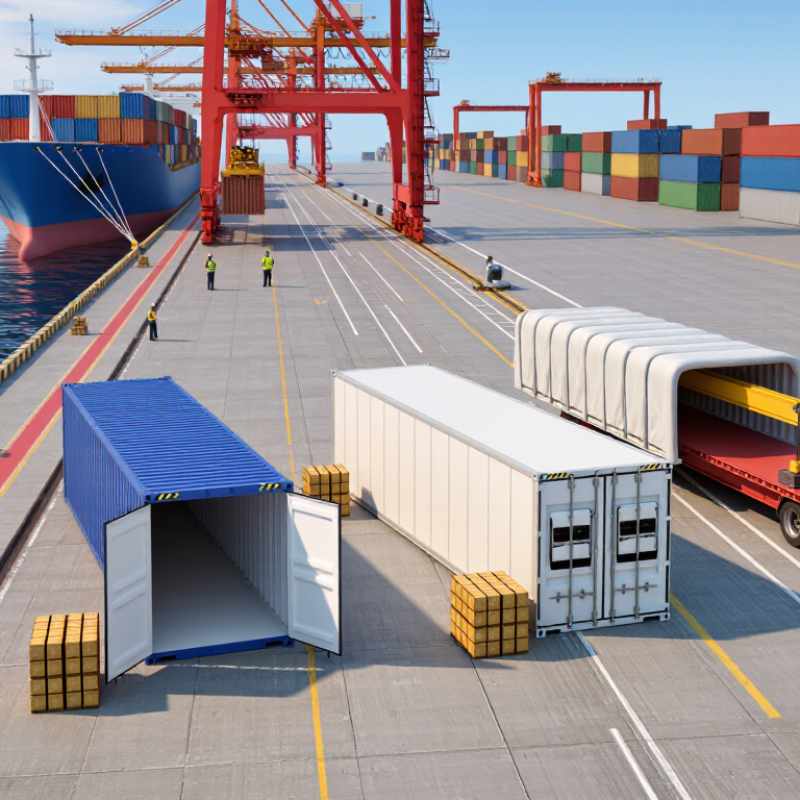
How ISO 668 Classifies Standard Shipping Containers by Size
What Is the Best Type of Shipping Container?
How ISO 668 Classifies Standard Shipping Containers by Size
ISO 668:2020 classifies Series 1 freight containers by external dimensions and related ratings; it does not define one universally best type. Common nominal lengths are 20 feet and 40 feet. A standard container is about 2.438 metres wide and 2.591 metres high. Their external lengths are 6.058 and 12.192 metres, respectively. High-cube containers typically reach 2.896 metres in external height.
Small differences matter. Door openings and usable interior dimensions are smaller, and can vary with construction.
Size labels help match cargo volume, handling equipment, and transport plans. A 20-foot container can suit dense, compact loads; a 40-foot container provides more floor space, but not necessarily twice the payload.
Easy to miss. UNCTAD’s Review of Maritime Transport 2024 reports global container-port throughput of 858.9 million TEU in 2023, illustrating the value of consistent size measures across large networks. TEU means twenty-foot equivalent unit, a capacity measure rather than a count of physical containers.
For an actual shipment, check the container’s data plate, usable interior dimensions, and maximum gross mass. ISO dimensions guide the choice, but a tidy classification cannot resolve every site-specific fit.
Compare 20-Foot and 40-Foot Containers: 6.06 m vs. 12.19 m Long
A 20-foot container measures about 6.06 m long, while a 40-foot container measures about 12.19 m. The longer option offers nearly twice the floor length, but it does not automatically suit every shipment. A compact load may leave a large amount of unused space, while a long load may not fit safely in a shorter unit. Measure the goods, including pallets and protective packaging. Measure twice. Internal dimensions and door openings can vary, so check the specific container’s specifications before booking.
Think about how the container will be loaded and where it must be placed. A 20-foot unit can be easier to position at a tight site, and may suit dense, heavy cargo that reaches weight limits before filling the floor. A 40-foot unit can carry more volume, but needs more clearance and a suitable vehicle for delivery. That matters. I used to treat length as the main decision, which is an oversimplification: cargo shape, access, and handling plans can matter just as much. Compare usable interior space, not only the outside length. If the load is irregular, sketch its layout first; even a simple drawing can expose wasted space or awkward gaps.
Match Dry, Reefer, Open-Top, and Flat-Rack Types to Cargo Needs
Dry containers are the practical choice for boxed, palletized, and other cargo that needs no temperature control. Reefer containers suit chilled or frozen goods, but the set point, airflow, and pre-cooling plan matter as much as the container itself. UNCTAD’s Review of Maritime Transport 2024 reports global container-port throughput of 858 million TEUs in 2023, reflecting the scale of standardized container handling. That figure does not mean every container type fits every terminal or route.
Open-top containers allow loading from above, useful for tall machinery or cargo handled by crane. Flat racks, with open sides and ends, accommodate oversized or heavy loads that cannot fit inside standard walls. Check cargo dimensions, weight distribution, lashing points, and lifting method before booking. A common planning blind spot is choosing by cargo name alone; loading geometry can decide the fit. Still, a perfect spec sheet cannot fix a rushed loading plan.
Tips: Measure the cargo, including packaging and lifting clearance. For reefers, confirm the required temperature and power availability at each transfer point. For open-tops and flat racks, ask the carrier to verify route acceptance and securing requirements before loading.
Assess High-Cube Containers: 2.896 m External Height vs. 2.591 m Standard
What Is the Best Type of Shipping Container?
Assess High-Cube Containers: 2.896 m External Height vs. 2.591 m Standard
A high-cube container is 2.896 m tall externally, compared with 2.591 m for a standard container. That extra 305 mm can help when loading tall equipment, stacked cartons, or bulky furniture that cannot be laid flat. The gain is useful, not magical. Roof framing, floor thickness, and door openings reduce usable clearance, and actual dimensions vary by unit.
Measure the tallest packed item, including pallets and protective wrapping. Check the interior door height as well as the listed internal height; a load may fit inside but fail at the doorway. Extra volume can also leave cargo less securely supported if the load plan is not adjusted. Choosing by exterior height alone is an easy detail to miss.
Tips: Ask for the specific unit’s internal and door dimensions. Leave clearance above the load, and check route restrictions, warehouse doors, and lifting arrangements. A tape measure helps. So does checking twice.
What Is the Best Type of Shipping Container? — Assess High-Cube Containers: 2.896 m External Height vs. 2.591 m Standard
How to choose: A high-cube container is often the better fit when cargo volume or height is the limiting factor. A standard-height container may be preferable when extra height is unnecessary or site, road, rail, or handling clearances are restricted. Dimensions shown are common nominal or approximate figures; actual internal and door dimensions vary by container design, construction, and condition. Confirm the specific unit’s measurements and payload rating before booking.
Verify ISO 1496 Ratings and CSC Plate Payload Limits Before Selection
A container’s label can look reassuring, but “standard” does not mean every unit has the same payload. ISO 1496-1:2013 sets performance requirements and tests for general-purpose freight containers, while ISO 668 defines size and rating classifications. These standards are useful checks, not substitutes for reading the specific unit’s CSC plate. Numbers matter. Look for maximum gross mass and tare mass; subtract tare from gross to estimate the maximum payload. For example, a plate showing 30,480 kg gross mass and 2,250 kg tare gives a payload limit of 28,230 kg. Treat this as an example, not a universal rating.
The CSC plate also records safety-related information, including stacking and racking limits. A container may pass a dimensional check yet still be unsuitable for a heavy, concentrated load. Picture a steel machine resting on narrow feet: its total weight may fit the payload figure, but the floor loading needs separate review. That detail is easy to miss. Check the plate against the container’s condition, cargo distribution, handling equipment, and planned route. ISO 1496-1 provides the technical test framework; the plate provides the unit-specific limits. If the plate is unreadable, inconsistent, or absent, do not guess from a sales listing. Recheck with a qualified inspector. That extra step can feel slow. It is still cheaper than choosing by headline capacity alone.
Shipping Container Types: Representative Rated Mass
These examples show representative mass ratings in kilograms, not universal limits. ISO 1496 covers container specifications and testing; the CSC plate on the individual container states its maximum gross mass. Check that plate and confirm payload limits before selection and loading.
