Skip to content

How to Choose the Best Carbon Fiber Supplier in 2026?

Choosing the best carbon fiber supplier in 2026 takes more than comparing prices or scanning a product catalog. A roll may look flawless under warehouse lights, yet vary in tow size, resin compatibility, or batch consistency. Those differences can affect machining, strength, and scrap rates. Small details matter.

Composite materials expert Dr. Stephen W. Tsai has emphasized how fiber direction and laminate design shape composite behavior. That principle offers a useful reminder: a supplier’s material must suit your part, process, and performance requirements. Ask for technical data sheets, traceable batch records, and test results tied to the grade you plan to buy. Check whether the supplier can explain tolerances, storage conditions, lead times, and what happens when a batch falls outside specification. A polished sample is not enough.

The strongest supplier relationship also depends on practical support. Can the team answer a question about prepreg out-time, recommend a fabric weight, or respond when production schedules shift? Request samples and evaluate them using your own process, not only the supplier’s claims. Compare total landed cost, but weigh it against yield, delivery reliability, and technical service. Be cautious of unusually broad promises. Some decisions will still involve trade-offs, and the “best” supplier may change as your design matures. This guide examines the checks that help buyers make a defensible choice—and the questions that are easy to overlook.
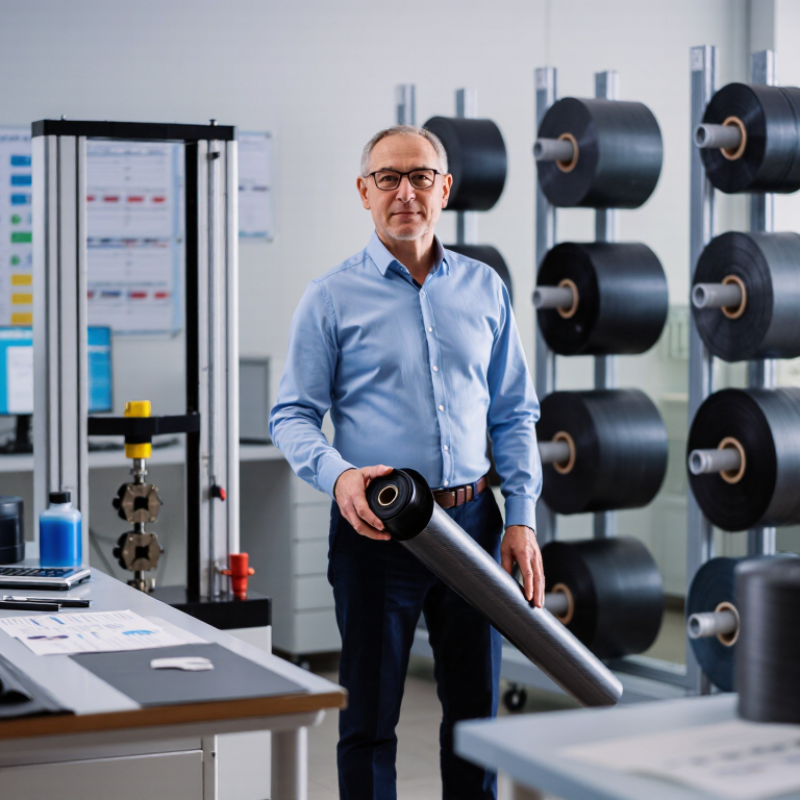
How to Choose the Best Carbon Fiber Supplier in 2026?

Define Your Carbon Fiber Requirements and Application Criteria

Before contacting suppliers, define what the part must do, not just that it should be lightweight. List the loads it will face, including bending, impact, vibration, and repeated cycling. Note operating temperatures, moisture, chemicals, UV exposure, and expected service life. A bike-frame tube, drone arm, and machine guard may need different layups, even when all use carbon fiber. Be specific.

Record the component’s shape, dimensions, target mass, and allowable deflection. Explain whether it will be molded, pultruded, filament-wound, or cut from sheet, and whether surface appearance matters. Specify the fiber form—woven cloth, unidirectional tape, or chopped fiber—and any resin requirements. If you know the load direction, include it; fiber orientation strongly affects stiffness and strength. Avoid choosing a grade before comparing relevant test data.

Ask for technical data tied to the intended test method, along with batch traceability and sample parts for evaluation. Check tolerances, void content, cure conditions, and inspection records where relevant. A headline strength figure may not predict performance in your component’s geometry. Test representative parts under realistic loads and temperatures. It takes time. Some requirements may change after the first prototype; record why each change was made.

Compare Supplier Materials, Manufacturing Capabilities, and Customization Options

How to Choose the Best Carbon Fiber Supplier in 2026?

A reliable comparison starts with the material, not the sales promise. Ask whether the supplier offers the fiber grade, weave, and resin system your part requires. A plain-weave sheet may suit a visible panel, while a unidirectional layup can better support loads along one axis. Request current technical data and sample test reports. Check that they identify the tested material and method. I have seen specifications look reassuring until the details are missing. That is a small warning, not proof of poor quality.

Tips: Ask for a sample. Check its thickness, surface finish, and edge quality. Confirm how the supplier tracks material batches.

Manufacturing capability matters just as much. Ask which processes are available, such as prepreg curing, resin infusion, or machining, and whether their equipment can meet your part’s size and tolerance needs. Discuss inspection steps, expected lead times, and how defects are handled. Customization may include laminate direction, thickness, finish, or cut-to-size panels. Share a drawing and intended use, then compare the supplier’s questions and proposed checks. A low quote can be tempting; I would still verify one production sample before committing. Supplier claims are useful, but measurable evidence is better.

Verify Quality Standards, Testing Methods, and Material Traceability

How to Choose the Best Carbon Fiber Supplier in 2026?

Verify Quality Standards, Testing Methods, and Material Traceability

A supplier’s certificate is only a starting point. Check that its quality system covers incoming fiber, resin storage, production controls, and finished-part inspection. CompositesWorld’s 2024 State of the Industry report estimated global carbon-fiber capacity at about 217,000 metric tonnes. That broad supply makes lot-level records especially useful. Ask for a certificate of analysis tied to each shipment, with fiber grade, tow size, resin system, and production date.

Match test evidence to your application. ASTM D3039 measures laminate tensile properties; ASTM D7264 covers flexural properties. Request the actual results, specimen details, test conditions, and the lab’s accreditation—not just a pass statement. Compare results across multiple lots. A single strong coupon proves little. Small details matter: a labeled spool, sealed resin pack, and readable batch code can connect a finished component to its raw materials.

Traceability should work in both directions. Ask the supplier to show how one finished panel links to fiber and resin batches, process records, and inspection results. Verify that records remain available after delivery. Still, paperwork can look perfect. It cannot replace consistent production checks, and buyers sometimes overlook that. A practical audit should follow one real lot from receiving dock to test report.

Assess Production Capacity, Lead Times, Sustainability, and Supply Chain Resilience

How to Choose the Best Carbon Fiber Supplier in 2026?

Production capacity is more than a factory’s maximum output. Ask how many shifts run, which curing systems are available, and how maintenance affects schedules. Compare these details with your forecast, including seasonal peaks and urgent replacement orders. A capable supplier should explain how it would move from a small trial batch to regular production. Ask for realistic figures, not just an impressive ceiling. Plans can change.

Lead times deserve the same scrutiny. Request separate estimates for raw material sourcing, production, inspection, and shipping. Then ask what happens when a shipment of fiber arrives late. Sustainability claims also need evidence. Look for documented energy use, scrap tracking, and clear procedures for handling production waste. A polished report is useful, but it cannot answer every shop-floor question.

Supply chain resilience shows up in the details. Does the supplier qualify alternative sources for key inputs? Can it identify bottlenecks and provide timely updates during disruptions? Review how it protects batch records and communicates specification changes. A simple test is to ask for a sample contingency plan and see whether responsibilities are clear. No plan removes every risk. Some answers may remain uncertain, and that is worth noting before signing a long-term agreement.

Evaluate Total Cost, Technical Support, and Long-Term Supplier Fit

A strong carbon fiber supplier should be judged by more than the quoted price per kilogram. Compare the full cost of a usable part: material price, shipping, inspection, storage, and expected scrap. Ask for pricing on the same fiber grade, weave, resin system, and delivery quantity. Otherwise, the comparison is not fair. A low quote can lose its appeal when a small batch arrives late or requires extra trimming.

Technical support matters most when production gets complicated. Can the supplier explain how a material behaves during cutting, layup, curing, and machining? Request current technical data and a representative sample, then check whether the results match your process. Notice how quickly the team answers specific questions. A polished brochure is not support. A clear response about a curing issue is. Still, one successful sample does not guarantee consistent future batches.

Long-term fit depends on communication, capacity, and honest limits. Discuss forecast changes, minimum order quantities, and lead times before relying on a supplier for production. Ask how batch records and quality concerns are handled. Keep a simple scorecard, but leave room for judgment; numbers rarely capture the frustration of vague updates. I would not treat a friendly sales call as proof of reliability. Test the working relationship with a modest order and review what actually happened.

How to Choose the Best Carbon Fiber Supplier in 2026

Evaluate total cost, technical support, and long-term supplier fit.

Suggested buyer-defined evaluation weights, not industry survey results. Compare suppliers using the same criteria, and assess total cost of ownership—including processing, scrap, logistics, and support—not just the quoted material price. Adjust the weights to match your application and production needs.

“Guardian has been a tremendous help in providing storage and distribution solutions for AIR Global. We came to Guardian with a need, and they quickly found a solution for us at a very reasonable price. Our business is very demanding, especially during busy periods, and Guardian has been flexible and able to accommodate all requests with less than 48 hours’ notice. April, our main contact, has been extremely helpful in making sure our orders are shipped on time and that our inventory is accurate. I highly recommend using Guardian and look forward to continuing our relationship for many years to come.”

Matt Buffington
Director of Supply and Operations
Americas

“The Guardian Logistics Team is responsive and helpful on a consistent basis.  This removes a tremendous amount of stress and gives us incentive to route cargo that will touch your dock. Thanks for all that you do!!!”

Charles Reel
Branch Manager
Scan Global Logistics

“I recommend with great confidence, Guardian Logistics Solutions and owner, Brent Smith to whomever needs top shelf deliveries including Last Mile, White Glove, Residential and Commercial.

I have known GLS since its inception. Guardian is always looking for the right answer to solve the customer’s problem. I can, without hesitation, recommend Guardian Logistics to any company that is looking for the best service in their coverage area. They will team with you to create a solution that suits your needs and ensure you are satisfied with the outcome.”

Steven T. Nelson

“I highly recommend Guardian Logistics Solutions. The professionalism and communications offered by the team, along with speediness, cost saving solutions and attitude is a testament to the fact that this is one of the most important partners you can have in the freight movement business.

The company offers exemplary service, they continuously exceed our expectations and that of the importers, they help us service, Guardian Logistics Solutions is the best solid business partner you should add to your company.”

Ubaldo Sierra
Maersk Customs Brokers
General Manager

“Guardian Logistic Solutions is one of those rare companies who under-promise-and-over-deliver EVERY single time!”

James Burke
Manager, Sales Team
OLIMP Warehousing

“I want to thank the team at Guardian for the excellent service we have received.
The shipments have been professionally handled and freight arrives timely and in good order at a fair price. Communication is a very important part of the handling and Guardian does a great job of communication through the delivery.”

Cheri Zetrouer
Access Worldwide
Customs Brokers & Freight Forwarders

“I am very lucky to have found Guardian Logistics to help with our freight needs.  Our business is a bit unique in that we only receive a shipment every 2-3 months and we have to stick to a very strict time schedule in order to unload the delivery.  We found it virtually impossible to consistently coordinate with logistics companies to have shipments arrive on time and when they were expected. After multiple frustrating scenarios, our broker introduced us to Guardian Logistics who handled all of our shipments recently to perfection. Our shipments have arrived on time, when expected, with friendly and helpful drivers.  We will only be using Guardian moving forward for all of our shipping and freight needs. I couldn’t recommend them strongly enough!”

Trey Conrad
Owner
Patriot Power Source

“We have been working with the Guardian company for several years now and I can say without a doubt that their entire team cares about the service they provide. Their personal interest in their customers’ success makes them a standout in the world of final mile delivery.

I highly recommend Guardian for anyone requiring outstanding services in warehousing and final mile delivery programs.”

Frank Ianucilli
Director of Final Mile Operations
Werner Enterprises

“At WeFixFreight.com, client satisfaction is our main priority.  We are proud to partner with the top notch team at Guardian to bring our customers nothing but the best service when it comes to freight reworks, cross docking services, and final mile delivery.”

Bill Carlin
CEO
WeFixFreight.Com

“The Guardian Logistics staff has always been exceptional, and these days, with all the competition out there, it’s the service that matters. We appreciate all they do and look forward to continuing our business with GLS.”

Cathy Avolio
Ocean Import Manager
Mallory Alexander Int'l Logistics (NY), LLC
Back To Top