Skip to content

How to Choose the Best Explosion Proof Forklift in China?

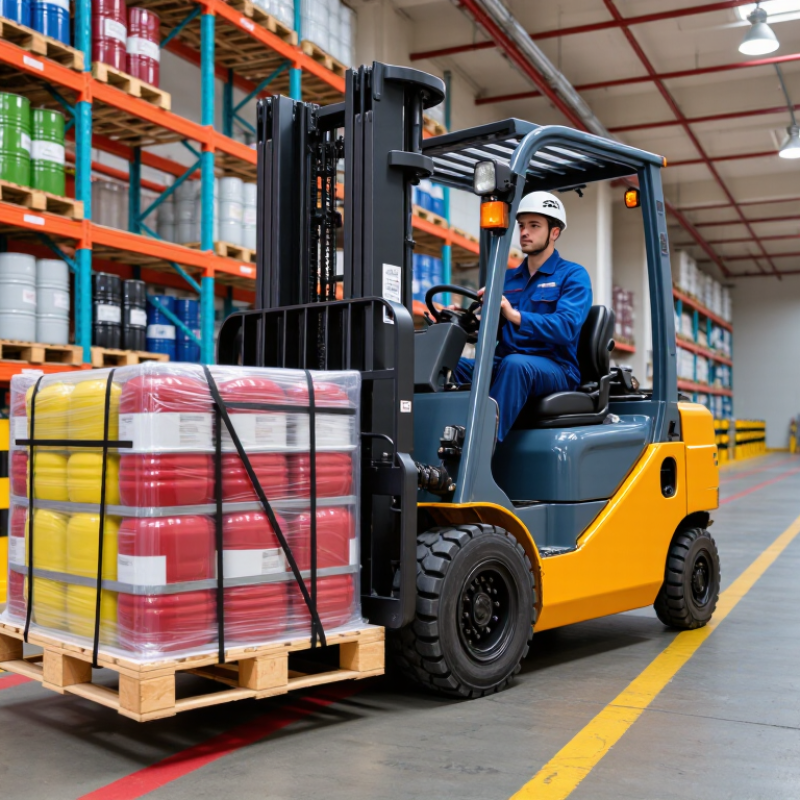
Choosing an Explosion Proof Forklift in China is not simply a matter of comparing lifting capacity or price. A truck moving palletized chemicals through a marked hazardous area needs protection suited to the actual gas or dust risk. The details matter: zone classification, temperature limits, load center, aisle width, and charging arrangements can all affect the choice. A poor match may look fine on a specification sheet. It may still be wrong for the site.

The International Labour Organization’s 2023 global estimates report nearly three million work-related deaths each year. This figure covers many industries, not forklift incidents alone, but it underscores why equipment selection deserves careful risk assessment. For technical guidance, the IEC 60079 series addresses equipment for explosive atmospheres. Buyers should also confirm which Chinese requirements and certifications apply to their intended workplace and export destination. Check the documents against the exact truck configuration, not just the supplier’s general product brochure.

Industry data helps with market context, too. World Industrial Truck Statistics tracks industrial-truck deliveries by region and class; its figures can inform availability and sourcing discussions, not prove a model is safe for a particular site. Ask suppliers for traceable test and certification records, component details, service coverage, and a clear explanation of the approved operating conditions. Inspect the actual route: a narrow turning point or uneven floor changes the practical choice. And one point is easy to miss. “Explosion-proof” is not a complete specification. This guide examines how to compare Chinese models, verify their documentation, and avoid decisions based on price alone.
How to Choose the Best Explosion Proof Forklift in China?

Classify Gas Zones 0–2 and Dust Zones 20–22 Under GB/T 3836

Under the GB/T 3836 series, classify the hazardous area before selecting an explosion-protected forklift. Gas Zone 0 means an explosive atmosphere is present continuously, frequently, or for long periods. Zone 1 means it may occur during normal operation; Zone 2 means it is unlikely and brief. Dust Zones 20, 21, and 22 use a similar frequency-based approach for combustible dust clouds. A solvent-tank aisle and a powder-handling bay may need different equipment. Use the site’s area-classification drawings, not a broad factory label.

Match the forklift’s protection level to the assessed zone: Ga, Gb, or Gc for gas Zones 0, 1, or 2; Da, Db, or Dc for dust Zones 20, 21, or 22. Check the gas or dust group, temperature limits, enclosure rating, and battery-charging arrangements. GB/T 3836 is a standards series, so verify the applicable edition and certificate scope with a qualified assessor. OSHA’s powered industrial truck guidance cites about 85 US deaths and 34,900 serious injuries annually. These figures are not China-specific or explosion-only, but they reinforce the need for careful vehicle selection.

Tips: Request the zone drawing, certificate, and equipment marking before purchase. Check the actual route, too. Do not guess. A correct zone label may still miss a site-specific temperature or dust hazard.

Match Gas Groups IIA–IIC and Temperature Classes T1–T6 to Site Hazards

Choosing an explosion-proof forklift starts with identifying the gases or vapors that may be present. IIA commonly includes propane, IIB ethylene, and IIC hydrogen or acetylene. IIC represents the most demanding gas group. Check the forklift’s nameplate and certification documents against the actual site hazard; do not rely on a general product description. Check the nameplate. A quick guess based on a familiar warehouse label can miss important details.

Temperature class limits the equipment’s maximum surface temperature: T1 is 450°C, T2 300°C, T3 200°C, T4 135°C, T5 100°C, and T6 85°C. The selected class must keep exposed surfaces below the gas’s autoignition temperature, with suitable margin for site conditions. Lower numbers allow higher surface temperatures; T6 is the coolest limit. Check components that can heat up during work, including motors, brakes, and electrical connections. Attachments or operating conditions may also matter. Verify the complete forklift configuration, not just one component. I would pause before treating a catalog table as the final answer: confirm the substances, area classification, ambient temperature, and equipment marking with the site’s qualified safety team.

How to Choose the Best Explosion-Proof Forklift in China?

Match gas groups IIA–IIC and temperature classes T1–T6 to site hazards.

The bars show each gas temperature class’s maximum permitted equipment surface temperature. Choose a class whose limit is below the ignition temperature of the hazardous gas. Gas groups describe different ignition characteristics: IIA commonly includes propane, IIB ethylene, and IIC hydrogen or acetylene; IIC is the most demanding group. Confirm the forklift’s certification covers the site’s gas group, temperature class, zone, and operating conditions. These gas markings do not replace separate dust-hazard requirements.

Verify China Ex Certification and GB/T 3836 Compliance for Key Components

When choosing an explosion-proof forklift in China, check more than the certificate on the sales sheet. Ask for the China Ex certificate and compare its model, protection method, and scope with the exact forklift configuration. Verify the certificate through the issuing body or its official records. A similar model name is not enough. Small differences matter.

Review key components against the applicable parts of the GB/T 3836 series. Check the motor, electrical enclosures, sensors, lamps, and cable glands. Their markings should match the intended hazardous-area classification and the forklift’s technical documents. Ask for component certificates, nameplate photos, and a parts list tied to the delivered unit. Then inspect the actual truck: a correctly marked motor does not prove that a later replacement part is suitable. Paperwork can look tidy; matching it to every installed component takes patience. I have seen buyers overlook cable entries because they seemed minor. They are not. If a certificate’s scope is unclear, ask the supplier to explain it in writing before ordering.

Compare Rated Capacity at the Load Center, Commonly 500 mm, and Lift Height

When comparing explosion-proof forklifts in China, start with the loads and aisles at your site. Rated capacity is measured at a specified load center, commonly 500 mm from the fork face to the load’s center of gravity. It is not simply the pallet’s total weight. A long or uneven load can shift its center of gravity forward and reduce the safe capacity. Small changes matter. Measure the real load, including any attachment used.

Check the capacity plate or load chart for the exact mast, attachment, and lift height you plan to use. A truck rated for a certain weight at 500 mm may have a lower allowable capacity when lifting higher. For example, a bulky pallet lifted to a tall rack can exceed the truck’s residual capacity even when it is below the headline rating. Do not assume the nominal figure applies at every height.

I would not treat 500 mm as a universal fit; it is a reference point, and site measurements can be imperfect. Confirm the load dimensions, lift height, aisle clearance, and operating surface, then have a qualified supplier verify the configuration and explosion-protection documentation for the intended work area.

Assess Battery, Tires, Brakes, and Maintenance Needs for the Hazardous Area

Choosing an explosion-proof forklift in China starts with the exact hazardous-area conditions, not just lifting capacity. Identify the gases or dust, temperature range, floor surface, load weight, and daily travel distance. Then confirm that the truck’s protection rating and complete configuration suit those conditions. A certified base model may not cover every attachment or later modification. Check the documents carefully.

Battery choice affects both operating time and charging arrangements. Compare usable capacity with the actual shift pattern, including pauses and cold-weather performance. Confirm that the battery, connectors, and charging method are approved for the intended area. Charging may need to happen in a designated safe location. Small details matter. A connector that looks ordinary can become a weak point if its protection is unsuitable.

Tires should match the floor, load, and risk of static buildup; ask the supplier to explain the specified compound and its limits. Inspect for cuts, flat spots, and embedded metal. Brakes deserve equal attention: verify their design suits the hazardous environment, then check response, wear, and heat during routine service. Dust changes everything. Plan maintenance around inspection intervals, trained technicians, and approved replacement parts. Keep a record of battery condition, brake adjustments, tire wear, and repairs. A tidy checklist helps, but it cannot replace a site-specific review; even experienced teams can overlook a change in floor coating or operating route.

“Guardian has been a tremendous help in providing storage and distribution solutions for AIR Global. We came to Guardian with a need, and they quickly found a solution for us at a very reasonable price. Our business is very demanding, especially during busy periods, and Guardian has been flexible and able to accommodate all requests with less than 48 hours’ notice. April, our main contact, has been extremely helpful in making sure our orders are shipped on time and that our inventory is accurate. I highly recommend using Guardian and look forward to continuing our relationship for many years to come.”

Matt Buffington
Director of Supply and Operations
Americas

“The Guardian Logistics Team is responsive and helpful on a consistent basis.  This removes a tremendous amount of stress and gives us incentive to route cargo that will touch your dock. Thanks for all that you do!!!”

Charles Reel
Branch Manager
Scan Global Logistics

“I recommend with great confidence, Guardian Logistics Solutions and owner, Brent Smith to whomever needs top shelf deliveries including Last Mile, White Glove, Residential and Commercial.

I have known GLS since its inception. Guardian is always looking for the right answer to solve the customer’s problem. I can, without hesitation, recommend Guardian Logistics to any company that is looking for the best service in their coverage area. They will team with you to create a solution that suits your needs and ensure you are satisfied with the outcome.”

Steven T. Nelson

“I highly recommend Guardian Logistics Solutions. The professionalism and communications offered by the team, along with speediness, cost saving solutions and attitude is a testament to the fact that this is one of the most important partners you can have in the freight movement business.

The company offers exemplary service, they continuously exceed our expectations and that of the importers, they help us service, Guardian Logistics Solutions is the best solid business partner you should add to your company.”

Ubaldo Sierra
Maersk Customs Brokers
General Manager

“Guardian Logistic Solutions is one of those rare companies who under-promise-and-over-deliver EVERY single time!”

James Burke
Manager, Sales Team
OLIMP Warehousing

“I want to thank the team at Guardian for the excellent service we have received.
The shipments have been professionally handled and freight arrives timely and in good order at a fair price. Communication is a very important part of the handling and Guardian does a great job of communication through the delivery.”

Cheri Zetrouer
Access Worldwide
Customs Brokers & Freight Forwarders

“I am very lucky to have found Guardian Logistics to help with our freight needs.  Our business is a bit unique in that we only receive a shipment every 2-3 months and we have to stick to a very strict time schedule in order to unload the delivery.  We found it virtually impossible to consistently coordinate with logistics companies to have shipments arrive on time and when they were expected. After multiple frustrating scenarios, our broker introduced us to Guardian Logistics who handled all of our shipments recently to perfection. Our shipments have arrived on time, when expected, with friendly and helpful drivers.  We will only be using Guardian moving forward for all of our shipping and freight needs. I couldn’t recommend them strongly enough!”

Trey Conrad
Owner
Patriot Power Source

“We have been working with the Guardian company for several years now and I can say without a doubt that their entire team cares about the service they provide. Their personal interest in their customers’ success makes them a standout in the world of final mile delivery.

I highly recommend Guardian for anyone requiring outstanding services in warehousing and final mile delivery programs.”

Frank Ianucilli
Director of Final Mile Operations
Werner Enterprises

“At WeFixFreight.com, client satisfaction is our main priority.  We are proud to partner with the top notch team at Guardian to bring our customers nothing but the best service when it comes to freight reworks, cross docking services, and final mile delivery.”

Bill Carlin
CEO
WeFixFreight.Com

“The Guardian Logistics staff has always been exceptional, and these days, with all the competition out there, it’s the service that matters. We appreciate all they do and look forward to continuing our business with GLS.”

Cathy Avolio
Ocean Import Manager
Mallory Alexander Int'l Logistics (NY), LLC
Back To Top