How to Choose the Best Food Cooler for Global Sourcing?
Choosing the right Food Cooler is a sourcing decision, not merely a packaging decision. A cooler must protect temperature, product quality, handling efficiency, and brand reputation across complex supply routes. FAO’s The State of Food and Agriculture 2019 estimates that 14% of food is lost between harvest and retail. That figure makes temperature control commercially important. It also reveals a difficult truth. Packaging alone cannot repair a weak cold chain.
UNEP’s Food Waste Index Report 2024 reported approximately 1.05 billion tonnes of food waste in 2022. Households generated the largest share. Better cooling may reduce spoilage, but it cannot solve poor forecasting or careless storage. The World Health Organization also estimates that unsafe food causes about 600 million illnesses annually. A Food Cooler therefore needs practical evaluation, not attractive claims. Buyers should examine insulation performance, internal capacity, reusable materials, ice-pack compatibility, cleaning access, and temperature stability during loading delays.
Global sourcing adds more variables. A supplier may quote a low unit price, yet shipping volume, replacement parts, testing, and disposal can change the total cost. The cheapest quote may look efficient. It may not be. Real-world trials should imitate airport tarmac exposure, warehouse stacking, delivery vibration, and repeated opening. Independent test records are valuable, but they still require careful interpretation. No single specification wins every route. The best choice depends on product sensitivity, transport duration, climate, order volume, and local handling practices. This guide introduces a structured way to compare Food Cooler suppliers, question incomplete data, and select equipment that performs beyond the sample stage.
What Is a Food Cooler and Why Does It Matter in Global Sourcing?
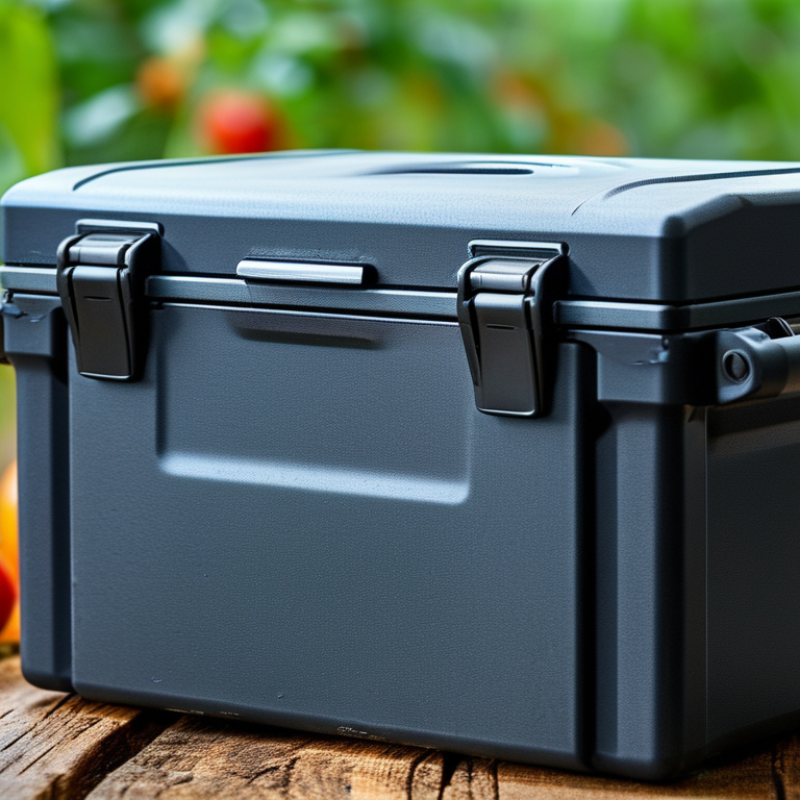
A food cooler is an insulated container designed to slow temperature changes during storage and transport. It may use foam panels, reflective layers, sealed lids, or reusable cooling packs. The goal is simple: protect food quality for longer. However, a cooler does not create cold by itself. Its performance depends on insulation, pack placement, outside temperature, opening frequency, and loading volume.
This matters in global sourcing because food may travel through warehouses, ports, and delivery vehicles before reaching its destination. A weak cooler can cause melted ice, damaged packaging, moisture buildup, or quality loss. Experienced buyers should review internal capacity, wall thickness, drainage, handle strength, and cleaning access. They should also request test data from suppliers. Testing should reflect real shipping conditions, not only a comfortable indoor room. Temperature records can reveal problems that visual inspections miss. Still, even good data has limits. A sample shipment may not represent every season or route.
Tips: Define the required temperature range before comparing prices. Ask for insulation materials and food-contact information. Check whether cooling packs fit without crushing products. Request drop, leak, and temperature-retention tests. Compare total delivered cost, not just the factory price. A slightly cheaper cooler may need stronger outer packaging. That can erase the savings. Suppliers should also explain production lead times, replacement parts, and quality checks. Clear records make communication easier when specifications change.
How to Define Your Cooling, Capacity, and Usage Requirements
Choosing a food cooler for global sourcing starts with measurable cooling requirements, not appearance. Define the target temperature for each product: chilled foods generally need 0–5°C, while frozen goods require about –18°C. USDA guidance advises keeping refrigerators at 4°C or below and freezers at –18°C. Build in a safety margin for hot loading areas and frequent opening.
Capacity should reflect real shipments, not an idealized warehouse. Measure carton dimensions, stacking limits, airflow gaps, and the maximum daily volume. The FAO reported that 14% of food is lost between harvest and retail, with temperature management among the contributing factors. A cooler that is too small may suffer slow recovery after loading. A larger unit may waste energy and space. That trade-off deserves a spreadsheet, not a guess.
Usage conditions can change the specification. Record ambient temperatures, door-opening frequency, transport duration, power availability, and cleaning routines. The UNEP Food Waste Index 2024 estimated 1.05 billion tonnes of food waste in 2022, showing why reliable handling matters. For international sourcing, verify voltage, plug compatibility, insulation performance, and service access before purchase. Ask for test data at your expected ambient temperature. Marketing claims are not enough. I would also test one loaded unit for a week; laboratory results can look excellent, while real handling remains messy.
Which Food Cooler Materials and Designs Offer the Best Performance?
Choosing a food cooler for global sourcing requires more than comparing insulation thickness. Material selection affects safety, durability, cleaning, and shipping cost. EPP is lightweight, resilient, and suitable for repeated commercial handling. HDPE offers a tough outer shell that resists impact and moisture. PP is also practical, especially for molded lids and internal parts. However, material performance depends on wall thickness, density, and manufacturing quality. A cheaper cooler may lose cold air quickly through weak seams.
Tips: Check food-contact documentation for each target market. Request test data for insulation, drop resistance, odor retention, and temperature stability. Inspect samples after cleaning, stacking, and transport simulation. Small flaws matter.
Design details often decide daily performance. A tight gasket reduces warm-air leakage, while a balanced lid prevents uneven pressure. Rounded interior corners make washing easier and reduce residue buildup. Drain plugs can help with melted ice, but poor seals may create leaks. Handles should feel secure with a full load, not only an empty sample. Stackable shapes improve warehouse efficiency, although narrow designs can reduce usable capacity. I have seen attractive coolers fail because their hinges cracked during repeated opening. Appearance is not proof of reliability.
For international sourcing, ask whether replacement parts are available and whether dimensions fit standard pallets. Confirm that labels, coatings, and adhesives meet applicable food-safety requirements. Avoid relying on one laboratory result; independent verification is wiser. A cooler should protect food consistently, not merely perform well during a short showroom demonstration.
How to Evaluate Suppliers, Certifications, Costs, and Lead Times
Selecting a food cooler for global sourcing starts with the supplier, not the color or handle design. Request factory audit records, production photos, and two recent customer references. ISO 9001 supports process control, while ISO 22000 is relevant when food safety management is involved. For food-contact parts, ask for migration test reports aligned with EU Regulation 1935/2004 or applicable national rules. Certification is evidence, not proof. I once saw a valid certificate covering only one factory building.
Material choices affect safety and cost. Ask for insulation density, seam strength, zipper-cycle results, and temperature retention at 2–8°C or other required ranges. Independent laboratories should test samples from actual production batches. The 2023 World Bank Logistics Performance Index shows major differences in customs, infrastructure, and shipment reliability across markets. A low factory price can become expensive after testing, inland transport, duties, and port delays. Calculate landed cost before negotiating.
Lead times need written milestones. Separate sample approval, tooling, raw-material preparation, production, inspection, and ocean freight. UNCTAD’s Review of Maritime Transport 2023 states that over 80% of global trade by volume moves by sea, so port disruption can reshape delivery schedules. Add a realistic buffer. Ten days may be enough for replenishment, but not for new tooling. Confirm minimum order quantities, spare-part availability, carton dimensions, and warranty response times. Suppliers often promise quickly. Sometimes, the spreadsheet is too optimistic.
How to Compare Samples and Select the Right Global Sourcing Partner
How to Choose the Best Food Cooler for Global Sourcing?
When comparing food cooler samples, test identical units under identical conditions. Fill each cooler with the same chilled load. Record internal temperatures at regular intervals. Check performance after opening the lid repeatedly. Small differences can reveal weak insulation or poor sealing.
I once trusted an attractive sample too quickly. Its hinge loosened during repeated use. That mistake changed my evaluation process. Inspect gasket contact, handle strength, drainage, wall thickness, and cleaning access. Ask for material specifications, test reports, production photos, and traceability records. A reliable sourcing partner should explain how samples match mass production. Request a second sample from a different production batch. Consistency matters more than one excellent unit.
Tips: Use a simple scorecard. Rate temperature retention, durability, usability, documentation, communication, and delivery control. Ask suppliers to explain failures, not only strengths. Visit the facility when practical, or arrange an independent quality inspection. Check whether corrective actions include evidence and deadlines. Clarify minimum order quantities, packaging details, lead times, replacement procedures, and sampling methods. A partner who answers precisely is valuable. A partner who avoids difficult questions deserves caution. Still, even careful evaluations can miss problems. Leave room for independent testing before placing a large order.