
Skip to content

How to Choose Biodegradable Non Woven Fabric?

Choosing Biodegradable Non Woven Fabric is not simply a matter of selecting a “green” label. The material must perform reliably before it begins to break down. In a hospital gown, shopping bag, or agricultural cover, softness, strength, breathability, and moisture resistance remain important. A weak fabric can create waste faster than a durable one.

Dr. Seshadri Ramkumar, a textile materials scientist, offers a practical principle: “Sustainable nonwovens must perform in use and return responsibly after use.” This idea should guide every purchasing decision. Examine the fiber source, bonding method, chemical additives, and expected degradation environment. PLA, cellulose, starch-based fibers, and other bio-based materials do not behave identically. Some require industrial composting. Others degrade slowly in ordinary soil or may not degrade effectively in landfill conditions.

Reliable selection requires evidence, not attractive packaging. Ask suppliers for third-party certifications, test reports, fiber-content declarations, and clear disposal instructions. Check whether the product maintains its structure during storage and use. Rub a sample between your fingers. Stretch it gently. Notice loose fibers, odor, and uneven bonding. Small details matter.

There is no perfect material.

A fabric advertised as biodegradable may still carry synthetic finishes or unsuitable dyes. This is where careful review becomes essential. Buyers should compare durability, carbon impact, end-of-life options, and local waste systems. The best Biodegradable Non Woven Fabric is not automatically the fastest to decompose. It is the material that meets its purpose, avoids unnecessary harm, and has a realistic recovery pathway after use.
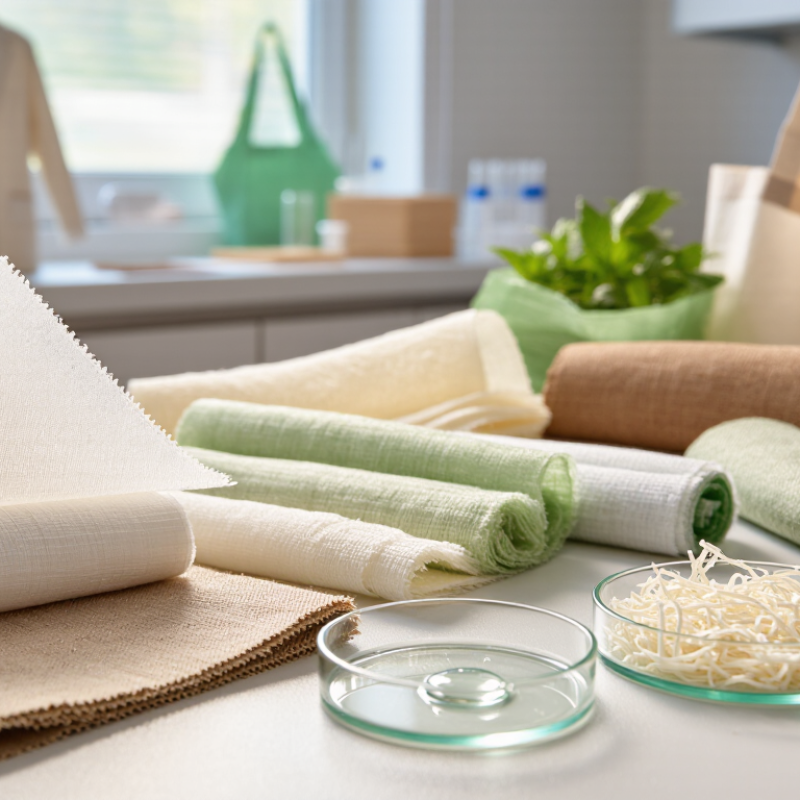
How to Choose Biodegradable Non Woven Fabric?

Define Biodegradable Non Woven Fabric and Its Environmental Benefits

Biodegradable non woven fabric is a sheet material made from fibers that can break down through biological activity. Unlike woven cloth, its fibers are bonded by heat, pressure, water, or approved binders. Common options include plant-based fibers, cellulose, and certain compostable polymers. However, “biodegradable” does not mean it disappears everywhere.

The breakdown process depends on moisture, temperature, oxygen, microbes, and time. A fabric may decompose in an industrial composting facility but remain unchanged in a dry landfill. Therefore, buyers should check laboratory test reports, disposal conditions, fiber composition, and chemical treatments. A useful specification should state the expected environment and degradation period clearly.

Its environmental benefits can be practical. Lightweight rolls may reduce transport emissions and packaging weight. Natural or compostable fibers can also lower dependence on fossil-based plastics.

In agricultural use, a suitable fabric may reduce plastic fragments left in soil. Still, the material is not a perfect solution. Some coatings, dyes, or mixed fibers can slow decomposition.

A fabric that feels eco-friendly may perform poorly after rain or handling. Choosing responsibly means comparing durability, verified biodegradability, production resources, and realistic disposal access. Small details matter.

Identify the Raw Materials and Biodegradation Standards

Choosing biodegradable non woven fabric starts with its raw material, not its marketing label. Common options include cellulose, starch blends, polylactic acid (PLA), and polyhydroxyalkanoates (PHA). Cellulose feels like paper and can suit wipes or packaging. PLA offers better strength, but usually needs industrial composting. The Textile Exchange Materials Market Report 2024 estimates global fiber production reached 124 million tonnes in 2023. It may reach 160 million tonnes by 2030. European Bioplastics reported approximately 2.18 million tonnes of global bioplastics production capacity in 2023. These figures show why material selection deserves careful attention.

Biodegradation claims must name the testing environment. EN 13432 evaluates industrial compostability, including disintegration and biodegradation. ASTM D6400 covers similar requirements for compostable plastics in controlled facilities. ISO 14855 measures aerobic biodegradation under controlled composting conditions. These standards do not prove that fabric will disappear in soil, seawater, or a household compost bin. A supplier should provide the test method, laboratory, sample thickness, and certificate scope. Thicker fabric can behave differently from thin film. This is often overlooked.

Tips: Request a full technical data sheet and an independent test report. Check whether adhesives, dyes, coatings, and elastic fibers are included. Ask where the product should be discarded. I would not trust “100% biodegradable” without a defined timeframe and environment. Even PLA may remain intact when local composting infrastructure is unavailable. A small real-use trial can reveal unexpected shedding, odor, or slow breakdown.

Compare Fabric Properties for Your Intended Application

Choosing biodegradable nonwoven fabric starts with the application, not the sustainability label. A nursery cover needs light transmission, airflow, and tear resistance. A dry packaging liner may need softness, printability, and stable dimensions. For absorbent products, compare liquid retention, wicking speed, and wet strength. These properties can conflict.

In practical material evaluations, I compare basis weight, thickness, tensile strength, elongation, and air permeability. A heavier fabric often feels stronger, but it may restrict airflow and increase material use. A soft fabric can improve handling, yet it may stretch during cutting or sealing. Test samples under actual conditions. Fold them, dampen them, pull them, and expose them to expected storage temperatures. Laboratory data is useful, but factory behavior can differ.

Degradation also requires careful comparison. Ask whether the fabric breaks down under industrial composting, home composting, soil contact, or another defined environment. “Biodegradable” alone is incomplete. Check test methods, timeframes, additives, and certification documents. I once focused too heavily on compostability and overlooked seam strength. The final structure failed during packing. That mistake was avoidable. Small trials reveal weaknesses early. Compare three fabric options using the same size, load, humidity, and processing method. Record changes in color, odor, strength, and surface texture. Recheck supplier data regularly, because fiber blends and production settings may change.

Evaluate Manufacturing Quality, Certifications, and Supplier Practices

Choosing biodegradable non woven fabric requires more than checking the word “biodegradable.” Manufacturing quality, certifications, and supplier practices reveal whether the material fits your project. Inspect the fabric’s weight, thickness, fiber distribution, and tensile strength. Uneven surfaces may cause weak seams or poor filtration. Request production samples, not only polished catalog pieces. I have found that small roll samples often expose inconsistencies hidden in larger presentations.

Tips: Ask for a specification sheet, batch records, and independent test reports. Confirm the testing method, laboratory, and test date. A certificate without clear scope is only paper. Check whether it covers the exact fabric, coating, and production site. Also review biodegradation conditions, such as industrial composting or soil exposure. These conditions are not interchangeable.

Supplier behavior matters just as much. Reliable suppliers explain fiber sources, additives, dye systems, and waste handling without vague promises. During an audit, observe covered raw materials, clean storage areas, calibrated testing equipment, and documented quality checks. Ask how rejected rolls are identified and controlled. Strong suppliers welcome these questions. Some may still lack perfect traceability, especially across complex supply chains. That should not be ignored. Record the gap and request a practical improvement plan, with dates and responsible personnel. Verify certifications through the issuing organization when possible, and compare recent test results against your actual use conditions.

Choose the Best Fabric Based on Cost, Performance, and Disposal Needs

How to Choose Biodegradable Non Woven Fabric?

Cost should be measured per usable item, not per roll. A fabric that costs less per roll may cost more per finished item. Check its weight, yield, cutting waste, and required thickness. Thin material may suit dry packaging, while heavier fabric works better for bags or protective covers. In my experience, choosing the cheapest option often creates weak seams and repeated production losses. That lesson is easy to overlook.

Performance must match the product’s real working conditions. Test tensile strength, tear resistance, softness, moisture behavior, and air permeability. A medical-style cover needs reliable barrier performance. A seedling pouch may need water flow and gradual breakdown. Ask for test reports, material composition, and production consistency. Do not trust the word “biodegradable” alone. It can describe very different breakdown conditions.

Disposal needs deserve equal attention. Some fabrics degrade only in controlled industrial composting facilities. Others may require commercial collection, heat, moisture, or microbial activity. Confirm local disposal options before selecting the material. A certified compostable fabric may still fail in a household compost bin. This is the uncomfortable part. The greener choice on paper may become ordinary waste in practice. Review the full use cycle, including packaging, transport, contamination, and end-of-life handling.

How to Choose Biodegradable Non-Woven Fabric

Comparison based on relative cost efficiency, functional performance, and end-of-life suitability.

Cellulose-based non-woven fabric generally offers the clearest composting profile and strong cost efficiency, but its wet strength can be limited unless treated. PLA provides better mechanical performance and is suitable for industrial composting where facilities are available. PHA offers good biodegradability and performance but typically has a higher material cost. Starch-blend fabrics provide a balanced option, although their disposal behavior depends on the blend and additives.

Scores are comparative screening values from 1 to 5: higher scores indicate better cost efficiency, functional performance, or disposal suitability. Actual results vary with fiber blend, basis weight, finishing, product design, and local composting infrastructure.

“Guardian has been a tremendous help in providing storage and distribution solutions for AIR Global. We came to Guardian with a need, and they quickly found a solution for us at a very reasonable price. Our business is very demanding, especially during busy periods, and Guardian has been flexible and able to accommodate all requests with less than 48 hours’ notice. April, our main contact, has been extremely helpful in making sure our orders are shipped on time and that our inventory is accurate. I highly recommend using Guardian and look forward to continuing our relationship for many years to come.”

Matt Buffington
Director of Supply and Operations
Americas

“The Guardian Logistics Team is responsive and helpful on a consistent basis.  This removes a tremendous amount of stress and gives us incentive to route cargo that will touch your dock. Thanks for all that you do!!!”

Charles Reel
Branch Manager
Scan Global Logistics

“I recommend with great confidence, Guardian Logistics Solutions and owner, Brent Smith to whomever needs top shelf deliveries including Last Mile, White Glove, Residential and Commercial.

I have known GLS since its inception. Guardian is always looking for the right answer to solve the customer’s problem. I can, without hesitation, recommend Guardian Logistics to any company that is looking for the best service in their coverage area. They will team with you to create a solution that suits your needs and ensure you are satisfied with the outcome.”

Steven T. Nelson

“I highly recommend Guardian Logistics Solutions. The professionalism and communications offered by the team, along with speediness, cost saving solutions and attitude is a testament to the fact that this is one of the most important partners you can have in the freight movement business.

The company offers exemplary service, they continuously exceed our expectations and that of the importers, they help us service, Guardian Logistics Solutions is the best solid business partner you should add to your company.”

Ubaldo Sierra
Maersk Customs Brokers
General Manager

“Guardian Logistic Solutions is one of those rare companies who under-promise-and-over-deliver EVERY single time!”

James Burke
Manager, Sales Team
OLIMP Warehousing

“I want to thank the team at Guardian for the excellent service we have received.
The shipments have been professionally handled and freight arrives timely and in good order at a fair price. Communication is a very important part of the handling and Guardian does a great job of communication through the delivery.”

Cheri Zetrouer
Access Worldwide
Customs Brokers & Freight Forwarders

“I am very lucky to have found Guardian Logistics to help with our freight needs.  Our business is a bit unique in that we only receive a shipment every 2-3 months and we have to stick to a very strict time schedule in order to unload the delivery.  We found it virtually impossible to consistently coordinate with logistics companies to have shipments arrive on time and when they were expected. After multiple frustrating scenarios, our broker introduced us to Guardian Logistics who handled all of our shipments recently to perfection. Our shipments have arrived on time, when expected, with friendly and helpful drivers.  We will only be using Guardian moving forward for all of our shipping and freight needs. I couldn’t recommend them strongly enough!”

Trey Conrad
Owner
Patriot Power Source

“We have been working with the Guardian company for several years now and I can say without a doubt that their entire team cares about the service they provide. Their personal interest in their customers’ success makes them a standout in the world of final mile delivery.

I highly recommend Guardian for anyone requiring outstanding services in warehousing and final mile delivery programs.”

Frank Ianucilli
Director of Final Mile Operations
Werner Enterprises

“At WeFixFreight.com, client satisfaction is our main priority.  We are proud to partner with the top notch team at Guardian to bring our customers nothing but the best service when it comes to freight reworks, cross docking services, and final mile delivery.”

Bill Carlin
CEO
WeFixFreight.Com

“The Guardian Logistics staff has always been exceptional, and these days, with all the competition out there, it’s the service that matters. We appreciate all they do and look forward to continuing our business with GLS.”

Cathy Avolio
Ocean Import Manager
Mallory Alexander Int'l Logistics (NY), LLC
Back To Top