Skip to content

How to Choose a Rotary Pouch Packing Machine?

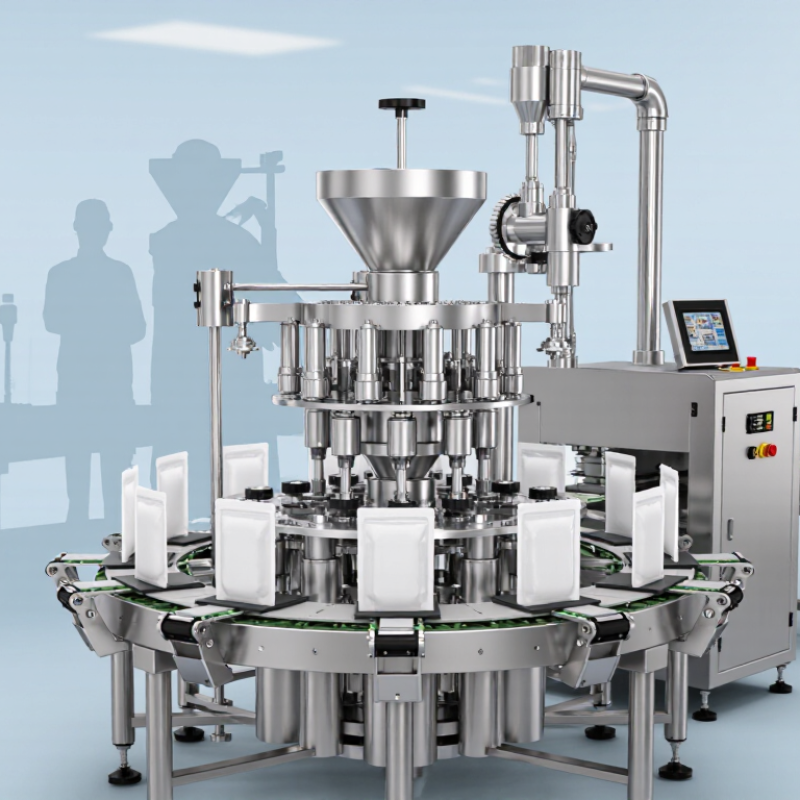
Choosing a rotary pouch packing machine is not simply a matter of comparing speeds. It is a production decision involving product behavior, pouch material, filling accuracy, labor, maintenance, and future demand. A machine may look impressive in a showroom, yet struggle with sticky powder or irregular granules on a busy factory floor.

PMMI market-development expert Jorge Izquierdo has emphasized, “The most important thing is to understand the process and the product.” That principle remains practical. Before reviewing machine models, manufacturers should test the product’s flow, density, moisture, and particle size. They should also examine pouch width, seal structure, filling range, and target output. Small details matter. A weak seal can waste an entire production shift.

A reliable rotary pouch packing machine should offer stable indexing, accurate dosing, accessible changeover parts, and clear operator controls. Hygienic design also deserves close attention, especially around product-contact areas and dust collection points. Experienced teams should request sample runs using their own materials, not only factory demonstrations. Ask for measured results, including seal strength, giveaway, downtime, and rejected pouch rates.

No checklist is perfect. A machine that suits one plant may disappoint another. Budget pressure can also hide long-term costs. Energy use, spare parts, training, and service response should be considered honestly. This guide explains how to compare these factors, identify avoidable risks, and select equipment that supports dependable production rather than impressive promises.
How to Choose a Rotary Pouch Packing Machine?

Define Your Product and Packaging Requirements

How to Choose a Rotary Pouch Packing Machine?

Define Your Product and Packaging Requirements

Your product should determine the machine, not the other way around. Start with its shape, density, moisture, temperature, and flow behavior. Powdered ingredients may bridge inside the hopper, while oily snacks can contaminate sealing jaws. Granules may require a multihead weigher for stable dosing.

Measure the target fill weight and acceptable variation. Then define pouch width, height, zipper needs, seal style, and film structure. A 2024 report from the Flexible Packaging Association valued the U.S. flexible packaging market at approximately $40 billion in 2023. This scale reflects strong demand, but every product still needs individual testing. Flexible film is not automatically suitable for every barrier requirement.

Consider oxygen, moisture, light, and aroma protection. A food product may need high-barrier laminate, while a dry household product may need a simpler structure. Review the sealing temperature range and friction of the film. Small differences can create wrinkles, weak seals, or leaking corners.

Ask for trials using your actual product and film. Watch the feed path closely. Does powder settle on the seal? Do irregular pieces damage the pouch? These observations matter more than a brochure’s maximum speed. PMMI’s 2024 State of the Industry report recorded U.S. packaging machinery shipments of about $10.2 billion in 2023, showing a mature equipment market. Yet advertised speed can mislead. Real output falls during film changes, cleaning, and adjustments. Build your specification around dependable production, not perfect test conditions.

Compare Rotary Pouch Machine Types and Operating Features

Choosing a rotary pouch packing machine requires more than comparing speed figures. The pouch material, product texture, and required seal quality matter equally. A practical evaluation should begin with daily production volume and pouch dimensions.

Intermittent-motion rotary machines suit products needing accurate dosing and careful sealing. They pause during filling and sealing, which can improve control for powders, granules, and irregular pieces. Continuous-motion models run faster and reduce stopping time. However, they may require more precise product flow and timing. Check whether the machine supports premade pouches, zipper pouches, spouted pouches, or flat sachets. Flexibility sounds useful, but unused options can increase maintenance work.

Operating features deserve close attention. Servo-driven dosing improves repeatability, while load cells can verify fill weight during production. Adjustable sealing temperature and pressure help protect delicate films. A clear touchscreen, recipe storage, and fault history can shorten operator training. Automatic film tracking is valuable when film edges shift slightly. It still needs regular inspection. Sensors should detect empty pouches, open seals, and product trapped in the sealing area. Washdown design, tool-free access, and stainless-steel contact parts support cleaner changeovers. In production reviews, changeover time is often underestimated. Measure the full process, including cleaning, adjustment, and test packs. A faster machine may become less productive when operators struggle with access or frequent adjustments. Reliability also depends on spare-part availability, service response, and documented operating procedures.

How to Choose a Rotary Pouch Packing Machine?

Compare typical throughput and operating features of common rotary pouch machine configurations.

Intermittent-Motion Rotary

A flexible choice for standard premade pouches, powders, granules, and irregular products. It generally offers easier changeovers and moderate speed.

Continuous-Motion Rotary

Designed for higher output with reduced stopping between stations. It is suitable for stable products and production lines that prioritize speed.

Vacuum Rotary

Removes air before sealing and is commonly selected for meat, seafood, cheese, and other products where reduced oxygen exposure is important.

MAP / Gas-Flushing Rotary

Replaces pouch air with a controlled gas mixture before sealing. It supports products that require a modified atmosphere and careful seal integrity.

The chart shows representative midpoints of common industry operating ranges: approximately 30–60, 60–100, 20–50, and 20–40 pouches per minute respectively. Actual output depends on pouch size, filling volume, product characteristics, sealing time, and the number of machine stations.

Evaluate Capacity, Accuracy, and Pouch Size Compatibility

How to Choose a Rotary Pouch Packing Machine?

Capacity, accuracy, and pouch size compatibility should guide your machine selection. A machine rated for 60 pouches per minute may slow down with heavy products, wide pouches, or delicate materials. Check the practical output, not only the advertised speed. Ask for trial data using your actual product, pouch film, and target weight.

Accuracy depends on the filling system, product flow, and weighing method. Granules may require a different filler from powders or irregular pieces. During testing, record ten or more consecutive weights. Small variations can become expensive over a long production shift.

I have seen teams focus on speed and overlook seal consistency. That mistake is easy to make. Inspect the seal width, temperature stability, and rejected pouch rate.

Pouch compatibility also needs careful checking. Confirm the minimum and maximum pouch width, height, thickness, zipper position, and spout location. A machine may handle several formats, but frequent size changes can reduce output. Changeover time matters.

Tips: Bring real pouches to the factory trial. Test the smallest and largest sizes. Leave room for future products, but do not pay for unused capacity. Write down every setting, result, and adjustment. My own preference is to repeat difficult tests, because one successful run can create false confidence.

Check Materials, Automation, Sanitation, and Safety Standards

Choosing a rotary pouch packing machine begins with the material, not the advertised speed. Film thickness, sealability, pouch size, powder flow, and product moisture all affect performance. A machine that handles dry granules may struggle with sticky products. Test your actual material before purchase. Small trials reveal problems that brochures often hide.

Automation should match your operators and production volume. Servo-driven filling, automatic film tracking, weight feedback, and recipe storage can improve consistency. Sensors should detect empty pockets, sealing faults, and film misalignment. I once underestimated changeover time; cleaning and format adjustments reduced daily output more than expected. Simple controls may be better than excessive automation.

Sanitation requires practical access. Choose smooth stainless-steel surfaces, removable contact parts, protected wiring, and designs that prevent product buildup. Check whether tools are needed for routine cleaning. Shorter cleaning routes matter. Safety cannot be treated as an optional feature. Confirm guarding, door interlocks, emergency stops, overload protection, and clear lockout procedures. Ask for risk-assessment documents and evidence of conformity with applicable local and industry standards. Do not accept vague claims. Review manuals, inspection records, and operator training requirements. A machine may meet a standard on paper, yet still create awkward cleaning or maintenance risks on the factory floor.

Assess Installation, Maintenance, Cost, and Supplier Support

How to Choose a Rotary Pouch Packing Machine?

Installation deserves more attention than catalog speed. Measure ceiling height, floor loading, electrical capacity, compressed-air quality, and feeding distances before purchase. A machine that fits the room may still obstruct maintenance access. Request a documented commissioning plan, operator training, and format-change tests using your actual pouch film. PMMI’s State of the Industry reporting placed U.S. packaging machinery shipments at about $10.2 billion in 2022, showing a mature market where integration quality strongly affects investment value.

Maintenance should be judged through evidence, not promises. Ask for lubrication charts, fault-history exports, accessible sensors, and a critical-spares list. The U.S. Department of Energy’s Operations & Maintenance Best Practices guide reports that predictive maintenance can reduce maintenance costs by 25–30% and downtime by 35–45%. Those figures are useful, but not automatic. Poor data collection can make predictive maintenance expensive theater. Check whether technicians can diagnose sealing temperature drift before rejected pouches accumulate.

Cost includes labor, utilities, film waste, training, and lost production. Build a three-year total-cost model, then challenge every assumption. Supplier support matters here. Confirm response times, remote-access procedures, local service coverage, software-update policies, and spare-part availability. Ask for references from facilities with similar pouch sizes and changeover frequency. A low purchase price can become costly after one unavailable servo drive. I would also test the supplier’s honesty: request known limitations, not only performance claims. That conversation often reveals more than a polished demonstration.

“Guardian has been a tremendous help in providing storage and distribution solutions for AIR Global. We came to Guardian with a need, and they quickly found a solution for us at a very reasonable price. Our business is very demanding, especially during busy periods, and Guardian has been flexible and able to accommodate all requests with less than 48 hours’ notice. April, our main contact, has been extremely helpful in making sure our orders are shipped on time and that our inventory is accurate. I highly recommend using Guardian and look forward to continuing our relationship for many years to come.”

Matt Buffington
Director of Supply and Operations
Americas

“The Guardian Logistics Team is responsive and helpful on a consistent basis.  This removes a tremendous amount of stress and gives us incentive to route cargo that will touch your dock. Thanks for all that you do!!!”

Charles Reel
Branch Manager
Scan Global Logistics

“I recommend with great confidence, Guardian Logistics Solutions and owner, Brent Smith to whomever needs top shelf deliveries including Last Mile, White Glove, Residential and Commercial.

I have known GLS since its inception. Guardian is always looking for the right answer to solve the customer’s problem. I can, without hesitation, recommend Guardian Logistics to any company that is looking for the best service in their coverage area. They will team with you to create a solution that suits your needs and ensure you are satisfied with the outcome.”

Steven T. Nelson

“I highly recommend Guardian Logistics Solutions. The professionalism and communications offered by the team, along with speediness, cost saving solutions and attitude is a testament to the fact that this is one of the most important partners you can have in the freight movement business.

The company offers exemplary service, they continuously exceed our expectations and that of the importers, they help us service, Guardian Logistics Solutions is the best solid business partner you should add to your company.”

Ubaldo Sierra
Maersk Customs Brokers
General Manager

“Guardian Logistic Solutions is one of those rare companies who under-promise-and-over-deliver EVERY single time!”

James Burke
Manager, Sales Team
OLIMP Warehousing

“I want to thank the team at Guardian for the excellent service we have received.
The shipments have been professionally handled and freight arrives timely and in good order at a fair price. Communication is a very important part of the handling and Guardian does a great job of communication through the delivery.”

Cheri Zetrouer
Access Worldwide
Customs Brokers & Freight Forwarders

“I am very lucky to have found Guardian Logistics to help with our freight needs.  Our business is a bit unique in that we only receive a shipment every 2-3 months and we have to stick to a very strict time schedule in order to unload the delivery.  We found it virtually impossible to consistently coordinate with logistics companies to have shipments arrive on time and when they were expected. After multiple frustrating scenarios, our broker introduced us to Guardian Logistics who handled all of our shipments recently to perfection. Our shipments have arrived on time, when expected, with friendly and helpful drivers.  We will only be using Guardian moving forward for all of our shipping and freight needs. I couldn’t recommend them strongly enough!”

Trey Conrad
Owner
Patriot Power Source

“We have been working with the Guardian company for several years now and I can say without a doubt that their entire team cares about the service they provide. Their personal interest in their customers’ success makes them a standout in the world of final mile delivery.

I highly recommend Guardian for anyone requiring outstanding services in warehousing and final mile delivery programs.”

Frank Ianucilli
Director of Final Mile Operations
Werner Enterprises

“At WeFixFreight.com, client satisfaction is our main priority.  We are proud to partner with the top notch team at Guardian to bring our customers nothing but the best service when it comes to freight reworks, cross docking services, and final mile delivery.”

Bill Carlin
CEO
WeFixFreight.Com

“The Guardian Logistics staff has always been exceptional, and these days, with all the competition out there, it’s the service that matters. We appreciate all they do and look forward to continuing our business with GLS.”

Cathy Avolio
Ocean Import Manager
Mallory Alexander Int'l Logistics (NY), LLC
Back To Top