How to Choose the Right Tipper Vehicle for Your Business?
Choosing the right Tipper Vehicle can determine whether a business gains steady profit or absorbs avoidable costs. The decision reaches beyond payload figures and purchase price. It affects loading speed, fuel use, tyre wear, driver comfort, maintenance intervals, and daily delivery capacity. A truck carrying wet sand on steep construction roads faces different demands from one moving agricultural grain across flat highways.
Tom Berg, a respected trucking industry writer, offers a useful principle: “The right truck must match the work, not merely the buyer’s ambition.” That advice deserves careful attention. A larger body may appear productive, but it can waste fuel when loads are light. An underpowered engine may struggle on gradients. Small details matter, too, including hydraulic response, tipping angle, body material, axle configuration, and ground clearance.
Begin with real operating evidence. Record average payloads, route distances, loading conditions, turnaround times, and seasonal changes. Speak with drivers and maintenance technicians. They often notice problems that brochures hide. Check dealer support, parts availability, warranty coverage, and resale expectations before signing an order. Reliability is not an abstract promise; it is a truck returning to work after a demanding shift.
My first choice might still prove wrong if I ignore local terrain or customer requirements. That is worth admitting. A careful comparison should include whole-life cost, not just the invoice. The best Tipper Vehicle is rarely the most powerful option. It is the one that performs consistently, safely, and economically under your actual working conditions.
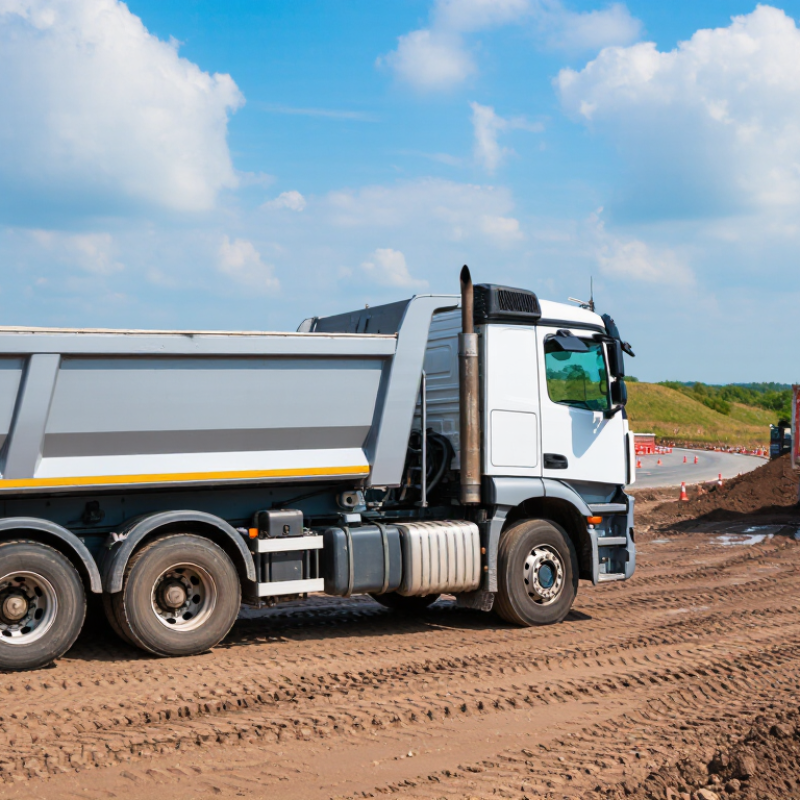
Define Payload and GVW: Compare 3.5–44 t Tipper Classes (UNECE)
Choosing a tipper vehicle starts with two numbers: payload and GVW. Payload is the material you can legally carry. GVW includes the empty vehicle, fuel, driver, tools, body, and payload. A 10-ton payload does not mean a 10-ton truck. The chassis and body already consume part of its permitted mass. Check the compliance plate, axle limits, and manufacturer data before comparing quotations.
For urban maintenance, a 3.5-ton tipper offers easier access and lower operating weight. Its payload may fall near one ton after adding equipment and a reinforced body. Vehicles above 3.5 and up to 12 tons suit regional deliveries, construction work, and moderate aggregate loads. Around 18 to 26 tons, operators gain capacity but face tighter turning spaces, stronger road requirements, and higher fuel use. Larger 32 to 44-ton combinations can move substantial loads efficiently on approved routes. UNECE vehicle categories help frame this range, but national rules and registration limits still require verification.
I once underestimated body weight during a fleet calculation. The result looked efficient on paper, yet the usable payload was disappointing. Measure typical material density, loading height, route distance, and daily cycle time. Wet soil can exceed an estimate quickly. Keep a practical margin below maximum GVW, especially when loads vary. Weighbridge records, axle distribution, tyre capacity, and suspension specifications provide stronger evidence than sales claims.
Smaller may be wiser.
Sometimes, not always.
Size the Body with Aggregate Density Data: Typically 1.5–1.8 t/m³
How to Choose the Right Tipper Vehicle for Your Business?
The correct tipper vehicle starts with material density, not body appearance. Aggregate commonly weighs 1.5–1.8 tonnes per cubic metre. A 10 m³ body may therefore carry 15–18 tonnes of material. That difference is significant. It affects fuel use, payload efficiency, braking, and daily productivity.
Use current density data from your quarry or supplier. Then verify it with weighbridge records from real deliveries. Moisture can increase weight, while loose loading can create empty spaces. Check the scale. Before choosing a vehicle, compare the expected payload with its tare weight, axle limits, and local road requirements. A large body is not always better. Overfilling can reduce stability and create unnecessary operating costs.
Choose the body size using the highest realistic density. For example, 12 m³ of aggregate at 1.8 tonnes per cubic metre equals 21.6 tonnes of payload. A vehicle rated for only 20 tonnes cannot safely use that full volume. At 1.5 tonnes per cubic metre, the same body carries about 18 tonnes. Leave practical headroom for wet material and uneven loading. I once treated a supplier’s density figure as fixed. It was not. Seasonal changes and different stone types quickly exposed that mistake. Record actual loads for several weeks, then adjust the body size based on evidence rather than assumptions.
Match Engine and Hydraulics Using SAE J1349 Power Ratings
Choosing the right tipper vehicle depends on more than payload capacity. Engine output must support the hydraulic system during repeated lifting cycles. SAE J1349 defines net engine power under controlled conditions, including temperature, pressure, and testing procedures. This creates a useful comparison point. However, the rated figure is not the power available at the wheels or hydraulic pump.
Match the engine’s usable torque range with the pump’s pressure and flow requirements. A system delivering 180 litres per minute at 250 bar needs about 75 kW of hydraulic power before mechanical losses. The engine must provide additional power for the PTO, transmission, cooling fan, and accessories. Choose an engine that maintains strong torque at working speed, not only peak horsepower at high rpm. Measure it loaded.
Consider the route, material density, gradient, and daily tipping frequency. A vehicle operating at high altitude or in extreme heat may lose practical performance, even when its SAE J1349 rating looks sufficient. Ask for derating data and verify PTO efficiency. A common mistake is selecting a pump from its maximum pressure alone. Flow determines cycle speed, while pressure supports lifting force. Both affect fuel use and component temperature. The first spreadsheet is rarely right. Check the figures against a real loading cycle, then leave a sensible reserve for wear, uneven ground, and occasional overloads within the vehicle’s rated limits.
Compare Five-Year TCO, Then Verify EU 11.5 t Drive-Axle Limits (96/53/EC)
Choosing a tipper vehicle should begin with a five-year total cost of ownership model, not the purchase price. Include fuel, financing, insurance, tyres, servicing, depreciation, driver time, and resale value. Payload matters too. A heavier chassis may reduce payload on every trip.
The EU axle check is critical. Directive 96/53/EC sets 11.5 tonnes as the maximum load for a motor vehicle’s driving axle under the standard framework. However, national implementation, road signs, seasonal restrictions, and weighing procedures can change the practical limit. Confirm the axle layout, suspension setting, and real load distribution before ordering. A full body of wet aggregate can move weight forward quickly. Small errors compound.
The European Commission’s EU Transport in Figures shows road transport carrying roughly three-quarters of inland freight in the EU, so utilisation strongly affects TCO. IRU’s 2024 driver shortage report estimated 426,000 unfilled truck-driver positions in Europe during 2023. Downtime deserves a line in the spreadsheet. My first-pass model would use actual route distances, payload records, fuel receipts, and workshop invoices. That estimate is never perfect. Measure it. Then test a low-utilisation case, because five-year savings can disappear when loads, drivers, or permitted routes change.