How to Choose Thermal Print Paper for Your Business?
Choosing Thermal Print Paper is a purchasing decision, not a minor supply task. It affects barcode clarity, customer receipts, inventory records, and printer maintenance. A faded receipt can damage trust within seconds. So can a paper roll that jams during a busy checkout.
Market reports show why this category deserves closer attention. Grand View Research estimates that the global thermal paper market was worth about USD 4.2 billion in 2023, with continued growth expected through 2030. Smithers also identifies retail, logistics, healthcare, and transportation as major demand sectors in its thermal-paper market analysis. However, reported values differ by research method and product definition. That uncertainty deserves attention.
As Koehler Paper CEO Dr. Frank Böhmer has stated, “Thermal paper is a functional paper, not merely a printing surface.” The point is practical. Thermal sensitivity, coating uniformity, roll dimensions, and image durability all influence performance. A warehouse label may face abrasion, moisture, or sunlight. A pharmacy receipt may require sharper, longer-lasting text. A restaurant roll may need reliable printing during repeated, high-speed transactions.
The best choice begins with usage conditions. Check the printer model, core size, roll width, paper length, storage environment, and required image life. Ask whether phenol-free or BPA-free materials suit your sustainability and compliance goals. Do not choose by price alone. Cheap rolls can produce dust, grey backgrounds, or uneven images. That becomes expensive later.
A useful conclusion is not always a perfect one. Test two or three samples first. Measure print contrast, feeding stability, and readability after storage. Your actual workflow may challenge the specification sheet. That is where responsible selection begins.
Understanding Thermal Paper Types and Printing Technologies
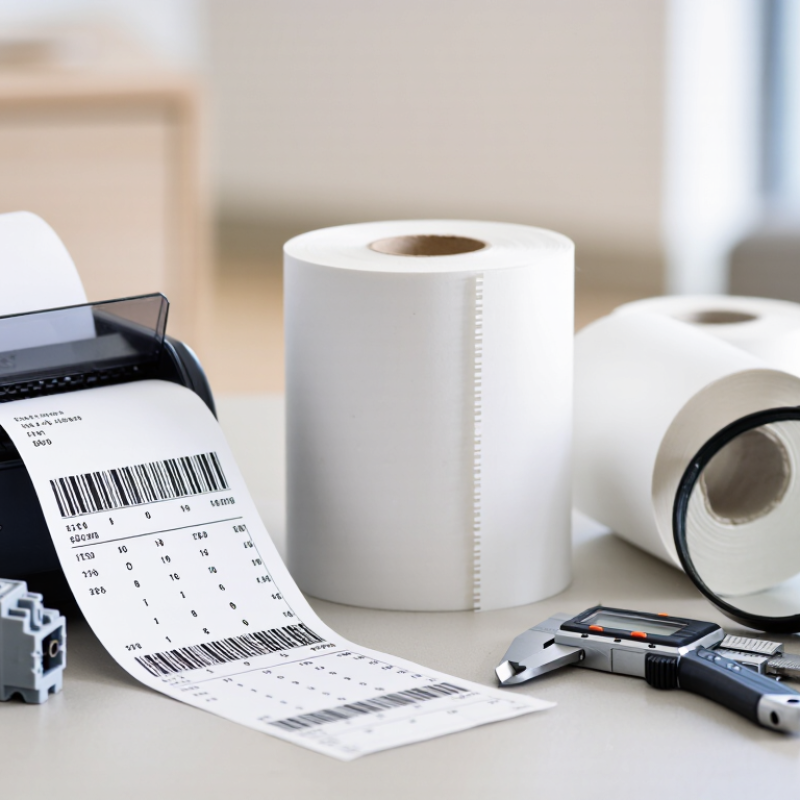
Choosing thermal paper starts with understanding the printing technology, not the lowest roll price. Direct thermal paper reacts to heat from the printhead. It needs no ribbon, making it suitable for receipts, queue tickets, and short-term labels. However, sunlight, friction, and heat can darken or fade the image. Thermal transfer printing uses a ribbon to move ink onto the surface. It usually provides better durability for shipping labels, inventory tags, and outdoor applications.
Market data supports careful selection. Fortune Business Insights valued the global thermal paper market at about USD 4.26 billion in 2023 and expects continued growth through 2032. Smithers’ thermal printing research also highlights retail, logistics, healthcare, and manufacturing as important demand areas. These sectors have different requirements. A checkout receipt may need readability for weeks. A warehouse label may need to survive moisture, abrasion, and temperature changes. Paper thickness, coating quality, roll width, and core size must match the printer. Small mismatches create jams.
Tips: Test several samples before buying in bulk. Print dense black bars, small text, and barcodes. Leave samples near a window and rub them with a coin. Compare them after one week. I would not trust a laboratory claim alone; real storage conditions can be messier. Also check whether the paper contains unwanted chemical developers and request current safety documentation from the supplier. A lower-cost roll may look efficient, but poor contrast can slow scanning and increase waste.
How to Choose Thermal Print Paper for Your Business?
Thermal paper selection depends on the required image life, exposure conditions, print speed, and operating environment. Direct thermal media is suitable for short-term receipts and tickets, while thermal transfer media is generally preferred when labels must remain readable for several years.
Interpretation: Standard direct thermal paper is best for short-term applications such as receipts, queue tickets, and delivery records. Premium direct thermal paper provides better resistance to fading. Wax thermal transfer is suitable for general-purpose labels, while resin thermal transfer offers the longest durability for demanding applications involving abrasion, chemicals, moisture, or outdoor exposure. Actual performance varies with coating quality, storage conditions, sunlight, heat, humidity, and handling.
Matching Paper Size, Thickness, and Roll Specifications to Your Equipment
How to Choose Thermal Print Paper for Your Business?
Paper specifications should begin with the printer, not the supplier’s catalog. Measure the print path, roll width, core diameter, and maximum outer diameter. A small mobile printer may accept 57 mm paper with a 12 mm core. Many counter systems use 80 mm rolls and larger cores. Even a two-millimeter width error can cause skewing, jams, or incomplete receipts. Check the equipment manual carefully.
Thickness also changes capacity. Common thermal stock ranges from about 55 to 80 microns. Thicker paper feels stronger but reduces the number of labels or receipts per roll. Smithers’ thermal printing market outlook identifies retail, logistics, and healthcare as major application areas through 2029. These sectors need different compromises. Shipping labels may require stronger stock, while short receipts prioritize roll length and smooth feeding. Test paper at the printer’s highest rated speed.
The GS1 General Specifications require clear symbols, proper dimensions, and sufficient quiet zones for reliable scanning. Paper coating affects contrast, barcode edges, and resistance to moisture or friction. Storage matters too. Keep rolls away from sunlight, heat, plasticizers, and cleaning chemicals. ISO 18911 provides guidance for storage conditions. In practice, I have seen low-cost rolls fade before the warranty period ends. That assumption needs testing, not confidence. Run a sample batch, inspect dark areas, and compare the first and last meters of each roll.
How to Choose Thermal Print Paper for Your Business? - Matching Paper Size, Thickness, and Roll Specifications to Your Equipment
| Typical Business Use | Recommended Paper Width | Common Roll Length | Typical Thickness | Common Core Size | Typical Maximum Roll Diameter | Equipment Compatibility Check |
| Compact receipt printers, mobile POS devices, kiosks | 57–58 mm | 10–18 m | 55–65 microns | 12 mm or 17.5 mm | Approximately 40–50 mm | Confirm the printer supports 58 mm paper and check the holder width, core diameter, and permitted roll diameter. |
| Standard retail POS terminals and restaurant receipt printers | 79–80 mm | 50–80 m | 55–75 microns | 12 mm, 17.5 mm, or 25 mm | Approximately 70–83 mm | Measure the paper path and verify whether the printer accepts 80 mm paper rather than 58 mm paper. |
| High-volume checkout counters and supermarket receipt stations | 79–80 mm | 80–150 m | 60–75 microns | 25 mm or 40 mm | Approximately 80–100 mm | Use a longer roll only when the printer compartment provides enough clearance and the roll weight is within the equipment limit. |
| Portable label printers and small barcode printers | 40–60 mm | 10–30 m | 60–80 microns | 12 mm or 25 mm | Approximately 40–60 mm | Check the printable width, sensor position, roll direction, and whether the device requires labels instead of continuous paper. |
| Shipping, warehouse, and logistics label printers | 50–108 mm | 25–100 m for direct thermal labels | 70–100 microns for label stock | 25 mm or 40 mm | Approximately 100–127 mm | Match the label width, gap or black-mark sensor, liner type, winding direction, and maximum outside diameter. |
| Medical, laboratory, and prescription printers | 57–80 mm | 20–60 m | 55–75 microns | 12 mm, 17.5 mm, or 25 mm | Approximately 50–80 mm | Verify required paper width, image durability, low-dust performance, and storage requirements for records. |
| Parking, ticketing, and queue-management terminals | 57–80 mm | 30–100 m | 65–85 microns | 12 mm, 25 mm, or 40 mm | Approximately 70–100 mm | Choose a thickness that feeds reliably and confirm resistance to light, heat, moisture, and frequent handling. |
Selection note: Dimensions shown are common commercial ranges, not universal specifications. Always compare the printer manual or equipment label with the roll width, core diameter, outside diameter, winding direction, and maximum supported paper thickness before purchasing.
Evaluating Print Quality, Durability, and Environmental Requirements
Choosing thermal print paper starts with the job, not the lowest price. In my testing, clear text depends on coating consistency, printer heat, and storage conditions. A receipt should show sharp characters without gray edges or missing lines. Test several rolls with real layouts, including small fonts, barcodes, and dense totals. If a barcode scans slowly, the paper may not suit your equipment. Print quality can change as print heads age. That detail is easy to miss.
Tips: Keep sample rolls for side-by-side checks. Rub printed areas lightly with a coin or fingernail. If marks fade quickly, durability may be weak. Expose samples briefly to heat, moisture, and sunlight, while recording the conditions. Do not rely on one dramatic test. It may not represent daily use. Ask suppliers for coating specifications and consistent batch data.
Environmental requirements need practical questions. Choose paper size carefully to reduce waste, and avoid printing unnecessary blank space. Look for documented sourcing, recycling guidance, and chemical compliance information. Thermal paper can react to heat inside vehicles or near windows. Store rolls in a cool, dry cabinet, away from direct light. I have seen durable paper fail after poor storage. That was a useful reminder: paper selection and handling work together. Test readability after several weeks, not minutes.
Checking Compatibility, Storage Conditions, and Regulatory Standards
How to Choose Thermal Print Paper for Your Business?
Compatibility should be checked before price. A roll may fit the printer but still produce pale, uneven images. Confirm core size, roll width, diameter, coating direction, and recommended heat sensitivity. Test receipts after repeated printing, not only after one pass. In practical testing, barcode clarity can decline when paper and printer settings do not match. A 2024 Smithers market assessment identifies continued demand for thermal printing in retail, logistics, and healthcare. That growth makes consistent paper selection more important.
Storage conditions directly affect print quality. Industry guidance commonly recommends 20–25°C, 45–65% relative humidity, and protection from sunlight. Keep cartons away from heaters, windows, solvents, and plastic packaging containing migrating chemicals. Use older stock first. Poor storage may cause grey backgrounds or fading before installation. It is easy to overlook.
Regulatory checks require documented evidence. Under EU REACH, BPA in thermal paper is restricted to 0.02% by weight. The European Chemicals Agency also evaluates safer substitutes and chemical exposure risks. Ask suppliers for current declarations, test reports, and safety data where applicable. Check whether the paper uses phenol-based developers, especially for records kept near skin contact. A compliance certificate alone may not prove every shipment matches the specification. Rechecking is sensible.
Comparing Suppliers, Costs, and Long-Term Business Value
Choosing thermal paper is a purchasing decision, not merely a search for the lowest roll price. Pitney Bowes’ Parcel Shipping Index 2024 recorded 161.8 billion parcels worldwide in 2023, keeping label demand substantial. Compare roll length, core size, coating, print density, and defect rates. A cheaper roll may contain less usable paper. Small errors compound. Request production samples, not polished brochures. Test it first.
Build a landed-cost sheet covering freight, storage, printer cleaning, reprints, and disposal. A $0.02 saving per label becomes $20,000 across one million labels. One smudged barcode can exceed that saving through reprints and shipment delays. Smithers’ The Future of Thermal Printing to 2028 identifies logistics and retail as important growth applications. Reliability is therefore an operating cost, not a minor specification. Request batch traceability, moisture data, shelf-life guidance, and documented quality checks.
Long-term value also depends on paper chemistry and workplace conditions. The European Commission’s BPA restriction for thermal paper has applied since January 2020. Compliance evidence matters when sourcing internationally. Avoid vague “eco-friendly” claims. Compare readability after heat, light, friction, and storage exposure. A trial may reveal fading that laboratory data misses. Run the trial. Review assumptions quarterly, because volumes, freight rates, and printer fleets change.