What is Inventory Management and Why is it Important for Business?
Inventory management plays a crucial role in the success of a business. It involves overseeing the flow of goods. Proper management ensures that products are available when needed. This prevents stockouts and overstock situations. Businesses need to balance supply and demand effectively.
Without effective inventory management, companies face serious challenges. Excess inventory ties up cash and increases storage costs. On the other hand, insufficient inventory can lead to lost sales and dissatisfied customers. Each decision made impacts the bottom line.
Moreover, inventory management is not just about tracking quantities. It also involves analyzing sales trends and customer preferences. This complexity requires a well-thought-out strategy. Reflecting on your current system is key. Are there areas that need improvement? Engaging with the right tools can enhance efficiency. Ultimately, mastering inventory management leads to better customer satisfaction and profitability.

What is Inventory Management?
Inventory management is the practice of overseeing and controlling stock levels in a business. It involves tracking quantities of products, timing restocks, and organizing warehouse space. Effective inventory management ensures that a company has the right products available at the right time. It helps businesses meet customer demands without overstocking.
Challenges often arise in inventory management. Companies may face issues like inaccurate data or sudden shifts in demand. These missteps can lead to stockouts or excess inventory. Instead of letting these challenges overwhelm them, businesses can learn to adapt. Regular audits and updated systems can help improve accuracy and efficiency over time. Understanding the flow of goods can minimize waste and optimize storage.
Some companies struggle to find a balance. Too much inventory ties up cash flow, while too little may result in lost sales. The key is to develop a flexible strategy. This not only involves monitoring stock levels but also analyzing market trends. A well-rounded approach can ultimately lead to a more resilient business model. Effective inventory management is not just about having goods on hand; it is about making informed decisions that drive success.
Key Components of Inventory Management
Inventory management is a crucial aspect of business operations. It involves overseeing and controlling stock levels to meet customer demand efficiently. The key components of inventory management include forecasting, tracking, storage, and replenishment.
Forecasting is vital. Accurate predictions help businesses prepare for demand fluctuations. Without effective forecasting, companies may face stockouts or overstock situations. This can lead to lost sales or increased holding costs.
Tracking inventory is another essential component. Businesses should utilize technology to maintain real-time visibility of their stock. This ensures that they know what items are available and what needs replenishing. Many businesses still use manual methods, which can introduce errors.
Storage conditions impact inventory quality. Poorly managed warehouses can lead to damage or spoilage. It's important to establish guidelines for proper storage practices. Regular audits can help identify issues early.
Tip: Implement regular audits to keep track of inventory.
Replenishment strategies are necessary. Businesses must decide when and how much stock to reorder. Many rely on automated systems to suggest quantities. However, these systems are not infallible. It's crucial to review their recommendations continuously.
Tip: Customize replenishment strategies to suit your unique business needs.
What is Inventory Management and Why is it Important for Business? - Key Components of Inventory Management
| Component |
Description |
Importance |
| Inventory Control |
The process of managing inventory levels to meet customer demand while minimizing costs. |
Ensures adequate stock levels and reduces the risk of overstock or stockouts. |
| Stock Audits |
Regular verification of inventory quantities and conditions. |
Identifies issues like shrinkage and helps maintain accurate records. |
| Demand Forecasting |
Analyzing data to predict future inventory needs. |
Improves planning and ensures stock availability based on anticipated sales. |
| Reorder Point (ROP) |
The inventory level that triggers a reorder of stock. |
Prevents stockouts and helps maintain smooth operations. |
| Lead Time Management |
The time taken from placing an order to receiving the goods. |
Critical for ensuring timely replenishment of stock. |
Importance of Inventory Management for Businesses
Effective inventory management is crucial for any business aiming to thrive in a competitive market. It involves overseeing the flow of goods from manufacturers to warehouses and finally to the point of sale. When businesses maintain optimal inventory levels, they can respond swiftly to customer demands. This responsiveness often leads to increased customer satisfaction, which is vital for retention.
Poor inventory management can create significant challenges. Overstocking leads to increased storage costs and potential wastage. Conversely, understocking can result in missed sales opportunities and dissatisfied customers. Businesses must find a balance. Implementing an efficient system is not just beneficial but necessary for healthy cash flow management.
Additionally, precise inventory data enhances decision-making. Companies can identify which products are moving quickly and which are stagnating. This insight fosters smarter purchasing decisions and marketing strategies. Regular reviews of inventory practices can uncover inefficiencies. Organizations need to revisit their processes often to ensure they adapt to changing market dynamics. This reflection can help reveal both strengths and weaknesses.
Inventory Management: Importance and Impact on Business
Effective inventory management is crucial for businesses as it helps in maintaining the right balance of stock, reducing costs, and improving customer satisfaction. The chart above shows the distribution of different types of inventory, highlighting the importance of each category in total inventory value.
Methods and Strategies for Effective Inventory Management
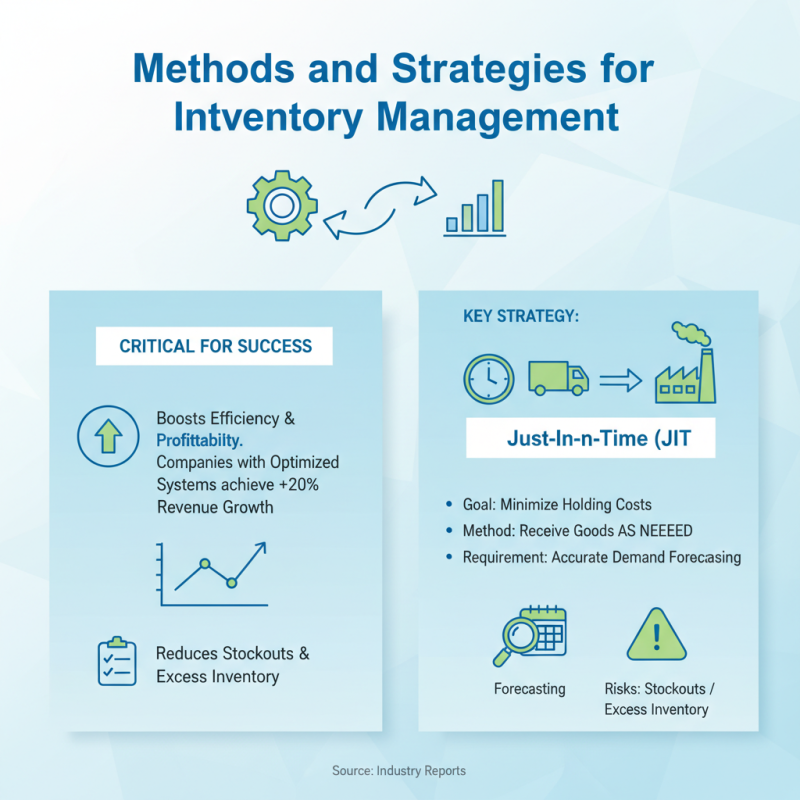
Effective inventory management is critical for business success. Implementing strategic methods can significantly boost efficiency. According to recent industry reports, companies with optimized inventory systems achieve 20% higher revenue growth. One popular strategy is Just-In-Time (JIT) inventory management. This method reduces holding costs by receiving goods only as needed. However, it requires precise demand forecasting. If forecasts are off, it can lead to stockouts or excess inventory.
Another effective approach is ABC analysis, which categorizes inventory based on importance and value. Typically, about 20% of items account for 80% of value. Focusing efforts on these high-impact items can streamline operations. However, it’s crucial to continually reassess these categories. Market conditions can change, rendering previous classifications outdated. Maintain flexibility in your inventory strategy to adapt to these fluctuations.
**Tip:** Regularly train staff on inventory management software. This ensures everyone is up to date.
**Tip:** Evaluate your supply chain relationships. Strong partnerships can enhance inventory reliability.
**Tip:** Use technology to gather real-time data. Accurate metrics support better decision-making.
Challenges in Inventory Management and Solutions
Inventory management presents numerous challenges for businesses. Disorganized stock can lead to lost sales and dissatisfied customers. Companies may struggle with overstock, which ties up capital and increases storage costs. Understocking can result in missed opportunities for sales, forcing customers to seek alternatives. Controlling inventory levels is crucial to maintaining a healthy balance.
To address these issues, businesses must adopt effective strategies. Implementing a robust inventory tracking system can streamline operations. Real-time data provides insights into stock levels and helps with demand forecasting. Businesses should regularly conduct audits to identify discrepancies and optimize stock locations.
Moreover, collaboration with suppliers can enhance inventory management. Strong relationships often lead to better communication and quicker response times. Yet, many businesses fail to recognize this. They may not prioritize supplier reliability, resulting in delayed shipments or unexpected shortages. Adapting to these challenges requires careful planning and a willingness to refine existing practices.