What Is a Mining Truck and How Does It Work?
A Mining Truck is a heavy-duty vehicle designed to move rock, ore, and overburden across large mining sites. Unlike highway trucks, it operates on rough haul roads, steep grades, and dusty surfaces. Its wide tires, reinforced frame, and powerful diesel or electric drive system support extremely heavy loads. Some models can carry several hundred tonnes in one trip.
The working process appears simple. A hydraulic shovel loads material into the raised body. The truck then travels to a crusher, stockpile, or waste dump. Large engines or electric motors turn the wheels through advanced transmission systems. Hydraulic cylinders lift the body, allowing the load to slide out quickly. Braking systems, retarding systems, and onboard monitoring help control the truck on long descents.
Inside the cab, operators use cameras, sensors, displays, and communication equipment to manage visibility and positioning. Autonomous systems can also guide trucks along planned routes, although human oversight remains important. Conditions change quickly when rain, loose gravel, or poor visibility affects traction. That detail is easy to underestimate.
Mining trucks are built for productivity, but efficiency depends on more than payload capacity. Tire condition, road design, loading balance, fuel use, and maintenance schedules all influence performance. A larger truck is not always the best choice. It may increase output, yet create higher road, maintenance, and safety demands. Understanding these machines requires practical site experience, engineering knowledge, and careful attention to operating data. Mistakes can happen, especially when specifications are compared without considering the entire mining system.
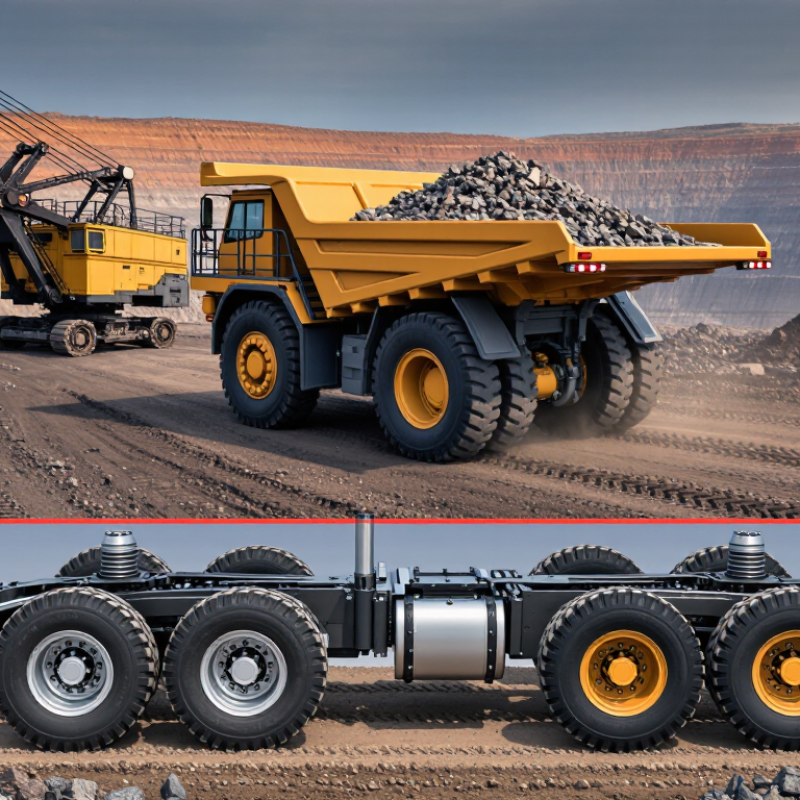
What Is a Mining Truck?
A mining truck is a heavy off-highway vehicle built to move rock, ore, and waste across large mine sites. It is not an ordinary road truck. Its frame, tires, suspension, and braking system are designed for steep haul roads, rough ground, and heavy payloads. Some models use mechanical drivetrains, while others combine diesel power with electric drive systems. The choice depends on mine design, distance, climate, and maintenance resources.
The main body is a large dump bed. Hydraulic cylinders raise it, allowing material to slide into a crusher, stockpile, or disposal area. A typical work cycle includes loading, traveling, reversing, dumping, and returning for another load. Operators monitor speed, engine temperature, tire condition, and warning signals inside the cab. A pre-shift inspection can reveal damaged steps, leaking hoses, or loose wheel components before they become serious problems.
Mining trucks work best when haul roads are properly graded and watered for dust control. Overloading may increase production briefly, but it can damage tires, brakes, and suspension parts. That trade-off is often underestimated. In real operations, delays still happen because of rain, poor visibility, or uneven loading. Engineers use payload records, fuel data, and cycle times to improve performance. Yet data is not enough by itself. Experienced operators often notice changing ground conditions before a sensor does. The safest decisions combine measured information with careful human judgment.
What Are the Main Types of Mining Trucks?
What Is a Mining Truck and How Does It Work?
What Are the Main Types of Mining Trucks?
Mining trucks move blasted rock, ore, and overburden between loading areas and processing sites. Their large frames, powerful engines, and reinforced bodies handle steep grades and rough surfaces. A hydraulic system raises the dump body, allowing material to slide out quickly. Operators also monitor payload, tire pressure, braking temperature, and road conditions during each cycle.
Rigid haul trucks are common in large open-pit mines. They carry heavy loads on stable, carefully maintained haul roads. Articulated dump trucks use a hinged center joint, giving them better movement on muddy or uneven ground. Underground mining trucks are shorter and more compact. Their low profiles help them pass through narrow tunnels. Electric or trolley-assisted trucks can reduce fuel use in suitable operations, but they require reliable power infrastructure. In practice, classifications can overlap. A truck may combine several design features.
Tips: Match the truck to the road, material, and loading equipment. Do not choose by payload alone. A larger truck may lose efficiency on tight bends or weak ground. Check braking performance, visibility, service access, and operator comfort. Small details matter. A common planning mistake is ignoring cycle time. Loading may be fast, but long queues or poor road drainage can reduce total output. Careful site measurements usually produce better decisions than impressive specifications.
What Is a Mining Truck and How Does It Work?
Mining trucks transport blasted rock, ore, and waste between loading areas, haul roads, crushers, stockpiles, and waste dumps. A typical cycle includes loading, hauling, dumping, and returning for the next load. The chart shows representative payload-capacity ranges for major mining truck types.
Payload figures are representative industry ranges in metric tonnes. Actual capacity depends on truck design, mine conditions, material density, road limits, and local safety regulations.
How Does a Mining Truck Operate Step by Step?
A mining truck is a heavy off-highway vehicle built to move blasted rock, ore, or waste. Its operating cycle starts before the engine moves. The operator checks tires, brakes, steering, lights, alarms, and the haul road. A payload system then confirms the load is within the truck’s rated limit. Many large trucks carry more than 100 tonnes, so small errors matter. The U.S. Mine Safety and Health Administration’s 2023 fatality data recorded 30 deaths in metal and nonmetal mines. Powered haulage remains a serious exposure.
At the loading point, the truck reverses into a marked position. A shovel or loader places material into the body. The operator watches the load distribution, not only the weight. Uneven loading can reduce stability on a slope. After receiving permission, the truck follows a planned route at a controlled speed. Cameras, mirrors, radios, and proximity alerts support the operator. They do not replace judgment. At the dump area, the truck stops on stable ground, applies the brake, and raises the body. Material slides out through the open rear gate.
The empty truck lowers its body and returns for another cycle. Fleet software records loading time, travel time, idle time, and fuel use. These figures help supervisors find delays and unsafe patterns. The Global Mining Guidelines Group’s autonomous mining guidance stresses controlled interaction between people, vehicles, and work zones. The ICMM Safety Performance Report 2023 also identifies mobile equipment and transportation as recurring safety concerns. A clean process diagram looks convincing. Real roads are dusty, wet, and imperfect. Even a reliable sensor can become unreliable when mud covers it.
How Are Mining Trucks Used and Maintained?
What Is a Mining Truck and How Does It Work?
Mining trucks are heavy off-highway vehicles built to move blasted rock, ore, or waste. Their large beds carry material from loading areas to crushers, stockpiles, or dumps. Powerful diesel-electric or mechanical systems deliver strong torque at low speeds. Operators control speed carefully because steep ramps, loose gravel, and heavy loads affect braking.
How Are Mining Trucks Used and Maintained?
Daily use begins with a pre-start inspection. Operators check tire pressure, wheel condition, lights, mirrors, brakes, steering, fluid leaks, and warning alarms. A small hydraulic leak can become serious during a long shift. Maintenance teams follow service intervals for filters, lubricants, cooling systems, suspension parts, and drive components. They also examine haul roads, since potholes and sharp edges increase tire damage and vibration. Electronic monitoring can reveal overheating or unusual pressure changes before failure occurs. Still, no system replaces an experienced inspection. Even skilled crews can miss a loose connection when schedules become tight. That weakness deserves honest review.
Tips: Keep inspection records clear and specific. Note the hour meter, fault code, location, and visible symptom. Clean mud from steps and handrails. Confirm the payload stays within the truck’s rated limit. Never ignore repeated alarms. A quiet warning today may become costly downtime tomorrow. Rotate experienced operators with newer workers, because practical judgment develops through supervised hours. Review near misses without blame, then adjust routes, speeds, or maintenance checks.
