Skip to content

10 Tips for Choosing Grocery Store Price Labels

grocery store price labels do more than display numbers. They help shoppers compare products, spot promotions, and move through busy aisles with confidence. A label that is crooked, faded, or blocked by a shelf edge can create doubt at the exact moment a customer is deciding. Small details matter. Retail anthropologist Paco Underhill, author of Why We Buy, is associated with the phrase, “Retail is detail.” Applied to grocery store price labels, that idea means clear type, accurate prices, and consistent placement are practical parts of the shopping experience—not decoration.

The right label depends on the store, the shelf, and the people using it. A neighborhood market with handwritten specials may need different materials from a high-volume supermarket updating prices electronically. Consider readability under bright lights, resistance to spills, how quickly staff can replace labels, and whether promotions remain easy to distinguish from regular prices. Test choices on a real shelf. A label can look crisp on a desk and disappear beside colorful packaging. These ten tips will help retailers assess format, durability, visibility, and maintenance before committing to a system. They cannot remove every trade-off. A highly durable label may cost more, while a low-cost option may need frequent replacement. That deserves a second look. Reliable decisions come from checking actual aisle conditions and customer needs, then reviewing results after installation.
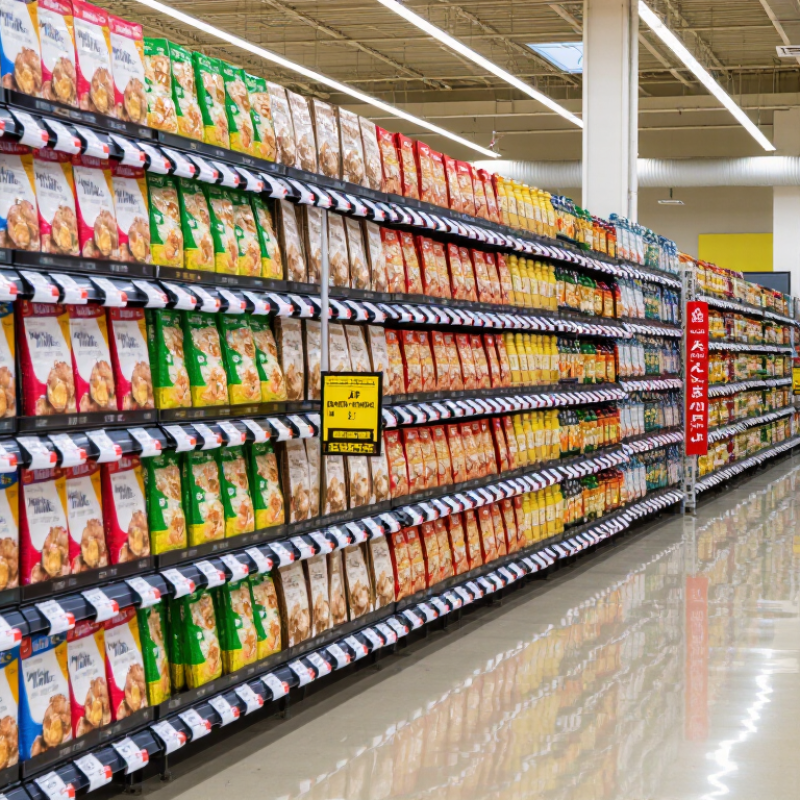
10 Tips for Choosing Grocery Store Price Labels

Assess update needs: USDA reported 11.4% U.S. food-at-home inflation in 2022

USDA reported that food-at-home prices rose 11.4% in the United States in 2022. That figure is a useful reminder: shelf prices may need frequent attention when costs change. It does not mean every item or region saw the same increase. A store’s update schedule should reflect its own supplier changes, promotions, and staffing capacity. A price label that is clear but slow to revise can still mislead shoppers.

Before choosing labels, ask how often prices change and who updates them. Paper tags may suit stable sections, while frequently adjusted items need a process that makes revisions quick and easy to verify. Check that each label clearly shows the product, unit price, and sale dates where relevant. Small errors add up. A shopper comparing two jars should not have to guess whether the price is per ounce or per package. It is also worth testing labels under aisle lighting and from a normal viewing distance. Digital systems can speed updates, but they still need checks for mismatches. No system is perfect. A simple daily spot-check may catch a stale tag before it causes confusion. Keep a record of corrections; even a handwritten note can reveal which shelves need closer review.

Compare paper and electronic labels by update frequency, labor, and total cost

Paper labels usually cost less to install, making them practical for stores with stable prices and few weekly changes. But every update takes staff time. An employee may print, sort, and replace hundreds of small tags before opening. Missed changes can leave shelf prices out of sync with checkout prices.

Electronic labels require a larger upfront investment, plus compatible equipment and ongoing maintenance. Their advantage grows when prices or promotions change often: staff can update many shelf displays from one system instead of walking each aisle. A grocery manager should check how updates are approved, how long they take, and what happens during a network or power problem. Faster is useful, but not magic.

Compare total costs over several years, not just the purchase price. Include label replacement, printing supplies, labor hours, installation, batteries, and service. For example, a store changing prices daily may find labor savings justify electronic labels; a small shop changing prices monthly may not. Track actual update time for a few weeks before deciding. Estimates can be wrong, especially when they ignore training and troubleshooting. It adds up.

Match labels to GS1’s 12-digit UPC-A product identifiers

Treat a UPC-A as a product identity, not a price field. GS1’s General Specifications define GTIN-12 identifiers as 12 digits, with a check digit calculated from the other 11. Match the complete number on the package to the item record used by the checkout system. Then confirm the shelf label shows the current price for that exact size and variety. A label can look right and still point to the wrong item. Check the digits, not just the familiar package color.

During a label change, compare the package barcode, item record, and shelf tag side by side. Test a scan before printing a full batch, especially when similar products sit together. The National Retail Federation’s 2023 National Retail Security Survey reported retail shrink averaging 1.6% of sales in fiscal year 2022. That figure covers retail losses broadly; it does not measure pricing-label errors. Still, it shows why dependable product records matter. A handwritten price correction may help during a rush, but it should prompt a proper system update. Easy to overlook. A recurring mismatch deserves review.

10 Tips for Choosing Grocery Store Price Labels — Match Labels to GS1’s 12-Digit UPC-A Product Identifiers

Tip What to Choose or Check UPC-A / GS1 Fact Practical Check
1 Confirm the identifier format UPC-A represents a GTIN-12 and contains 12 numeric digits, including its check digit. Confirm that the product record and scanning setup expect the UPC-A identifier for the item.
2 Keep price separate from product identity A UPC-A barcode identifies a trade item; it does not, by itself, state the current retail price. Print the shelf price as a clear label field and maintain the price in the store’s pricing system.
3 Preserve all 12 digits Leading zeros can be significant in how an identifier is represented and processed. A GTIN-12 can also be represented in a 14-digit GTIN format by padding it with leading zeros. Store and transfer UPC-A values consistently; do not let spreadsheets or label software remove leading zeros.
4 Validate the check digit The final digit of a UPC-A is a check digit used to help detect data-entry or scanning errors. Use a GS1-compatible check-digit validation process when importing or editing product identifiers.
5 Protect barcode readability When a label includes a UPC-A barcode, its printed bars and required clear space around the symbol must remain unobstructed for reliable scanning. Choose a label layout that avoids folds, clips, text, or artwork covering the barcode or its clear margins.
6 Match the label to the correct item The identifier is used to connect a scanned trade item with its product record; the identifier alone is not a substitute for checking that record. Compare the item description and UPC-A in the product file before printing or replacing shelf labels.
7 Select a suitable label size Label dimensions do not change the GTIN-12, but an undersized or crowded layout can make text and barcodes harder to read. Allow enough room for the price, product description, and any barcode required by the store’s workflow.
8 Make price changes easy to identify UPC-A identifies the product rather than its price, so price updates need to be managed separately. Use a consistent format for current prices and promotions, and remove or replace outdated labels promptly.
9 Check unit-price information Unit pricing is separate from the UPC-A identifier. Requirements and permitted units can vary by location and product type. Where applicable, show the correct unit basis and verify the calculation and local requirements before printing.
10 Test labels in the actual workflow A correctly formatted identifier still needs to be printed and scanned reliably in the store’s equipment and conditions. Scan a sample label, confirm the correct product record appears, and compare the displayed price with the shelf label.

Reserve GS1’s 9-module UPC-A quiet zones for reliable barcode scanning

A grocery price label must do more than display a price. Its barcode needs clean space to scan reliably. GS1’s General Specifications define UPC-A as 95 modules wide, with a quiet zone of at least 9 modules on both sides. Those margins are easy to lose when a label is squeezed beside a sale badge or cut too close to the barcode. Keep them blank. Even a neat-looking label can fail at the checkout.

Tips: Measure the barcode and both quiet zones before printing. Keep text, borders, and colored blocks outside the clear margins. Print a test label at the final shelf size, then scan it under store lighting. GS1’s specification gives the technical rule; an actual scan checks whether your printer, material, and placement work together. Test again after changing stock or print settings.

For a practical check, compare the printed symbol against GS1’s General Specifications rather than judging it by appearance alone. A smudged edge or one misplaced line can eat into the quiet zone. Labels near shelf lips may also wrinkle or catch glare. I would not assume a successful scan on a desk proves shelf performance. It does not. Keep a few samples for routine checks, and note failures, even when the cause seems obvious.

Check unit-price and display rules against NIST Handbook 130 and local law

A shelf label makes a small but important promise: the displayed price and unit price should be clear, accurate, and easy to compare. NIST Handbook 130 provides model requirements for unit pricing and price verification, but it is not automatically the law everywhere. States and local jurisdictions may adopt different editions or add their own rules. Check the current requirements where each store operates, including which products need unit prices and how units must be shown. A price per ounce beside a 16-ounce jar is useful only if the calculation and format meet local rules.

Choose labels that leave enough room for the selling price, unit of measure, and any required information without cramped type. Test them on the actual shelf: glare from overhead lights can obscure small print, and a label can slip behind a shelf edge. Verify sample calculations against the register price and the package size. Keep a dated record of the rule source and review it when regulations change. It is easy to overlook a local amendment during a busy reset. Don’t assume. Ask the relevant weights-and-measures office or a qualified compliance professional when wording is unclear. A neat label is helpful, but accuracy and local compliance matter more.

10 Tips for Choosing Grocery Store Price Labels

Check unit-price and display rules against NIST Handbook 130 and local law.

Conversion references for unit-price comparisons

These exact conversions can help check quantities used in price-per-unit calculations. They are conversion references, not required label formats; applicable rules vary by jurisdiction.

  1. Check whether local law requires unit pricing for the product or store.
  2. Use a unit of measure permitted by the applicable rules.
  3. Compare like with like: weight, volume, or count.
  4. Verify the net quantity shown on the package.
  5. Use the correct conversion when package and comparison units differ.
  6. Calculate the unit price consistently and check the arithmetic.
  7. Make the selling price and unit price easy to distinguish.
  8. Keep the label legible and positioned clearly with the product.
  9. Check special rules, exemptions, and rounding requirements locally.
  10. Review current state or local requirements: NIST Handbook 130 is a model reference, and jurisdictions may adopt or amend its provisions.

Conversion references: 1 kilogram = 1,000 grams; 1 liter = 1,000 milliliters; 1 avoirdupois pound = 16 ounces; 1 U.S. liquid gallon = 128 U.S. fluid ounces.

“Guardian has been a tremendous help in providing storage and distribution solutions for AIR Global. We came to Guardian with a need, and they quickly found a solution for us at a very reasonable price. Our business is very demanding, especially during busy periods, and Guardian has been flexible and able to accommodate all requests with less than 48 hours’ notice. April, our main contact, has been extremely helpful in making sure our orders are shipped on time and that our inventory is accurate. I highly recommend using Guardian and look forward to continuing our relationship for many years to come.”

Matt Buffington
Director of Supply and Operations
Americas

“The Guardian Logistics Team is responsive and helpful on a consistent basis.  This removes a tremendous amount of stress and gives us incentive to route cargo that will touch your dock. Thanks for all that you do!!!”

Charles Reel
Branch Manager
Scan Global Logistics

“I recommend with great confidence, Guardian Logistics Solutions and owner, Brent Smith to whomever needs top shelf deliveries including Last Mile, White Glove, Residential and Commercial.

I have known GLS since its inception. Guardian is always looking for the right answer to solve the customer’s problem. I can, without hesitation, recommend Guardian Logistics to any company that is looking for the best service in their coverage area. They will team with you to create a solution that suits your needs and ensure you are satisfied with the outcome.”

Steven T. Nelson

“I highly recommend Guardian Logistics Solutions. The professionalism and communications offered by the team, along with speediness, cost saving solutions and attitude is a testament to the fact that this is one of the most important partners you can have in the freight movement business.

The company offers exemplary service, they continuously exceed our expectations and that of the importers, they help us service, Guardian Logistics Solutions is the best solid business partner you should add to your company.”

Ubaldo Sierra
Maersk Customs Brokers
General Manager

“Guardian Logistic Solutions is one of those rare companies who under-promise-and-over-deliver EVERY single time!”

James Burke
Manager, Sales Team
OLIMP Warehousing

“I want to thank the team at Guardian for the excellent service we have received.
The shipments have been professionally handled and freight arrives timely and in good order at a fair price. Communication is a very important part of the handling and Guardian does a great job of communication through the delivery.”

Cheri Zetrouer
Access Worldwide
Customs Brokers & Freight Forwarders

“I am very lucky to have found Guardian Logistics to help with our freight needs.  Our business is a bit unique in that we only receive a shipment every 2-3 months and we have to stick to a very strict time schedule in order to unload the delivery.  We found it virtually impossible to consistently coordinate with logistics companies to have shipments arrive on time and when they were expected. After multiple frustrating scenarios, our broker introduced us to Guardian Logistics who handled all of our shipments recently to perfection. Our shipments have arrived on time, when expected, with friendly and helpful drivers.  We will only be using Guardian moving forward for all of our shipping and freight needs. I couldn’t recommend them strongly enough!”

Trey Conrad
Owner
Patriot Power Source

“We have been working with the Guardian company for several years now and I can say without a doubt that their entire team cares about the service they provide. Their personal interest in their customers’ success makes them a standout in the world of final mile delivery.

I highly recommend Guardian for anyone requiring outstanding services in warehousing and final mile delivery programs.”

Frank Ianucilli
Director of Final Mile Operations
Werner Enterprises

“At WeFixFreight.com, client satisfaction is our main priority.  We are proud to partner with the top notch team at Guardian to bring our customers nothing but the best service when it comes to freight reworks, cross docking services, and final mile delivery.”

Bill Carlin
CEO
WeFixFreight.Com

“The Guardian Logistics staff has always been exceptional, and these days, with all the competition out there, it’s the service that matters. We appreciate all they do and look forward to continuing our business with GLS.”

Cathy Avolio
Ocean Import Manager
Mallory Alexander Int'l Logistics (NY), LLC
Back To Top