
Skip to content

7 Tips for Choosing Die Cutter Manufacturers?

Choosing the right die cutter manufacturers can influence production speed, cutting accuracy, and long-term operating costs. A reliable supplier does more than offer attractive machine prices. It should understand your materials, product dimensions, required tolerances, and expected production volume. Paperboard, foam, leather, and flexible packaging may demand very different cutting systems.

Look closely at engineering experience, machine construction, and after-sales support. Ask how the manufacturer handles blade alignment, pressure control, tooling changes, and routine maintenance. A factory visit can reveal practical details that brochures often hide, such as workshop cleanliness, testing procedures, and spare-parts organization. Request verified case studies, technical drawings, and sample cuts using your own materials. Real evidence matters.

Small details matter.

These seven tips provide a practical way to compare die cutter manufacturers without relying on sales claims alone. They cover machine capability, customization, quality control, technical service, delivery reliability, operating safety, and total ownership cost. A lower quotation may appear appealing, yet weak support can create expensive delays later. That assumption deserves careful review.

No supplier is perfect. Even experienced manufacturers may have limitations with unusual materials or complex shapes. Buyers should record these risks before signing an agreement. Speak with current customers when possible, and test important specifications under realistic production conditions. Clear communication, documented commitments, and honest technical answers usually indicate a dependable manufacturing partner.
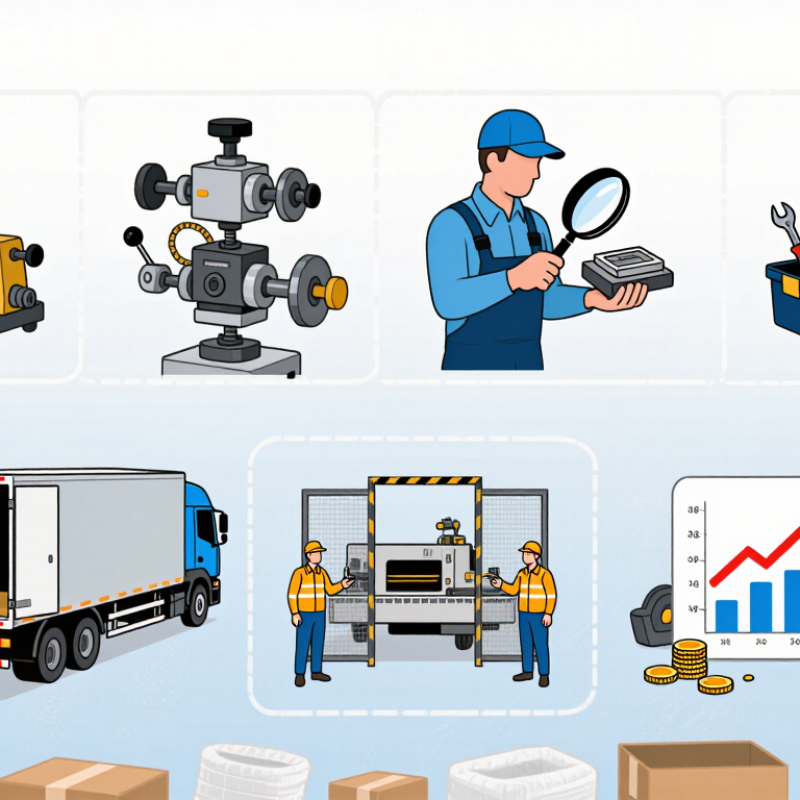
7 Tips for Choosing Die Cutter Manufacturers?

Define Your Die Cutting Requirements and Production Goals

Define your die cutting requirements before comparing manufacturers. List material type, thickness, sheet size, tolerance, order volume, and finishing needs. Include difficult samples, not only ideal ones. A coated carton may crack at the fold. A thin gasket may stretch during stripping. These details expose real machine limits.

Smithers’ The Future of Global Packaging to 2028 values the global packaging market at about $1.17 trillion in 2023. It forecasts approximately $1.33 trillion by 2028. This growth increases pressure on converters to improve speed, waste control, and changeover time. Your production goals should reflect that pressure.

Set measurable targets, such as 8,000 sheets per hour, below 3% setup waste, or a 12-minute tooling change.

Confirm how each figure will be measured. A vague target invites a vague quotation.

Ask manufacturers for trial-cut evidence using your actual stock. Request data on registration accuracy, tool life, noise, operator training, and maintenance intervals. PMMI’s recent packaging reports repeatedly identify labor availability and automation as important investment factors.

Therefore, inspect the control interface and fault recovery process, not only rated speed.

I once trusted a faster specification too quickly. The machine later needed longer setup time. That mistake matters.

Also calculate floor space, energy use, tooling cost, and expected annual output before choosing a supplier.

Compare Manufacturer Experience, Equipment, and Technical Capabilities

Choosing a die cutter manufacturer requires more than comparing prices. Experience should match your materials, tolerances, and production volume. Smithers’ The Future of Global Packaging to 2028 reports that global packaging value exceeded 1 trillion dollars in 2023. That scale increases pressure on converters to reduce waste and downtime.

Tip 1: Examine recent projects using similar board, film, or labels. Request measurable results, not general claims.

Tip 2: Review equipment age, cutting speed, automation, and inspection systems. PMMI’s 2024 State of the Industry report identifies labor efficiency and automation as major investment drivers. A modern machine may still perform poorly without disciplined maintenance.

Tip 3: Ask for maintenance records and replacement-part availability. Delayed parts can stop a valuable production line.

Tip 4: Test your actual substrates before signing. Check registration, stripping, edge quality, and scrap rates. Do not trust only sample photos.

Tip 5: Inspect technical depth, including tooling design, software integration, and troubleshooting support.

Tip 6: Require documented acceptance criteria for speed, accuracy, and changeover time. These details protect both sides.

Tip 7: Compare training, response times, and commissioning support. A technically strong supplier should explain limitations clearly. That matters.

A useful warning comes from my own evaluation habits: attractive specifications can receive too much attention. Operator feedback, service history, and trial results often reveal more. Ask difficult questions early. Mistakes become expensive later.

Evaluate Material Compatibility, Precision, and Quality Control

Choosing die cutter manufacturers requires more than comparing prices. In my experience, material compatibility determines whether a clean cut survives real production. Ask for trials using your actual substrate, thickness, coating, adhesive, and grain direction. Tip 1: Request physical samples. Tip 2: Check the machine’s working range. A cutter suited to thin film may struggle with dense board. Watch edge quality, waste, curling, and heat marks after repeated runs.

Precision should be measured, not promised. Tip 3: Review tolerance data from recent jobs. Ask how operators verify registration, pressure, and tool wear. Tip 4: Inspect calibration routines and measurement records. A precise first batch means little if accuracy drifts by afternoon. Request a short endurance test. It exposes vibration, inconsistent feeding, and premature blade damage. Small errors become expensive quickly. I would test more samples than necessary; rushed approval remains a common mistake.

Quality control should exist before, during, and after cutting. Tip 5: Confirm incoming material checks. Tip 6: Ask for documented inspections during setup and final packing. Tip 7: Clarify how nonconforming parts are isolated, traced, and corrected. Look for trained technicians, maintained equipment, and clear acceptance criteria. A reliable manufacturer explains limitations honestly. That matters. If test results are vague, request measurements, photographs, and repeatable conditions before approving production.

Review Customization Options, Prototyping, and Production Scalability

7 Tips for Choosing Die Cutter Manufacturers?

Customization begins with material knowledge, not a glossy sample. Ask whether the manufacturer has handled your board grade, film, foam, label stock, or laminated structure. Confirm cutting tolerances, crease depth, stripping methods, and tooling limits. Small changes can affect waste, folding accuracy, and assembly speed. Request a drawing review before approving any die.

Prototyping should resemble production, not merely look attractive on a desk. A reliable supplier can produce short-run samples, record machine settings, and explain failures. The Wohlers Report 2024 valued the global additive manufacturing industry at $20.035 billion in 2023, after 13.5% growth. That expansion shows how quickly digital prototyping is becoming practical. Still, a prototype may hide problems. Test stacking, dust removal, edge quality, and repeated handling.

Scalability needs evidence. Review cycle times, press capacity, backup equipment, inspection records, and operator training. The 2024 Smart Manufacturing and Operations Survey reported that 86% of manufacturers expect smart manufacturing to drive competitiveness within three years. Ask how production data supports scheduling and quality control. Also request a realistic ramp plan, including material availability and tooling replacement. I have learned that impressive equipment does not guarantee stable output. The better question is simple: can the supplier repeat the same result next month? Include approval checkpoints, measurable acceptance limits, and a corrective-action process in the quotation.

Verify Pricing, Lead Times, Support, and Supplier Reliability

7 Tips for Choosing Die Cutter Manufacturers

Pricing is only the opening question. Ask whether the quote includes tooling, delivery, installation, training, and replacement parts. Compare the total operating cost, not only the machine price. A cheaper die cutter may require longer setup time or more maintenance. Request sample cuts using your actual material, tolerances, and production speed.

Tip 1: Verify every commercial detail in writing.

Tip 2: Request a milestone-based lead-time schedule. It should show design approval, tooling, factory testing, shipment, and commissioning.

The 2024 MHI Annual Industry Report found that 55% of supply-chain professionals planned to increase technology investment. This supports asking for digital production updates, not vague promises.

Still, schedules can slip. Keep a realistic production buffer.

Support quality deserves equal attention.

Ask for response times, spare-parts availability, technician coverage, and training hours.

Tip 3: Test support before purchasing. Send three technical questions and measure the clarity and speed of each reply.

Tip 4: Request customer references with similar materials and volumes.

McKinsey research has reported that roughly 90% of supply-chain leaders invested in resilience after recent disruptions. A reliable supplier should explain backup processes, inspection records, and corrective actions.

Tip 5: Require documented factory acceptance testing.

Tip 6: Check service coverage near your facility.

Tip 7: Review the contract for warranty limits and delivery penalties.

I would not rely on a polished factory tour alone. Ask difficult questions. Record the answers.

“Guardian has been a tremendous help in providing storage and distribution solutions for AIR Global. We came to Guardian with a need, and they quickly found a solution for us at a very reasonable price. Our business is very demanding, especially during busy periods, and Guardian has been flexible and able to accommodate all requests with less than 48 hours’ notice. April, our main contact, has been extremely helpful in making sure our orders are shipped on time and that our inventory is accurate. I highly recommend using Guardian and look forward to continuing our relationship for many years to come.”

Matt Buffington
Director of Supply and Operations
Americas

“The Guardian Logistics Team is responsive and helpful on a consistent basis.  This removes a tremendous amount of stress and gives us incentive to route cargo that will touch your dock. Thanks for all that you do!!!”

Charles Reel
Branch Manager
Scan Global Logistics

“I recommend with great confidence, Guardian Logistics Solutions and owner, Brent Smith to whomever needs top shelf deliveries including Last Mile, White Glove, Residential and Commercial.

I have known GLS since its inception. Guardian is always looking for the right answer to solve the customer’s problem. I can, without hesitation, recommend Guardian Logistics to any company that is looking for the best service in their coverage area. They will team with you to create a solution that suits your needs and ensure you are satisfied with the outcome.”

Steven T. Nelson

“I highly recommend Guardian Logistics Solutions. The professionalism and communications offered by the team, along with speediness, cost saving solutions and attitude is a testament to the fact that this is one of the most important partners you can have in the freight movement business.

The company offers exemplary service, they continuously exceed our expectations and that of the importers, they help us service, Guardian Logistics Solutions is the best solid business partner you should add to your company.”

Ubaldo Sierra
Maersk Customs Brokers
General Manager

“Guardian Logistic Solutions is one of those rare companies who under-promise-and-over-deliver EVERY single time!”

James Burke
Manager, Sales Team
OLIMP Warehousing

“I want to thank the team at Guardian for the excellent service we have received.
The shipments have been professionally handled and freight arrives timely and in good order at a fair price. Communication is a very important part of the handling and Guardian does a great job of communication through the delivery.”

Cheri Zetrouer
Access Worldwide
Customs Brokers & Freight Forwarders

“I am very lucky to have found Guardian Logistics to help with our freight needs.  Our business is a bit unique in that we only receive a shipment every 2-3 months and we have to stick to a very strict time schedule in order to unload the delivery.  We found it virtually impossible to consistently coordinate with logistics companies to have shipments arrive on time and when they were expected. After multiple frustrating scenarios, our broker introduced us to Guardian Logistics who handled all of our shipments recently to perfection. Our shipments have arrived on time, when expected, with friendly and helpful drivers.  We will only be using Guardian moving forward for all of our shipping and freight needs. I couldn’t recommend them strongly enough!”

Trey Conrad
Owner
Patriot Power Source

“We have been working with the Guardian company for several years now and I can say without a doubt that their entire team cares about the service they provide. Their personal interest in their customers’ success makes them a standout in the world of final mile delivery.

I highly recommend Guardian for anyone requiring outstanding services in warehousing and final mile delivery programs.”

Frank Ianucilli
Director of Final Mile Operations
Werner Enterprises

“At WeFixFreight.com, client satisfaction is our main priority.  We are proud to partner with the top notch team at Guardian to bring our customers nothing but the best service when it comes to freight reworks, cross docking services, and final mile delivery.”

Bill Carlin
CEO
WeFixFreight.Com

“The Guardian Logistics staff has always been exceptional, and these days, with all the competition out there, it’s the service that matters. We appreciate all they do and look forward to continuing our business with GLS.”

Cathy Avolio
Ocean Import Manager
Mallory Alexander Int'l Logistics (NY), LLC
Back To Top