Skip to content

10 Tips to Choose the Right Sheet Metal Cap

Choosing the right Sheet Metal Cap is a small decision with visible consequences. A poorly specified cap can collect water, expose sharp edges, or fail at expansion joints. The right profile should protect the substrate, shed rain, and remain stable under temperature changes.

Industry data reinforces the importance of material selection. The World Steel Association reported approximately 1.89 billion tonnes of crude steel production in 2023. The U.S. Geological Survey also recorded about 12.3 million metric tonnes of global zinc mine production in 2023. These figures reflect a broad, active supply chain, but they do not guarantee suitable performance. Thickness, coating, forming quality, and compatibility still matter. A common mistake is treating a low price as proof of value.

Metal-roofing consultant Rob Haddock has emphasized, “The details are where the roof succeeds or fails.” That principle applies directly to Sheet Metal Cap selection. Field experience shows that a cap fitting a drawing may still fail beside masonry, insulation, or uneven edges. Our guide examines ten practical considerations, including base-metal choice, dimensions, finish, drainage, fastening, fabrication accuracy, and maintenance access. It also questions assumptions that deserve closer review. Is the cap exposed to salt air? Will trapped moisture remain beneath it? Can installers replace damaged sections without disturbing adjacent materials? There is no universal best cap. The strongest choice balances climate, geometry, service life, installation skill, and verified specifications.
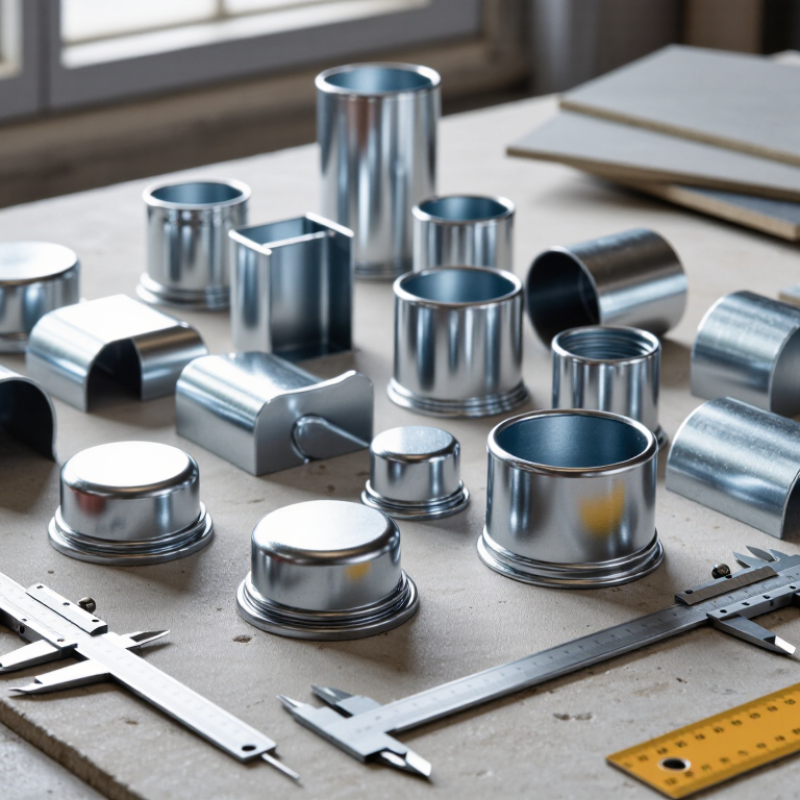
10 Tips to Choose the Right Sheet Metal Cap

Define the Purpose and Performance Requirements of the Sheet Metal Cap

Before choosing a sheet metal cap, define what it must protect, cover, or control. A decorative cover needs different performance from a cap used on a hot duct or exposed enclosure. Write down the application, location, expected service life, and maintenance conditions. Then identify loads, temperature changes, moisture, chemicals, airflow, and contact with nearby parts. These details prevent attractive but unsuitable choices.

Do not guess the material. Stainless steel may suit moisture, while aluminum can reduce weight; the correct choice depends on the environment. Coating, thickness, edge treatment, and forming method also affect durability. Tips: Match the cap to measurable requirements. Specify load capacity, temperature range, corrosion exposure, fit tolerance, and sealing needs before requesting samples. Ask for drawings, test information, and material certificates when performance matters.

A practical review should include installation. Will the cap be screwed, snapped, welded, or removed regularly? A tight fit can improve protection, but excessive tolerance may complicate assembly. Small details matter. From production experience, failures often begin with overlooked drainage or sharp edges. I once underestimated cleaning access on a covered assembly; the cap worked, but servicing became unnecessarily slow. That lesson changed my checklist. Tips: Test a representative sample in real conditions. Check fit after thermal cycling, inspect water paths, and confirm that tools can reach fasteners. No design is perfect on paper. Field feedback should refine the specification before full production.

10 Tips to Choose the Right Sheet Metal Cap - Define the Purpose and Performance Requirements of the Sheet Metal Cap

Tip Purpose or Performance Requirement Key Dimension or Selection Factor Practical Guidance Typical Verification Method
1 Define the primary function Protection, closure, decoration, shielding, or structural support Select the cap design according to its main job. A protective closure may need stronger material and retention than a decorative trim cap. Review the application drawing, installation procedure, and required service life.
2 Match the cap to the mating part Opening size, outside diameter, inside diameter, depth, and wall clearance Measure the mating component at several points. Allow for material thickness, forming variation, coating thickness, and installation clearance. Use calibrated calipers, micrometers, gauges, and a production-fit trial.
3 Choose an appropriate metal Strength, corrosion resistance, conductivity, weight, and formability Aluminum is lightweight and corrosion resistant; stainless steel provides high corrosion resistance and strength; carbon steel is economical but generally requires protective treatment. Compare material certificates, mechanical requirements, corrosion conditions, and forming capability.
4 Specify suitable material thickness Rigidity, impact resistance, weight, bend radius, and manufacturing method Thicker sheet usually improves stiffness and durability but can increase weight, cost, and forming force. Confirm the minimum thickness required for the load. Perform a deflection, compression, impact, or handling test based on the application.
5 Account for environmental exposure Moisture, salt spray, chemicals, ultraviolet light, dust, and temperature Use corrosion-resistant material or a compatible finish for outdoor, coastal, industrial, or wash-down environments. Check chemical compatibility before approval. Evaluate the operating environment and use a relevant corrosion or chemical-resistance test.
6 Define sealing and ingress protection Seal type, compression, joint design, drainage, and required IP level A cap intended only for dust protection may require a different design from one exposed to water jets or temporary immersion. Avoid trapping water inside the assembly. Confirm the applicable enclosure rating and conduct dust or water ingress testing where required.
7 Select the retention method Press fit, snap fit, threaded attachment, screws, rivets, welds, or adhesive Choose retention based on removal frequency, vibration, load, access requirements, and risk of accidental detachment. Measure insertion and removal force, then test under vibration and repeated installation cycles.
8 Control edges and surface safety Edge radius, burr control, corners, seams, and user contact areas Specify deburring, edge finishing, or hemmed edges where personnel may handle the cap or where cables and seals could be damaged. Conduct visual inspection and perform a hand-feel, glove, or cable-abrasion check.
9 Consider thermal and electrical requirements Temperature range, heat transfer, electrical continuity, insulation, and grounding Metal caps can conduct heat and electricity. Define whether the cap must dissipate heat, remain electrically isolated, or provide a reliable grounding path. Check temperature limits, dielectric requirements, continuity, and bonding resistance as applicable.
10 Confirm manufacturing and quality requirements Tolerances, surface finish, batch consistency, tooling, inspection, and total cost Use laser cutting, stamping, spinning, or bending according to volume and geometry. Define critical dimensions and acceptance criteria before production. Approve a first article, inspect critical dimensions, review material records, and monitor production samples.

Compare Materials, Coatings, and Corrosion Resistance

10 Tips to Choose the Right Sheet Metal Cap

Choosing a sheet metal cap starts with its environment, not its appearance. Indoor steel may need only a basic protective coating. Outdoor caps face rain, sunlight, salt, and temperature changes. Galvanized steel offers practical corrosion resistance at a moderate cost. Aluminum is lighter and performs well near coastal air. Stainless steel handles demanding exposure, but its grade must match the environment.

Coatings add another layer of protection. Powder coating creates a hard, attractive surface, yet scratches can expose the metal beneath. Fluoropolymer coatings resist ultraviolet damage and color fading more effectively. Paint thickness matters, especially around folded edges and drilled holes. Look closely there. A smooth finish can still hide weak coverage.

Material contact also deserves attention. Aluminum touching certain steel fasteners may create galvanic corrosion when moisture remains trapped. Use compatible fasteners and include drainage paths in the cap design. Sealants can help, but they should not replace proper geometry. In one inspection, trapped water caused rust beneath an otherwise excellent coating. That result changed the specification. Salt-spray testing, such as ASTM B117, can support comparison, but it cannot reproduce every outdoor condition. Review cut-edge protection, coating adhesion, metal thickness, and maintenance access before choosing. My earlier preference for the thickest coating was too simple; durability depends on the whole system.

Select the Correct Size, Shape, and Fitting Method

10 Tips to Choose the Right Sheet Metal Cap

Select the Correct Size, Shape, and Fitting Method

Measure the opening at several points, because sheet metal edges are rarely perfect. Record the largest and smallest dimensions. Allow enough clearance for installation, but avoid a loose cap that rattles. Check the wall thickness before selecting an inner or outer fitting design. Confirm the cap depth against the available panel length. A short cap may slip off under vibration. A deep cap can interfere with nearby parts.

Match the cap shape to the profile. Round, square, rectangular, and irregular openings need different forming methods. Inspect corners carefully; sharp bends can prevent full contact. Choose a hemmed edge when handling safety matters. Use a flanged edge when fastening space is available. Push-fit caps suit quick access. Screws, rivets, or clips provide stronger retention. Select corrosion-resistant material for moisture, dust, or outdoor exposure. Consider temperature changes too.

Test one sample before ordering in quantity. I once trusted a single measurement and missed a slight taper. It caused an avoidable fitting problem. A caliper and simple cardboard template can reveal such errors early. Check whether tools can reach the fitting points. Leave room for removal and maintenance. Review the finish for scratches, burrs, and sharp corners. A cap can look correct yet fail during installation. Recheck the drawing against the real opening. Small details matter.

Evaluate Manufacturing Quality, Safety, and Customization Options

Choosing the right sheet metal cap requires more than checking price and appearance. Use these ten practical checks.

  1. Request material certificates. Confirm grade, thickness, and coating.
  2. Inspect edge quality under bright light. Burrs can damage cables, gloves, or nearby parts.
  3. Review forming accuracy with measured samples.
  4. Ask for dimensional tolerances before approval. Vague tolerances create expensive arguments.
  5. Check welds, bends, and corners for consistent workmanship. A clean surface may still hide weak joints.

Safety deserves documented evidence.

  1. Confirm that exposed edges are rounded or properly finished. OSHA’s machine guarding requirements, 29 CFR 1910.212, emphasize protection from hazards created by machine operation.
  2. Request inspection records for sharp edges, coatings, and load-bearing features.
  3. Review the supplier’s quality system. ISO’s 2022 Survey recorded more than 1.2 million ISO 9001 certificates worldwide, but certification alone does not prove every cap is suitable. Ask for process-specific evidence.

Customization affects fit, performance, and future replacement.

  1. Confirm CAD revision control, hole positions, fastening methods, and surface requirements.
  2. Order a first-article sample before approving volume production. Compare it with the drawing, not memory.

The U.S. Bureau of Labor Statistics reported about 2.6 million recordable private-industry workplace injuries and illnesses in 2023. That figure is not sheet-metal-specific, but it supports careful risk review.

One detail is easy to miss: a cap can fit today and fail after coating thickness changes. Recheck assemblies after finishing.

My own preferred process is not perfect; production speed can quietly weaken inspection. Ask who signs the final release, and keep that answer in writing.

Review Costs, Suppliers, Installation, and Long-Term Maintenance

Choosing the right sheet metal cap requires more than comparing prices. Request itemized quotes covering material thickness, finish, edging, packaging, delivery, and installation. A low quote may exclude sealants or replacement pieces. That creates expensive surprises later. Check the supplier’s certifications, production experience, quality controls, and response time. Ask for physical samples. Finish color can appear different under daylight and warehouse lighting.

Supplier reliability matters. Confirm measurements, tolerances, lead times, and protection during transport. Review recent project references, but do not rely on testimonials alone. Written specifications are safer. One overlooked detail is packaging. Scratched corners can delay installation and weaken weather protection. I would also question unusually fast promises. They may reflect limited inspection, not efficiency.

Installation should follow the roof design, local conditions, and manufacturer guidance. Verify overlap, slope, drainage paths, fastener compatibility, and movement allowances before fixing each section. A cap that looks straight may still direct water inward. Use trained installers for complex joints and high-access areas. After installation, inspect seams, exposed fasteners, coating damage, and blocked drainage twice yearly. Clean dirt with mild water and avoid abrasive tools. Maintenance is simple, but often postponed. That is where small defects become leaks. Keep spare touch-up materials and inspection records. Reassess the choice after one wet season, because real performance may challenge the original assumptions.

10 Tips to Choose the Right Sheet Metal Cap

Relative five-year ownership cost index by material option

The index combines typical material cost, fabrication complexity, installation effort, corrosion resistance, and expected maintenance over five years. Galvanized steel is used as the baseline at 100. Actual costs vary by thickness, finish, profile, order volume, location, and site conditions.

“Guardian has been a tremendous help in providing storage and distribution solutions for AIR Global. We came to Guardian with a need, and they quickly found a solution for us at a very reasonable price. Our business is very demanding, especially during busy periods, and Guardian has been flexible and able to accommodate all requests with less than 48 hours’ notice. April, our main contact, has been extremely helpful in making sure our orders are shipped on time and that our inventory is accurate. I highly recommend using Guardian and look forward to continuing our relationship for many years to come.”

Matt Buffington
Director of Supply and Operations
Americas

“The Guardian Logistics Team is responsive and helpful on a consistent basis.  This removes a tremendous amount of stress and gives us incentive to route cargo that will touch your dock. Thanks for all that you do!!!”

Charles Reel
Branch Manager
Scan Global Logistics

“I recommend with great confidence, Guardian Logistics Solutions and owner, Brent Smith to whomever needs top shelf deliveries including Last Mile, White Glove, Residential and Commercial.

I have known GLS since its inception. Guardian is always looking for the right answer to solve the customer’s problem. I can, without hesitation, recommend Guardian Logistics to any company that is looking for the best service in their coverage area. They will team with you to create a solution that suits your needs and ensure you are satisfied with the outcome.”

Steven T. Nelson

“I highly recommend Guardian Logistics Solutions. The professionalism and communications offered by the team, along with speediness, cost saving solutions and attitude is a testament to the fact that this is one of the most important partners you can have in the freight movement business.

The company offers exemplary service, they continuously exceed our expectations and that of the importers, they help us service, Guardian Logistics Solutions is the best solid business partner you should add to your company.”

Ubaldo Sierra
Maersk Customs Brokers
General Manager

“Guardian Logistic Solutions is one of those rare companies who under-promise-and-over-deliver EVERY single time!”

James Burke
Manager, Sales Team
OLIMP Warehousing

“I want to thank the team at Guardian for the excellent service we have received.
The shipments have been professionally handled and freight arrives timely and in good order at a fair price. Communication is a very important part of the handling and Guardian does a great job of communication through the delivery.”

Cheri Zetrouer
Access Worldwide
Customs Brokers & Freight Forwarders

“I am very lucky to have found Guardian Logistics to help with our freight needs.  Our business is a bit unique in that we only receive a shipment every 2-3 months and we have to stick to a very strict time schedule in order to unload the delivery.  We found it virtually impossible to consistently coordinate with logistics companies to have shipments arrive on time and when they were expected. After multiple frustrating scenarios, our broker introduced us to Guardian Logistics who handled all of our shipments recently to perfection. Our shipments have arrived on time, when expected, with friendly and helpful drivers.  We will only be using Guardian moving forward for all of our shipping and freight needs. I couldn’t recommend them strongly enough!”

Trey Conrad
Owner
Patriot Power Source

“We have been working with the Guardian company for several years now and I can say without a doubt that their entire team cares about the service they provide. Their personal interest in their customers’ success makes them a standout in the world of final mile delivery.

I highly recommend Guardian for anyone requiring outstanding services in warehousing and final mile delivery programs.”

Frank Ianucilli
Director of Final Mile Operations
Werner Enterprises

“At WeFixFreight.com, client satisfaction is our main priority.  We are proud to partner with the top notch team at Guardian to bring our customers nothing but the best service when it comes to freight reworks, cross docking services, and final mile delivery.”

Bill Carlin
CEO
WeFixFreight.Com

“The Guardian Logistics staff has always been exceptional, and these days, with all the competition out there, it’s the service that matters. We appreciate all they do and look forward to continuing our business with GLS.”

Cathy Avolio
Ocean Import Manager
Mallory Alexander Int'l Logistics (NY), LLC
Back To Top