7 Tips for Choosing Wheel Alignment Equipment?
Choosing Wheel Alignment Equipment is no longer a simple matter of comparing prices and measuring ranges. Modern repair shops must balance accuracy, vehicle coverage, technician workflow, software support, and long-term serviceability. S&P Global Mobility reported that the average age of vehicles in operation in the United States reached 12.6 years in 2024. Older vehicles create steady demand for suspension checks, tire services, and alignment corrections. Meanwhile, newer vehicles often require precise alignment before advanced driver-assistance systems can be calibrated correctly.
Small details matter. A machine may promise impressive accuracy, yet its clamps can struggle with damaged rims. A fast console may still slow the bay if targets need frequent recalibration. The best Wheel Alignment Equipment should match the shop’s actual vehicle mix, floor space, technician skills, and daily workload. There is no universal winner.
Practical selection requires evidence. Compare published accuracy data, calibration procedures, turntable capacity, target compatibility, and database update policies. Review technical guidance from organizations such as the Automotive Service Association, the Equipment and Tool Institute, and vehicle manufacturers. Reports from Grand View Research and Research and Markets also show continued growth across automotive repair and aftermarket service sectors, but market growth alone does not prove equipment quality. That assumption deserves scrutiny.
These seven tips examine the choices that are often overlooked. They consider measurement reliability, installation conditions, operator training, maintenance access, software costs, ADAS readiness, and supplier support. A reliable machine should produce repeatable readings on a busy Monday morning, not only during a showroom demonstration. Practical experience still matters. So does independent verification.
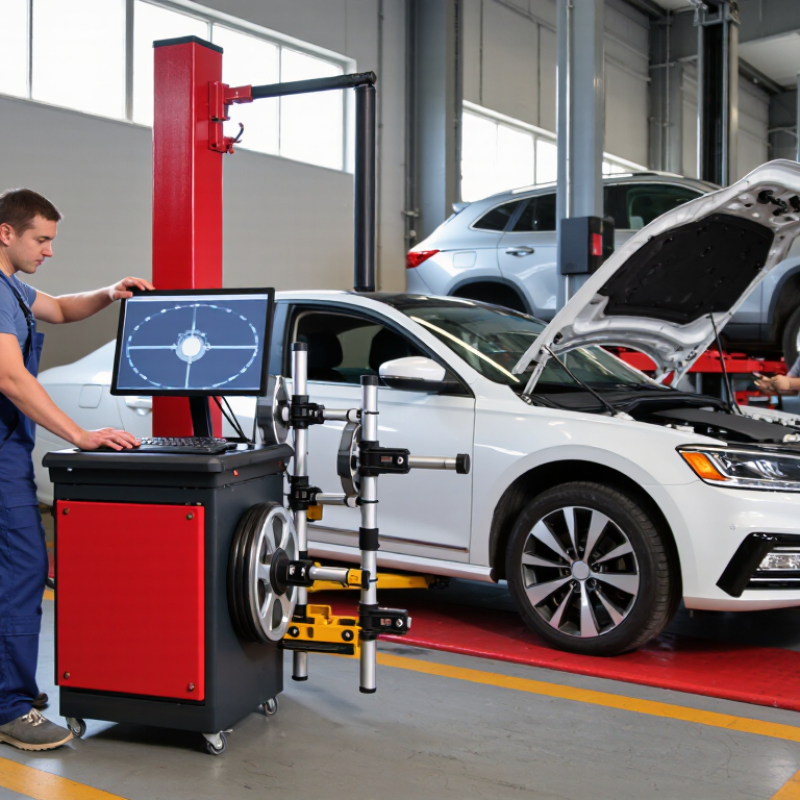
Define the Alignment Tasks and Vehicle Types You Need to Support
7 Tips for Choosing Wheel Alignment Equipment
Define the alignment work before comparing equipment. Will your shop handle toe, camber, caster, or thrust-angle adjustments? Some workshops mainly service passenger cars, while others inspect SUVs, vans, and light commercial vehicles. Each type needs suitable measurement ranges and accurate vehicle data. A machine designed for small cars may struggle with wide axles or heavy wheels.
Think about your daily bay conditions. Measure the lift, turnplate space, and available clearance. Low-profile vehicles may require special targets or extended ramps. Electric vehicles can also bring unusual weight distribution and lifting requirements. Check whether the system supports four-wheel alignment, rolling compensation, and steering-angle measurement. These functions reduce repeated positioning and improve technician consistency.
Real workshop experience matters here. I once underestimated how often large vans would enter a general repair bay. The equipment technically worked, but setup took too long. That was not a small problem. Ask for repeatability data, calibration procedures, and training support. Review the vehicle database update process as well. Accurate readings mean little when specifications are outdated or entered incorrectly. Choose equipment that matches your actual jobs, not an impressive feature list.
Compare Alignment Technologies, Accuracy, and Measurement Methods
7 Tips for Choosing Wheel Alignment Equipment
Compare the measurement technology before comparing prices. Camera-based systems capture target positions quickly and suit busy workshops. Laser systems can provide clear reference lines, but setup demands careful positioning. Three-dimensional measurement usually offers richer data and easier vehicle diagnosis. Still, technology alone does not guarantee accuracy. Accuracy matters.
Ask for repeatability data, not only advertised precision. A reliable system should detect small toe and camber changes consistently. Check how it handles target movement, wheel runout, and uneven workshop floors. A short demonstration can reveal loose clamps, unstable turn plates, or confusing software. Do not guess. Watch an operator measure the same vehicle twice.
Examine the measurement method closely. Automatic rolling compensation saves time and reduces manual lifting. Manual compensation may cost less, but it depends more heavily on technician skill. Confirm whether the equipment supports current vehicle specifications and commercial vehicle sizes. Inspect calibration procedures, sensor durability, and service training. In daily use, clean targets and correct tire pressure also affect results. That detail is easy to overlook. I would also leave room for operator error, because no alignment system removes every human mistake. Choose equipment with clear alerts, accessible records, and a calibration process your team will actually follow.
Assess Software Features, Ease of Use, and Technician Training
Choosing wheel alignment equipment requires more than comparing measurement ranges. The software shapes daily accuracy, speed, and confidence. In a busy workshop, clear prompts should guide technicians from vehicle selection to final readings. Live graphics can show toe, camber, and caster changes without forcing users to interpret dense tables. Simple screens matter.
Test the software with real workshop tasks. Select several vehicle types, enter customer details, and print a professional report. Check how quickly the system loads specifications and displays warnings for incorrect procedures. Automatic updates are useful, but they should include transparent release notes and reliable data sources. A hidden menu or confusing alert can waste valuable time. I have seen technically capable equipment slow a bay because its interface assumed too much knowledge.
Ease of use should never replace technician training. New staff need supervised practice with sensors, turn plates, steering locks, and compensation routines. Training should also explain why readings change, not only which button to press. Ask whether the supplier provides practical instruction, service documentation, and refresher materials. Short sessions near the alignment rack often work better than a single classroom demonstration. Mistakes still happen. A technician may skip a compensation step during a rushed inspection, so the software should flag incomplete procedures clearly. Managers should review training results through repeat measurements and occasional quality checks. Accuracy improves when equipment, software, and human judgment support each other.
Review Durability, Service Support, and Total Ownership Costs
Choosing wheel alignment equipment requires more than comparing purchase prices. Durability, service support, and total ownership costs often decide whether a machine earns money or creates delays. A robust alignment unit should tolerate daily shop use, dust, vibration, and repeated vehicle measurements. Inspect the sensor housings, clamps, turn plates, lift compatibility, and calibration process. Small weaknesses become expensive during busy weeks.
The Auto Care Association’s 2024 Factbook reports that the U.S. aftermarket exceeded 500 billion dollars in annual economic activity. S&P Global Mobility also reported that the average U.S. light vehicle age reached about 12.6 years in 2024. Older vehicles need more suspension and tire work, increasing equipment utilization. Ask about software updates, replacement sensors, calibration fees, and response times before signing. A cheap unit is not cheap when one failed camera stops a service bay.
Service quality needs evidence. Request written uptime targets, training options, remote diagnostics, and local technician coverage. Check whether support remains available after the warranty expires. The TechForce Foundation’s 2024 transportation technician report highlights continuing workforce pressure across vehicle service operations. Simple equipment can reduce training time, but only if its displays and procedures are clear. I would test the machine on uneven wheels and older vehicles, not only a clean demonstration car. That step may expose awkward clamps or inconsistent readings. Ownership cost should include installation, calibration, subscriptions, repairs, training, and lost labor hours. Teams often overlook the last item.
7 Tips for Choosing Wheel Alignment Equipment
Review durability, service support, and total ownership costs before making a purchasing decision.
This buyer-weighting framework highlights the factors that most directly affect measurement reliability, workshop productivity, equipment lifespan, and long-term operating costs. The percentages are planning weights for comparing equipment objectively and are not associated with any specific brand.