Essential Tips for Optimizing Last Mile Delivery Service?
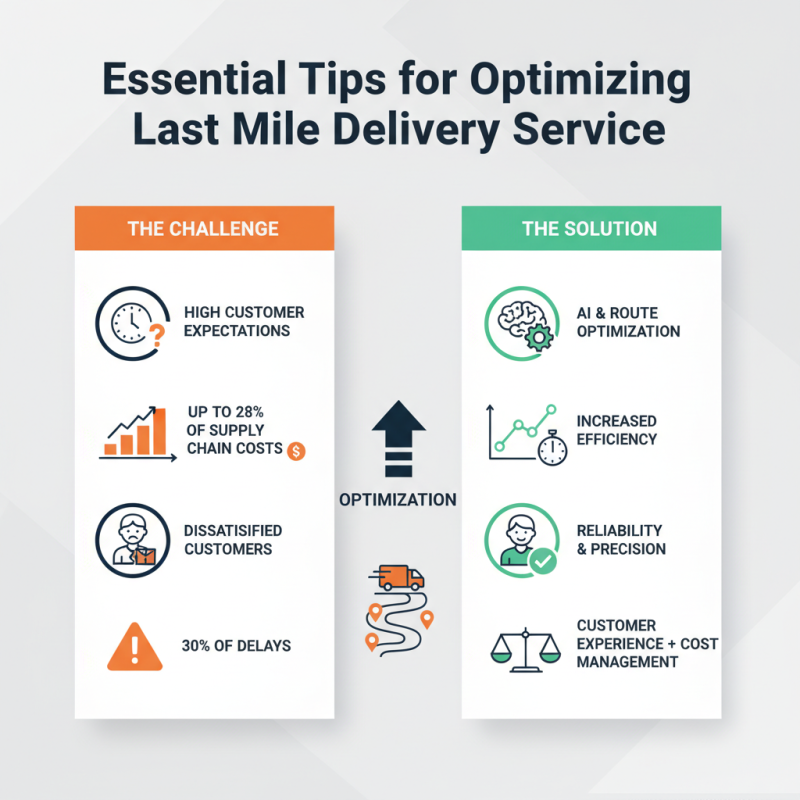
The last mile delivery service is pivotal in logistics, especially in e-commerce. According to a report by McKinsey, last mile delivery can account for up to 28% of total supply chain costs. This statistic underscores the importance of optimizing delivery methods. Experts in the field, such as Dr. Mark E. Sweeney, CEO of Logistics Innovations, stress the need for efficiency. He states, “Successful last mile delivery is about more than speed; it's about reliability and precision.”
The challenge is real. High customer expectations demand fast and accurate deliveries. Yet, many companies struggle with this aspect. Bottlenecks and inefficiencies can lead to increased costs and dissatisfied customers. Research suggests that 30% of deliveries face delays. This highlights the need for improvement in this segment. Adopting new technologies, such as AI and route optimization software, can help address these issues.
While striving for excellence in last mile delivery service, businesses must reflect on their strategies. A focus on customer experience must coexist with cost management. The right balance is essential, but it is often hard to achieve. Many firms find themselves at crossroads, trying to enhance efficiency while meeting market demands.
Understanding Last Mile Delivery: Importance and Challenges
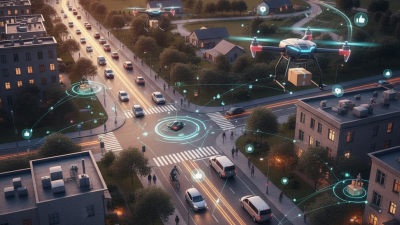
Last mile delivery is crucial in the logistics chain. This final stretch greatly impacts customer satisfaction. As e-commerce grows, so does the complexity of last mile delivery. Urban areas face heavy traffic, making timely deliveries a challenge. Additionally, navigating different neighborhoods can lead to delays. Companies must adapt to these hurdles.
Understanding the importance of last mile delivery helps businesses improve their processes. Quick and efficient delivery can set a business apart. Visibility and tracking are key elements for customer trust. However, not all companies have the right technology. Outdated systems may result in poor performance. Investing in modern solutions is essential but often neglected.
Challenges also involve cost and sustainability. Rising fuel prices affect profit margins. Many companies overlook eco-friendly options that can attract green-conscious customers. Balancing costs and service quality remains an ongoing struggle. Efforts to optimize last mile delivery must address these concerns head-on.
Essential Tips for Optimizing Last Mile Delivery Service
| Tip |
Description |
Benefits |
| Utilize Route Optimization Software |
Implement software to analyze delivery routes for efficiency. |
Reduces fuel consumption and delivery times. |
| Leverage Real-Time Tracking |
Provide customers with real-time updates on their deliveries. |
Enhances customer satisfaction and transparency. |
| Offer Flexible Delivery Options |
Allow customers to choose delivery time and method. |
Improves the likelihood of successful deliveries on the first attempt. |
| Optimize Inventory Management |
Ensure that inventory is stored close to customers for faster delivery. |
Minimizes shipping costs and delivery time. |
| Implement Contactless Delivery |
Adopt contactless delivery methods to ensure safety. |
Increases customer confidence and safety during delivery. |
Key Strategies for Improving Last Mile Delivery Efficiency
Improving last mile delivery efficiency is crucial for businesses striving to meet customer expectations. One essential strategy involves leveraging data analytics. By analyzing delivery patterns, companies can identify peak times and areas that require more resources. This leads to optimized routing and reduced delivery times. Real-time data can empower teams to adjust routes dynamically, ensuring timely deliveries.
Investing in technology is another vital tip. Automated systems can track packages and provide updates to consumers. This minimizes confusion and enhances customer satisfaction. Offering features like live tracking allows consumers to know exactly when their packages will arrive. It also reduces unnecessary inquiries to customer service.
However, there are challenges to consider. Not all areas have the same level of access to technology. Some customers may struggle with apps or online portals. This can create a gap in service quality. Also, companies need to reflect on their delivery fleet’s capacity. Overextending resources may lead to delays, ultimately disappointing customers. Balancing efficiency with quality service remains an ongoing challenge.
Leveraging Technology in Last Mile Delivery Optimization
In today’s fast-paced world, optimizing last mile delivery is crucial. Leveraging technology is key to this optimization process. A recent report from McKinsey indicates that 30% of total logistics costs come from last mile delivery. This substantial figure emphasizes the need for efficiency and innovation.
Real-time tracking systems improve transparency. Customers expect precise updates on their deliveries. A survey by Deloitte found that 88% of consumers are likely to choose a delivery service based on tracking capabilities. However, integrating these technologies is not always flawless. Many companies face challenges in unifying multiple data streams. Inconsistent data can result in poor decision-making and customer dissatisfaction.
Additionally, route optimization software can enhance delivery efficiency. According to a study by Capgemini, route optimization can reduce costs by up to 15%. Yet, achieving perfect efficiency remains elusive. Traffic conditions and unforeseen delays can derail even the best-planned routes. It's essential to remain adaptable in the face of these challenges. Embracing flexible last mile solutions can lead to better outcomes.
Last Mile Delivery Optimization Metrics
Enhancing Customer Experience in Last Mile Delivery Services
Last mile delivery is the final stage of the shipping process. It can often define customer satisfaction. To enhance the customer experience, understanding their expectations is crucial. Timeliness is a priority for many consumers. Delays can lead to frustration and lost trust.
Communication is vital during delivery. Providing real-time updates can build transparency. Customers appreciate knowing when their package will arrive, as it eases anxiety and fosters a positive experience. Additionally, offering flexible delivery options can cater to diverse needs. Some may prefer evening deliveries; others might want weekend options.
However, challenges exist. Not every delivery can meet exact timing. Traffic, weather, and logistical issues may arise. It's essential to address these concerns promptly. Acknowledging delays and offering solutions can turn a negative experience into a positive one. Engaging with customers after delivery can provide insights for future improvements. Listening to feedback can drive innovation in service and enhance satisfaction in the long run.
Measuring Success: KPIs for Last Mile Delivery Performance
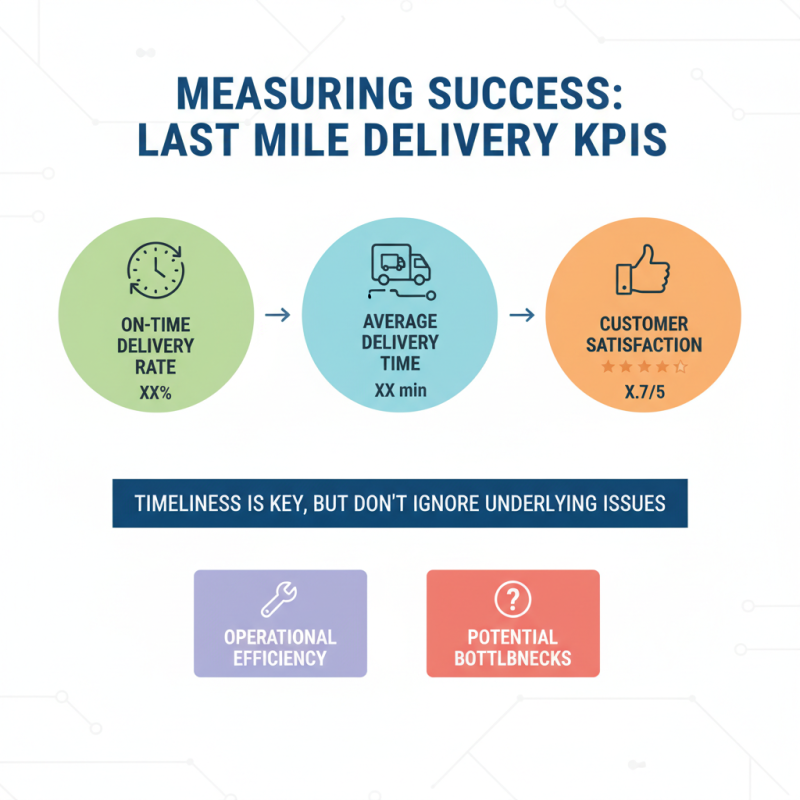
Measuring success in last mile delivery is crucial for any logistics operation. Key Performance Indicators (KPIs) serve as essential benchmarks. They provide clear insights into performance and areas for improvement. Timeliness is a primary metric. On-time delivery rates can directly reflect overall operational efficiency. However, reliance solely on this metric might mask underlying issues.
Customer satisfaction scores are another vital KPI. These scores measure how well deliveries meet customer needs. If feedback trends negative, companies must reflect on their processes. Communication and transparency during the delivery process matter greatly. Real-time tracking updates can enhance customer confidence. Yet, many services struggle to implement effective tracking systems.
Cost per delivery is another important indicator. This metric helps assess profitability. However, achieving low costs shouldn’t come at the expense of service quality. If costs drop but delivery experience worsens, long-term customer loyalty may suffer. Regular reviews of all KPIs can provide clarity. Continuous reflection on what these numbers reveal is essential for genuine progress.