Skip to content

China Top Lithium Battery Charger Suppliers?

China has become an important sourcing destination for lithium battery chargers, serving applications from e-bikes and power tools to industrial equipment. Yet a supplier’s product page rarely tells the whole story. Buyers need to assess battery chemistry, charging voltage, current limits, thermal protection, documentation, and production consistency. These details affect whether a charger works safely and reliably with a specific battery pack.

Battery expert Isidor Buchmann, founder of Cadex Electronics and Battery University, has long emphasized matching charging methods to battery characteristics. His guidance can be summarized this way: “A charger must match the battery chemistry and its charging limits.” This is a paraphrase, not a verbatim quotation. It captures a practical point: a charger designed for one lithium-based chemistry may not suit another. Check technical specifications rather than relying on a broad “lithium compatible” label.

Small details matter. A clear datasheet, readable safety markings, and responsive engineering support can help buyers compare suppliers more confidently. This guide examines China’s lithium battery charger suppliers through practical criteria, including product range, customization, quality controls, and communication. It also considers questions worth asking before requesting samples or placing an order. Supplier comparisons are not always straightforward; public information can be incomplete, and a polished website is not proof of consistent manufacturing. Treat claims as starting points, verify important details, and match every charger to its intended battery and application.
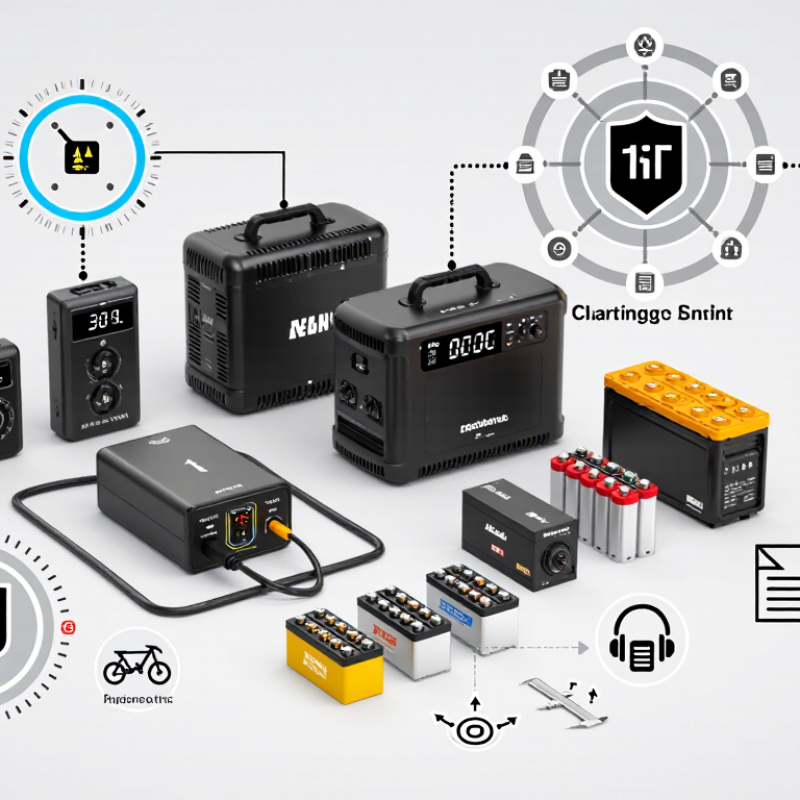
China Top Lithium Battery Charger Suppliers?

Types of Lithium Battery Chargers and Their Applications

Lithium battery chargers are not interchangeable, even when their plugs fit. Many lithium-ion packs use a constant-current, constant-voltage charging profile. The charger supplies controlled current, then holds voltage as current gradually falls. Lithium iron phosphate packs need different voltage limits, so chemistry must be confirmed before selection. Small details matter. A reliable supplier should state output voltage, current range, supported chemistries, and any battery management system requirements. Check these against the pack label and technical data, not connector shape alone.

Compact single-cell chargers suit small devices and test setups, where modest charging current helps limit heat. Multi-cell balance chargers monitor individual cells and are useful for removable packs used in equipment or hobby applications. Larger chargers serve electric vehicles, warehouse equipment, and stationary storage; they may include temperature sensing, cooling, or communication with the battery system. Match charging current to the battery maker’s specification, especially for a pack used daily. On a workbench, an unexpectedly warm case or a charge that stops early deserves investigation. One point is easy to overlook: a charger can meet its rated output and still perform poorly with a mismatched battery or weak connection.

Types of Lithium Battery Chargers and Their Applications

Representative charger output power varies by device, battery pack, and charging standard.

USB-C chargers serve portable electronics, while higher-power chargers are used for cordless tools and e-bikes. Electric vehicles use onboard AC chargers or external DC fast chargers. Values are representative examples; actual power ratings vary. The vertical axis uses a logarithmic scale.

Overview of China’s Lithium Battery Charger Supplier Market

China’s lithium battery charger supplier market includes large-scale manufacturers, engineering-focused factories, and trading companies coordinating production. Suppliers often serve electric mobility, energy storage, industrial equipment, and consumer device projects. Their capabilities vary: some offer standard charger models, while others adjust voltage, current, connectors, or communication functions for a specific battery system.

For buyers, technical matching matters more than a broad catalog. A charger must suit the battery’s chemistry, voltage range, and charging profile, and work reliably with its battery management system. Ask for product specifications, test records, sample units, and clear information about thermal and overcurrent protection. Small details matter. A connector that looks right may still have a different pin arrangement.

Supplier evaluation should include production consistency, engineering response times, and the process for handling design changes. Factory visits or third-party inspections can help verify equipment and quality controls, though neither guarantees future performance. That sounds neat on paper. It is not always simple. Specifications may be incomplete, and samples can differ from later production. Clear acceptance criteria and regular communication reduce avoidable surprises when moving from prototype to volume orders.

Leading Chinese Suppliers and Their Product Specialties

Chinese lithium battery charger suppliers generally specialize by application rather than offering one universal design. Some focus on onboard chargers for electric vehicles, where compact size, thermal control, and communication with the battery management system matter. Others build high-frequency industrial units for forklifts, warehouse vehicles, and stationary storage. Portable chargers often prioritize simple controls and clear fault indicators. A useful sample test includes checking connector temperature, charge stability, and behavior after a battery fault.

Market growth makes product fit especially important. The International Energy Agency’s Global EV Outlook 2024 reports that electric-car battery demand reached about 750 GWh in 2023, with China accounting for nearly 60 percent. The China Electric Vehicle Charging Infrastructure Promotion Alliance reported more than 8.5 million charging points nationwide by the end of 2023. That figure covers charging infrastructure broadly, not lithium-battery charger sales. The distinction is easy to miss.

When comparing suppliers, buyers should request charging curves, efficiency figures, protection details, and test conditions—not just a rated power. Check whether the unit supports the battery’s chemistry and voltage range, then verify performance under the intended load. Look closely at cable strain relief and enclosure sealing; these details matter in dusty workshops. Some catalogs still leave test methods unclear. That deserves a follow-up question.

Key Factors for Evaluating Charger Suppliers

China Top Lithium Battery Charger Suppliers?
Key Factors for Evaluating Charger Suppliers

Choosing a charger supplier starts with battery compatibility, not a low quote. Confirm the charger matches the battery’s chemistry, voltage, capacity, and required charging profile. Ask for clear specifications on output current, temperature limits, and protection against overvoltage or overheating. Small details matter. A charger that works well in a cool test room may behave differently inside a warm enclosure.

Check whether the supplier can provide test records, wiring diagrams, and clear operating instructions. Ask how each unit is inspected and how faults are handled after delivery. If your battery system uses communication between the charger and battery management system, verify the interface with a real sample. Do not rely on a brochure alone. I would also compare production lead times and technical response times, though these can change during busy periods. A spreadsheet can miss the quality of support.

Tips: Send suppliers the same battery specifications and test questions. Request a sample, then check charging behavior under your expected load and temperature conditions. Record any unclear answers; they may reveal gaps in documentation.

China Top Lithium Battery Charger Suppliers? - Key Factors for Evaluating Charger Suppliers

Evaluation Dimension What to Verify Useful Evidence or Questions Why It Matters
Battery chemistry and charge profile Confirm that the charger supports the exact battery chemistry, cell count, and charge limits specified by the battery manufacturer. Lithium-ion and LiFePO₄ batteries require different voltage limits. Request the charge-voltage and termination-current settings for the intended battery. For reference, some conventional lithium-ion cells use a 4.20 V-per-cell charge limit and some LiFePO₄ cells use 3.65 V per cell; the battery specification must determine the actual values. An incorrect charge profile can reduce battery life or create a safety risk.
Output voltage and current Check the permitted output range, rated current, current tolerance, and behaviour at low or high input voltage. Compare the datasheet with the battery pack’s maximum charging voltage and allowable charge current. Ask for test results at the intended load and operating conditions. The charger must meet the pack’s limits without relying on a generic current or voltage rating.
Charging control and termination Verify the charging sequence, current regulation, voltage regulation, termination method, and response to a depleted or disconnected battery. Request a charge-cycle diagram or test report showing charge stages, termination conditions, and restart behaviour. Defined control behaviour supports consistent charging and helps prevent overcharging.
Protection and fault handling Review protection against overvoltage, overcurrent, short circuit, overheating, and reverse connection where relevant to the design. Ask which protections are built into the charger and which depend on the battery pack’s battery-management system (BMS). Request fault-condition test records. Protection responsibilities should be clear across the charger, battery, and end product.
Temperature monitoring Check operating-temperature limits and whether charging is inhibited or adjusted outside the battery’s permitted temperature range. Confirm whether temperature sensing uses a pack thermistor or another specified signal, and ask how open-circuit or out-of-range sensor readings are handled. Lithium batteries have chemistry- and cell-specific charging temperature limits.
Electrical safety and compliance Identify the product’s intended market, power category, and applicable safety and electromagnetic-compatibility requirements. Applicability depends on the product and destination market. Request current test reports and certificates for the exact charger model. IEC 60335-2-29 is a relevant safety standard for many battery chargers; confirm applicability with the compliance team or testing laboratory. Certificates should match the delivered model and intended market; a standard or certificate should not be assumed to apply universally.
Quality management and traceability Assess documented production controls, incoming inspection, calibration, change management, and lot-level traceability. Ask for the quality-management certificate scope and validity, sample inspection records, and a description of how components and finished units are tracked by lot. Traceability and controlled processes help identify and manage defects or design changes.
Validation and production testing Check whether prototypes and production units are tested against agreed electrical, thermal, and fault-condition requirements. Request a test plan and sample reports covering output accuracy, temperature rise, protection operation, and final production inspection. Test evidence helps show that production units match the approved design.
Communication and system integration For smart chargers, confirm supported communication interfaces, command definitions, fault reporting, and compatibility with the battery BMS or host system. Request the protocol specification, interface details, and integration test results. Confirm whether communication is required for safe operation or only for monitoring. Clear interface requirements reduce integration issues and ambiguous fault handling.
Customization, supply, and after-sales support Review engineering-change control, sample and production lead times, component availability, warranty terms, and technical support arrangements. Ask for written delivery assumptions, minimum order quantities, warranty coverage, spare-unit arrangements, and notification procedures for design or component changes. Supply and support terms affect product continuity after qualification and launch.

Quality Standards, Compliance, and Supplier Verification

When comparing China-based lithium battery charger suppliers, judge the evidence, not the brochure. Ask which safety and performance standards apply to your charger type and sales market. Requirements differ by destination and product design. Request current test reports and certificates, then check that the listed factory, model number, and rated output match the quotation. A certificate for a similar model is not enough. Verify the issuing laboratory independently, and confirm the document covers the complete charger rather than one component.

Check the physical product, too. Review sample labels, cable markings, ventilation, and the clarity of charging instructions. Ask how the supplier tests overvoltage, temperature rise, and charging cut-off, and request dated inspection records. A short video can help, but it cannot replace a witnessed test or a suitable third-party assessment. Paperwork can look convincing. It can still be incomplete.

Production controls deserve attention: ask how component changes are approved and how finished units are traced by batch. One awkward detail often gets missed: confirm who pays for retesting if a design changes. Supplier verification is never perfectly tidy; records may be delayed or translated unevenly, so clarify gaps before placing a production order.

“Guardian has been a tremendous help in providing storage and distribution solutions for AIR Global. We came to Guardian with a need, and they quickly found a solution for us at a very reasonable price. Our business is very demanding, especially during busy periods, and Guardian has been flexible and able to accommodate all requests with less than 48 hours’ notice. April, our main contact, has been extremely helpful in making sure our orders are shipped on time and that our inventory is accurate. I highly recommend using Guardian and look forward to continuing our relationship for many years to come.”

Matt Buffington
Director of Supply and Operations
Americas

“The Guardian Logistics Team is responsive and helpful on a consistent basis.  This removes a tremendous amount of stress and gives us incentive to route cargo that will touch your dock. Thanks for all that you do!!!”

Charles Reel
Branch Manager
Scan Global Logistics

“I recommend with great confidence, Guardian Logistics Solutions and owner, Brent Smith to whomever needs top shelf deliveries including Last Mile, White Glove, Residential and Commercial.

I have known GLS since its inception. Guardian is always looking for the right answer to solve the customer’s problem. I can, without hesitation, recommend Guardian Logistics to any company that is looking for the best service in their coverage area. They will team with you to create a solution that suits your needs and ensure you are satisfied with the outcome.”

Steven T. Nelson

“I highly recommend Guardian Logistics Solutions. The professionalism and communications offered by the team, along with speediness, cost saving solutions and attitude is a testament to the fact that this is one of the most important partners you can have in the freight movement business.

The company offers exemplary service, they continuously exceed our expectations and that of the importers, they help us service, Guardian Logistics Solutions is the best solid business partner you should add to your company.”

Ubaldo Sierra
Maersk Customs Brokers
General Manager

“Guardian Logistic Solutions is one of those rare companies who under-promise-and-over-deliver EVERY single time!”

James Burke
Manager, Sales Team
OLIMP Warehousing

“I want to thank the team at Guardian for the excellent service we have received.
The shipments have been professionally handled and freight arrives timely and in good order at a fair price. Communication is a very important part of the handling and Guardian does a great job of communication through the delivery.”

Cheri Zetrouer
Access Worldwide
Customs Brokers & Freight Forwarders

“I am very lucky to have found Guardian Logistics to help with our freight needs.  Our business is a bit unique in that we only receive a shipment every 2-3 months and we have to stick to a very strict time schedule in order to unload the delivery.  We found it virtually impossible to consistently coordinate with logistics companies to have shipments arrive on time and when they were expected. After multiple frustrating scenarios, our broker introduced us to Guardian Logistics who handled all of our shipments recently to perfection. Our shipments have arrived on time, when expected, with friendly and helpful drivers.  We will only be using Guardian moving forward for all of our shipping and freight needs. I couldn’t recommend them strongly enough!”

Trey Conrad
Owner
Patriot Power Source

“We have been working with the Guardian company for several years now and I can say without a doubt that their entire team cares about the service they provide. Their personal interest in their customers’ success makes them a standout in the world of final mile delivery.

I highly recommend Guardian for anyone requiring outstanding services in warehousing and final mile delivery programs.”

Frank Ianucilli
Director of Final Mile Operations
Werner Enterprises

“At WeFixFreight.com, client satisfaction is our main priority.  We are proud to partner with the top notch team at Guardian to bring our customers nothing but the best service when it comes to freight reworks, cross docking services, and final mile delivery.”

Bill Carlin
CEO
WeFixFreight.Com

“The Guardian Logistics staff has always been exceptional, and these days, with all the competition out there, it’s the service that matters. We appreciate all they do and look forward to continuing our business with GLS.”

Cathy Avolio
Ocean Import Manager
Mallory Alexander Int'l Logistics (NY), LLC
Back To Top