China Top Printed Aluminium Foil Manufacturers for Global Buyers
Printed Aluminium Foil helps brands present products clearly while adding a functional layer of packaging. Buyers often compare Chinese manufacturers for printing consistency, foil thickness, coating options, order flexibility, and export experience. A sample can reveal details a brochure misses: tiny text, color shifts, pinholes, or weak adhesion after folding. Small differences matter.
This guide introduces key considerations when evaluating China’s printed aluminium foil suppliers. It explains how to review production capabilities, request relevant quality records, and compare quotations beyond the unit price. Buyers should confirm intended use, dimensions, artwork requirements, minimum order quantities, lead times, and packaging details before placing an order. For applications with specific safety or performance requirements, request current documentation and verify that it applies to the exact material and end use. Do not assume one certificate covers every product.
A supplier’s claims deserve practical checks. Ask for samples from the proposed production line, not only attractive showroom pieces. Review print registration, surface finish, sealing performance, and consistency across rolls. Then clarify how defects are handled. There is no perfect shortlist. A capable manufacturer may still be a poor fit for a particular project, and some details need a second look. Careful comparison can help global buyers find a reliable partner, reduce avoidable surprises, and make decisions based on evidence rather than polished sales language.
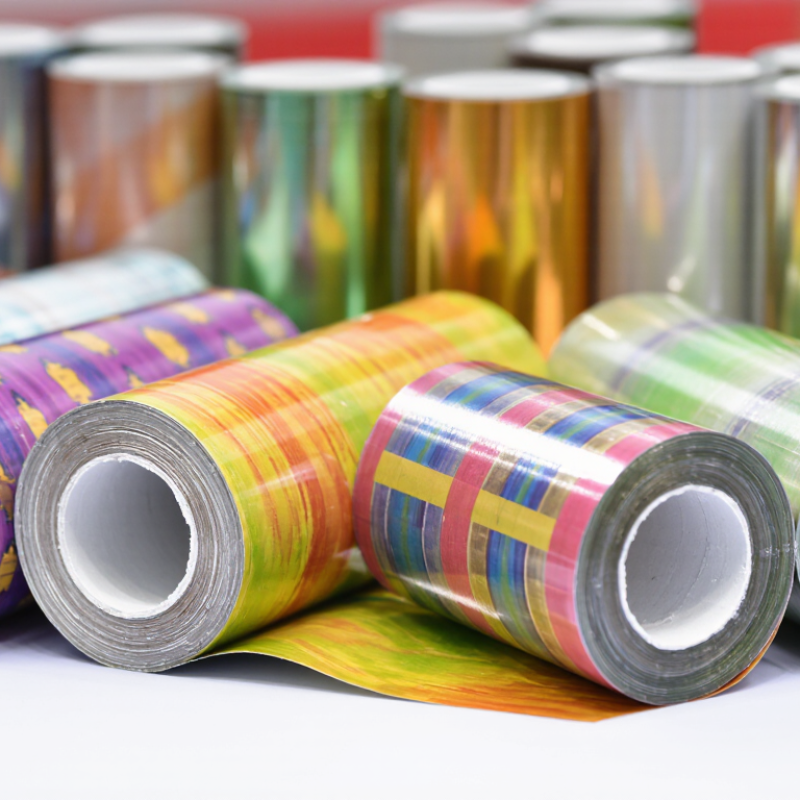
Printed Aluminium Foil Basics: Foil Is Typically Less Than 0.2 mm Thick
Aluminum foil is typically less than 0.2 mm thick, or under 200 micrometers. In printed packaging, however, buyers often see a laminate, not bare foil. A caliper reading across the full structure can include coatings, ink, adhesive, and polymer layers. That distinction matters. Ask suppliers to state whether quoted thickness describes the foil alone or the finished material. For a roll sample, note gauge, width, and method. One edge reading may not represent the full web.
Printing adds another practical concern. Ink must suit the surface treatment and intended contact side, while conversion steps can stretch or crease thin foil. Check a sample under normal handling: look for scuffing, pinholes against a bright light, and uneven winding. These checks do not replace documented barrier or migration testing, but they can flag basic process issues. A thicker foil is not automatically better; performance depends on alloy, temper, laminate design, and package use.
Tips: Measure the foil layer. Confirm units and tolerance in writing, and compare samples using the same method. Keep a small retained sample. Real production can differ from a neat lab swatch, so verify the actual roll before approving print color or sealing settings.
China’s Printing Process: Gauge, Color Control, Coatings, and Food-Contact Safety
Printed aluminium foil demands tighter control than a color proof alone can show. European Aluminium’s technical overview describes foil as rolled aluminium below 0.2 mm, or 200 microns. At these thin gauges, small thickness changes can affect stiffness, registration, and handling on press. Buyers should specify nominal thickness and agreed tolerances, then check incoming rolls. A bright red swatch may look different on silver foil than on white-coated stock. Measure color with a spectrophotometer under agreed conditions, and set a job-specific ΔE00 tolerance. Small shifts show.
Coatings must suit the intended use, printing inks, and any later heat-sealing step. Ask for cure records, coating specifications, and evidence that the finished structure meets the destination market’s food-contact requirements. For example, FDA 21 CFR 175.300 addresses certain resinous and polymeric coatings; it is not a blanket approval for every printed foil construction. The EU’s Framework Regulation 1935/2004 also sets food-contact principles. Test the complete package where required, not just an ink sample. Paperwork can look tidy. Real production varies, and a clean swatch cannot reveal every migration risk.
Comparing Chinese Manufacturers by Output, MOQ, Lead Time, and Certifications
Comparing Chinese printed aluminium foil manufacturers is less about finding the biggest factory than matching production systems to your order. Ask for monthly output by foil gauge, width, and print complexity; a headline tonnage figure can hide bottlenecks. A line handling plain rolls may not run equally fast on multi-colour artwork. Details matter.
Minimum order quantities often depend on print cylinders, material specifications, and whether the factory can combine similar jobs. Request a written MOQ for your exact roll width and design, not a general estimate. Lead times also need context: confirm whether the quoted schedule starts after artwork approval, deposit, or sample sign-off. Ask about production and shipping separately. A short promise is less useful if it excludes proofing or packing.
Certifications should match the product and destination market. Check the document holder, validity dates, covered site, and product scope; a certificate alone may not verify a specific printed foil. Request recent test reports or declarations relevant to your intended use. Compare suppliers using the same specification sheet and order quantity. Published capacity and delivery figures can be outdated, and even careful comparisons leave some uncertainty. That is worth acknowledging. A small pilot order can reveal print consistency, roll edges, packaging quality, and communication gaps before a larger commitment.
China Printed Aluminium Foil Manufacturers: Sourcing Benchmarks
Indicative planning estimates for comparing supplier scale and order requirements—not audited or company-specific data.
How to read the chart: Horizontal position shows minimum order quantity (MOQ); vertical position shows lead time; larger bubbles indicate higher estimated monthly output capacity.
Certifications: ISO 9001, BRCGS, and FSSC 22000 are examples of standards buyers may request. Certification scope and validity vary by site and product; verify documents directly with each supplier. Confirm actual output, MOQ, and lead time during quotation.
Buyer Quality Checks: Pinholes, Seal Strength, and Barrier Performance
For global buyers comparing printed aluminium foil manufacturers in China, quality checks should match the package’s actual use. Pinholes can weaken protection even when the printed surface looks flawless. Inspect samples under a bright light, then examine several areas across the roll, including edges and splices. Tiny defects matter. Visual checks are useful, but they cannot prove that an entire production batch is defect-free. Keep samples and record the batch, foil thickness, and inspection method.
Seal strength needs testing with the intended sealing temperature, pressure, and dwell time. A seal that holds in a room-temperature hand test may fail after filling, handling, or transport. Ask for test results tied to clear conditions, not just a single strength figure. Barrier performance also needs evidence: request oxygen and water-vapour transmission results, with the test temperature and humidity stated. These values can change with material structure and test conditions. A bright sample can still mislead. I would compare production samples with agreed specifications and repeat checks when materials or settings change. Even careful testing leaves some uncertainty; documenting it is better than assuming every roll will behave identically.
Recycling Aluminium Uses About 5% of the Energy Needed for Primary Production
China Top Printed Aluminium Foil Manufacturers for Global Buyers
Recycling aluminium uses about 5% of the energy required to produce primary aluminium, according to widely cited industry estimates. The exact figure varies with the energy source, recycling process, and quality of collected scrap. Still, remelting clean aluminium generally needs far less energy than producing metal from bauxite. That difference can matter when buyers assess the footprint of printed foil packaging.
Printed foil is not always simple to recycle. Inks, coatings, adhesives, and plastic layers may need separation, and local facilities handle these materials differently. Ask suppliers about recycled content, material composition, and supporting documentation. Check whether the foil’s thickness and print performance suit the product; a lighter gauge may reduce material use, but it must still protect the contents. Small details matter. Energy savings are meaningful, yet they do not automatically make every package recyclable.
Tips: Request clear material specifications and verify recycling options in the destination market. Compare like with like, including foil thickness and any bonded layers. A useful question: what happens to this exact packaging after use? That answer may be less tidy than a sustainability claim, and worth checking.
