
Skip to content

Top 10 Types of Vacuum Seal Pouches for Food Packaging

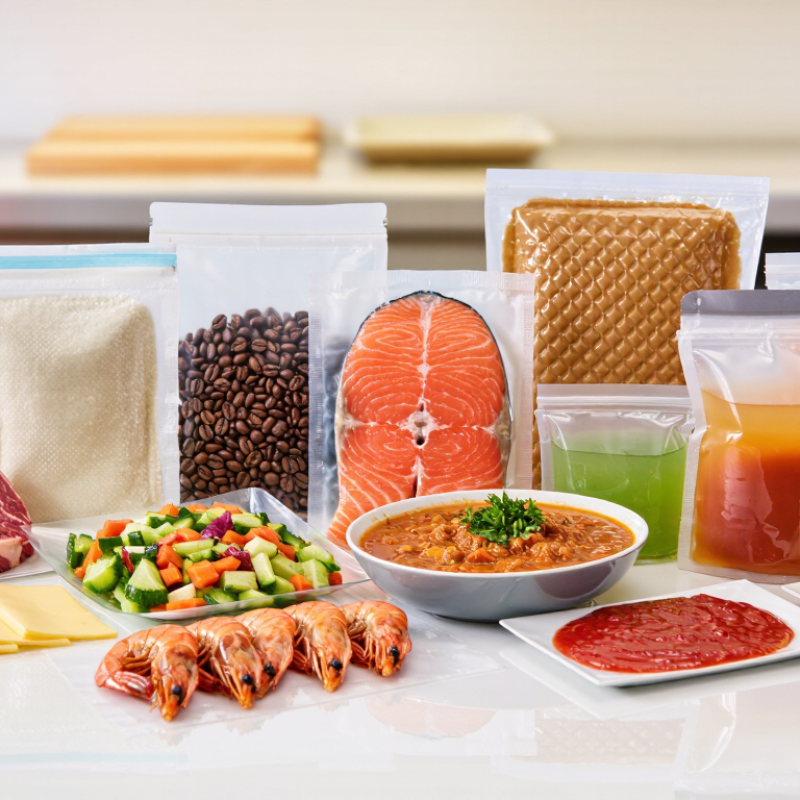
Food packaging decisions rarely begin with a machine. They begin with moisture, oxygen, sharp bones, and customer expectations. Vacuum Seal Pouches help remove air around meat, cheese, coffee, seafood, and prepared meals. Their clear walls reveal product quality, while sealed edges reduce leakage and freezer burn. Yet no pouch solves every problem. A material that protects fresh beef may perform poorly with hot soup or oily sauces. Good selection requires more than attractive product photographs.

This guide examines ten common types, including standard multilayer pouches, boilable pouches, freezer-grade options, embossed bags, nylon-reinforced designs, and high-barrier films. Each type is assessed through practical factors: puncture resistance, seal strength, oxygen control, storage temperature, and equipment compatibility. In real packing rooms, small details matter. A damp seal area can create a hidden channel. A rough bone can pierce thin film overnight. These examples reflect routine packaging experience, not laboratory promises.

Reliable recommendations also depend on product testing and supplier documentation. Check food-contact suitability, stated temperature limits, traceability, and sealing instructions before production. Testing should include compression, drop, leakage, and shelf-life checks. Some results may surprise you. A thicker pouch is not always safer, and a stronger vacuum is not always better. Product shape, residual air, and sealing time can change outcomes. The following overview offers a practical starting point for informed packaging choices, while leaving room for correction when actual products behave differently.
Top 10 Types of Vacuum Seal Pouches for Food Packaging

Vacuum Seal Pouches: Structure, Function, and Food-Safety Basics

Top 10 Types of Vacuum Seal Pouches for Food Packaging

Vacuum seal pouches combine a sealant layer, barrier layer, and strength layer. Common structures include PE/PE, PA/PE, EVOH laminates, foil laminates, shrink pouches, embossed pouches, smooth pouches, retort pouches, boilable pouches, and mono-material designs. Each structure solves a different problem. PE provides heat sealing. PA improves puncture resistance. EVOH limits oxygen transmission, while foil offers stronger light and gas protection. A pouch may look simple. It is engineered packaging.

The function is practical: removing air reduces oxidation, freezer burn, and package volume. FAO’s 2019 report estimated that 14% of food is lost between harvest and retail, so better packaging can support waste reduction. Yet vacuum sealing does not sterilize food. USDA guidance emphasizes keeping perishable foods at 40°F (4.4°C) or below. Low oxygen can also support certain anaerobic hazards when temperature control fails. That detail is often missed.

Food safety depends on the complete system: approved food-contact materials, clean filling, validated seal strength, correct storage, and traceable production records. FDA Food Code guidance commonly uses 41°F (5°C) as a cold-holding limit. Small wrinkles near the seal can create a serious leak. I have seen attractive pouches fail there. Testing should include burst, drop, leak, and seal-integrity checks. The imperfect part is material selection: recyclable mono-material pouches may reduce barrier performance in demanding applications, while multilayer films can be harder to recover. Good decisions require measured shelf-life data, not packaging claims alone.

How the Ten Pouch Types Differ by Material, Shape, and Application

Top 10 Types of Vacuum Seal Pouches for Food Packaging

Vacuum seal pouches differ mainly by material, shape, and intended use. Plain polyethylene pouches suit dry foods and light-duty storage. Nylon/polyethylene pouches resist punctures and protect fresh meat, seafood, and cheese. EVOH multilayer pouches provide stronger oxygen protection, helping preserve color and aroma. PET/polyethylene structures offer stiffness and clear presentation for prepared foods. Aluminum foil laminates block light, oxygen, and moisture, making them useful for sensitive products. They are not transparent.

Retort pouches combine heat-resistant layers with strong seals for sterilized meals. Flat pouches save space and work well for sliced products. Stand-up pouches include a bottom gusset, so sauces and ready meals can sit upright. Shrink pouches tighten around meat during controlled heating, reducing loose film and purge. Bone-in or heavy-duty pouches use reinforced films for products with sharp edges. The right choice depends on product temperature, moisture, fat content, storage time, and handling pressure.

In practical packaging trials, seal width often matters as much as film thickness. A thick pouch can still fail when crumbs enter the sealing area. I have also seen attractive clear films lose performance after rough transport. That result was easy to overlook. Product testing should include vacuum retention, drop resistance, seal strength, and oxygen transmission. Food-contact suitability and processing conditions must be verified before production. Some applications need a stronger barrier; others only need reliable sealing and lower material use. Choosing the most advanced pouch is not always the most responsible decision.

Flexible Pouches for Everyday Foods, Portions, and Household Storage

Top 10 Types of Vacuum Seal Pouches for Food Packaging

Flexible vacuum seal pouches suit everyday foods, measured portions, and household storage. Their thin structure saves space in crowded freezers and kitchen drawers. Smooth pouches work well with compatible external vacuum sealers. Embossed pouches can improve air removal during sealing. Portion-size bags help separate chicken, vegetables, cheese, or marinated ingredients. Less waste, often. For dry goods, thicker pouches offer better resistance against punctures from pasta edges or small bones. In my packing trials, narrow bags sealed more neatly than oversized ones. Still, a perfect appearance does not guarantee a safe seal.

Tips: Cool cooked food before packing, then refrigerate or freeze it promptly. Freeze soups and sauces first to prevent liquid from entering the sealer. Leave enough headspace for a strong, even seal. Wipe the opening completely dry. Label every pouch with its contents and date. Small details matter.

Freezer-grade pouches help reduce frost exposure, while boilable pouches suit controlled reheating when their instructions allow it. Heavy-duty options are useful for sharp or irregular foods, but they can use more material. Reusable vacuum pouches may reduce waste, though cleaning the inner corners takes patience. I sometimes choose a smaller pouch too quickly, then struggle with sealing. That mistake is avoidable. Inspect each seam before storage, especially when stacking portions for several weeks.

Top 10 Types of Vacuum Seal Pouches for Food Packaging - Flexible Pouches for Everyday Foods, Portions, and Household Storage
No. Pouch Type Typical Material Structure Common Thickness Typical Format Best-Suited Foods and Uses Typical Temperature Guidance Main Benefits
1 Smooth Chamber Vacuum Pouch Multilayer polyethylene-based sealant film with nylon or another high-strength barrier layer 70–150 µm Flat three-side-seal pouch; usually used with chamber vacuum machines Fresh meat, poultry, fish, cheese, cooked foods, and freezer portions Usually for chilled or frozen storage; heat use depends on the specific film construction Strong seals, good puncture resistance, efficient air removal, and broad everyday use
2 Embossed Channel Vacuum Pouch Textured outer layer with a heat-sealable multilayer inner structure 70–120 µm Textured bags or rolls for external suction vacuum machines Dry goods, meat portions, vegetables, leftovers, and household storage Generally intended for refrigerated or frozen storage unless the film is specifically rated for heating Textured channels help air move toward the vacuum port in external machines
3 Boil-in-Bag Vacuum Pouch Heat-resistant multilayer film, commonly incorporating nylon and heat-stable sealant layers 80–150 µm Flat pouch with reinforced heat seals Pre-cooked grains, vegetables, sauces, soups, and meal components Often designed for hot-water heating around 90–100 °C; product instructions must be followed Allows sealed food to be reheated in hot water while reducing handling and oxidation
4 Sous Vide Cooking Pouch High-temperature multilayer film with a heat-resistant sealant and oxygen-barrier layer 70–120 µm Flat pouch with wide, reliable heat seals Steak, poultry, fish, vegetables, eggs, and portion-controlled prepared meals Commonly used between approximately 55–90 °C, depending on the film specification and cooking time Supports controlled low-temperature cooking and helps prevent water contact during cooking
5 Retort Vacuum Pouch Heat-resistant laminated structure, often using polyester, aluminum or transparent barrier layers, nylon, and polypropylene 90–180 µm Flat or stand-up pouch with high-strength seals Shelf-stable curries, sauces, soups, ready meals, seafood, and emergency food portions Designed for commercial retort processing, commonly about 110–135 °C under controlled pressure Combines vacuum packaging with thermal sterilization for extended ambient shelf life
6 Gusseted Vacuum Pouch Flexible multilayer barrier film with side or bottom gussets 80–160 µm Three-dimensional pouch with expanded capacity Large cuts of meat, whole poultry, bulky vegetables, cheese blocks, and family-size portions Usually used for chilled or frozen storage; thermal processing requires a rated structure Provides additional volume and improves package stability for irregular or bulky products
7 Bone-Guard Vacuum Pouch Heavy-gauge multilayer film with enhanced puncture and abrasion resistance 120–250 µm Flat or gusseted pouch with reinforced construction Bone-in beef, lamb, poultry, ribs, seafood with shells, and products with sharp edges Primarily for refrigerated or frozen distribution; heat suitability varies by film Reduces the risk of punctures caused by bones, shells, or hard food surfaces
8 Shrink Vacuum Pouch Multilayer shrink film with high oxygen barrier and heat-shrink properties 60–120 µm Form-fitting pouch that shrinks around the product after hot-water or controlled heat treatment Fresh meat, poultry, cheese, and products requiring a tight, retail-style package Shrink activation is commonly performed in hot water at approximately 80–95 °C, subject to film instructions Improves product presentation, reduces loose film, and helps limit purge and package movement
9 Resealable Zipper Vacuum Pouch Multilayer barrier film with an integrated zipper and a separate heat-seal area 80–150 µm Flat or stand-up pouch with zipper closure and top heat seal Dry snacks, coffee, nuts, grated cheese, deli foods, leftovers, and repeated household access Generally intended for chilled, frozen, or dry storage; zipper and film must be rated separately for heating Allows partial use and resealing while the heat seal provides the initial tamper-evident closure
10 Small Portion Vacuum Pouch Lightweight multilayer polyethylene and nylon or equivalent barrier film 60–100 µm Compact flat pouch, commonly made in single-serving sizes Herbs, berries, meat portions, baby-food ingredients, grated cheese, snacks, and meal-prep servings Typically used for refrigerated or frozen storage unless marked for cooking or hot filling Reduces portion waste, improves freezer organization, and supports convenient meal preparation
Packaging note: Thickness, barrier performance, seal strength, puncture resistance, and temperature limits vary by film construction and supplier specification. Always confirm food-contact compliance and processing instructions before using a pouch for boiling, sous vide cooking, retort processing, or hot filling.

Specialized Pouches for Liquids, Bones, Retail Display, and Long-Term Storage

Top 10 Types of Vacuum Seal Pouches for Food Packaging

Vacuum seal pouches serve different food packaging needs, and one material rarely fits every product. Liquid pouches need strong seals and controlled filling. Chill sauces, soups, or marinades before sealing to reduce spills. Leave enough headspace for a clean closure. For wet foods, a pouch with a textured channel can improve air removal.

Bone-in meat requires puncture-resistant film. Sharp edges can damage ordinary pouches during handling or freezing. A thicker pouch, bone guard, or double-bag method adds practical protection. Retail display pouches should offer clear visibility, neat edges, and consistent dimensions. A flat package stacks well, while a shaped pouch may show premium cuts more effectively. Long-term storage needs high oxygen and moisture barriers. This helps protect color, aroma, and texture during extended freezing. Still, no pouch prevents quality loss forever. Storage temperature matters.

Tips: Test the pouch with the actual food. Fat, moisture, and sharp bones behave differently. Check seal strength after freezing, thawing, and transport. I have seen attractive packages fail because the seal area was greasy. That detail is easy to miss. Choose pouch size carefully; excess material wastes space, while a tight fit can stress the seal. Record test results and adjust film thickness, sealing time, or filling volume when needed. Practical testing remains more reliable than relying only on specifications.

Top 10 Types of Vacuum Seal Pouches for Food Packaging

Application-fit index for common pouch formats used with liquids, bones, retail display, and long-term storage. Scores range from 1 to 5, where 5 indicates the strongest typical suitability.

Liquid pouches prioritize leak resistance, bone-guard pouches emphasize puncture protection, and retort or boilable formats are designed for heat processing and extended shelf life. The index reflects common construction characteristics rather than sales or brand performance.

How to Choose the Right Vacuum Seal Pouch for Each Food Product

Choosing the right vacuum seal pouch starts with the food, not the pouch supplier. Fresh meat and fish usually need strong puncture resistance, so multilayer PA/PE pouches are practical choices. Their nylon layer improves toughness, while polyethylene supports reliable sealing. For dry foods, a simpler PE structure may reduce cost and material use. Cheese and oily products often need higher oxygen and aroma barriers. EVOH or foil laminates can help, but they may reduce recyclability.

Moisture changes the decision. Soups, sauces, and ready meals need leak-resistant seals and, sometimes, retort-grade structures for heat processing. Retort pouches must match the product’s temperature, acidity, and processing time. Vacuum sealing is not a substitute for refrigeration. USDA FSIS guidance warns that oxygen-free packaging can support risks from Clostridium botulinum when temperature control fails. That detail is easy to overlook. According to FAO’s 2019 food-loss report, about 13.2% of food is lost between harvest and retail. Better packaging can reduce damage, but it cannot repair poor handling. UNEP’s 2024 Food Waste Index estimated 1.05 billion tonnes of food waste in 2022, showing why portion sizes and package formats also matter. A common mistake is choosing the strongest pouch for every product. It can increase cost, create unnecessary material use, and still fail if the seal area contains sauce or bone fragments. Test real products, real storage temperatures, and real sealing conditions before approval.

“Guardian has been a tremendous help in providing storage and distribution solutions for AIR Global. We came to Guardian with a need, and they quickly found a solution for us at a very reasonable price. Our business is very demanding, especially during busy periods, and Guardian has been flexible and able to accommodate all requests with less than 48 hours’ notice. April, our main contact, has been extremely helpful in making sure our orders are shipped on time and that our inventory is accurate. I highly recommend using Guardian and look forward to continuing our relationship for many years to come.”

Matt Buffington
Director of Supply and Operations
Americas

“The Guardian Logistics Team is responsive and helpful on a consistent basis.  This removes a tremendous amount of stress and gives us incentive to route cargo that will touch your dock. Thanks for all that you do!!!”

Charles Reel
Branch Manager
Scan Global Logistics

“I recommend with great confidence, Guardian Logistics Solutions and owner, Brent Smith to whomever needs top shelf deliveries including Last Mile, White Glove, Residential and Commercial.

I have known GLS since its inception. Guardian is always looking for the right answer to solve the customer’s problem. I can, without hesitation, recommend Guardian Logistics to any company that is looking for the best service in their coverage area. They will team with you to create a solution that suits your needs and ensure you are satisfied with the outcome.”

Steven T. Nelson

“I highly recommend Guardian Logistics Solutions. The professionalism and communications offered by the team, along with speediness, cost saving solutions and attitude is a testament to the fact that this is one of the most important partners you can have in the freight movement business.

The company offers exemplary service, they continuously exceed our expectations and that of the importers, they help us service, Guardian Logistics Solutions is the best solid business partner you should add to your company.”

Ubaldo Sierra
Maersk Customs Brokers
General Manager

“Guardian Logistic Solutions is one of those rare companies who under-promise-and-over-deliver EVERY single time!”

James Burke
Manager, Sales Team
OLIMP Warehousing

“I want to thank the team at Guardian for the excellent service we have received.
The shipments have been professionally handled and freight arrives timely and in good order at a fair price. Communication is a very important part of the handling and Guardian does a great job of communication through the delivery.”

Cheri Zetrouer
Access Worldwide
Customs Brokers & Freight Forwarders

“I am very lucky to have found Guardian Logistics to help with our freight needs.  Our business is a bit unique in that we only receive a shipment every 2-3 months and we have to stick to a very strict time schedule in order to unload the delivery.  We found it virtually impossible to consistently coordinate with logistics companies to have shipments arrive on time and when they were expected. After multiple frustrating scenarios, our broker introduced us to Guardian Logistics who handled all of our shipments recently to perfection. Our shipments have arrived on time, when expected, with friendly and helpful drivers.  We will only be using Guardian moving forward for all of our shipping and freight needs. I couldn’t recommend them strongly enough!”

Trey Conrad
Owner
Patriot Power Source

“We have been working with the Guardian company for several years now and I can say without a doubt that their entire team cares about the service they provide. Their personal interest in their customers’ success makes them a standout in the world of final mile delivery.

I highly recommend Guardian for anyone requiring outstanding services in warehousing and final mile delivery programs.”

Frank Ianucilli
Director of Final Mile Operations
Werner Enterprises

“At WeFixFreight.com, client satisfaction is our main priority.  We are proud to partner with the top notch team at Guardian to bring our customers nothing but the best service when it comes to freight reworks, cross docking services, and final mile delivery.”

Bill Carlin
CEO
WeFixFreight.Com

“The Guardian Logistics staff has always been exceptional, and these days, with all the competition out there, it’s the service that matters. We appreciate all they do and look forward to continuing our business with GLS.”

Cathy Avolio
Ocean Import Manager
Mallory Alexander Int'l Logistics (NY), LLC
Back To Top