
Skip to content

Why Choose an Aluminum Scrap Melting Furnace?

Choosing an aluminum scrap melting furnace is a production decision, not merely an equipment purchase. The right system can convert clean returns, machining chips, and rejected castings into useful molten metal. It can also reduce waste, energy loss, and dependence on primary aluminum. Small details matter.

Experienced foundry teams examine furnace capacity, melting speed, fuel or electrical demand, temperature control, and metal recovery. They also consider scrap condition. Painted, oily, or mixed material may create more dross and require careful preparation. A furnace that performs well with clean ingots may struggle with loose chips. That assumption can fail. The best choice reflects the actual charge materials, batch size, and daily operating rhythm.

Reliable selection requires more than a supplier’s brochure. Ask for documented performance data, service records, refractory specifications, and practical references from comparable facilities. Observe how operators load the chamber, skim dross, monitor temperature, and protect molten metal from contamination. Safety systems deserve equal attention, including controls, ventilation, access design, and emergency procedures. No furnace is perfect.

A well-designed aluminum scrap melting furnace should support stable metal quality and predictable production, while leaving room for maintenance and changing scrap streams. Energy efficiency is important, but it should not hide difficult cleaning or frequent downtime. Total operating cost often reveals the truth. Careful testing, realistic calculations, and honest conversations with experienced users can prevent an expensive mismatch. The final decision should balance recovery, reliability, safety, environmental responsibility, and long-term service support.
Why Choose an Aluminum Scrap Melting Furnace?

What Is an Aluminum Scrap Melting Furnace?

What Is an Aluminum Scrap Melting Furnace?

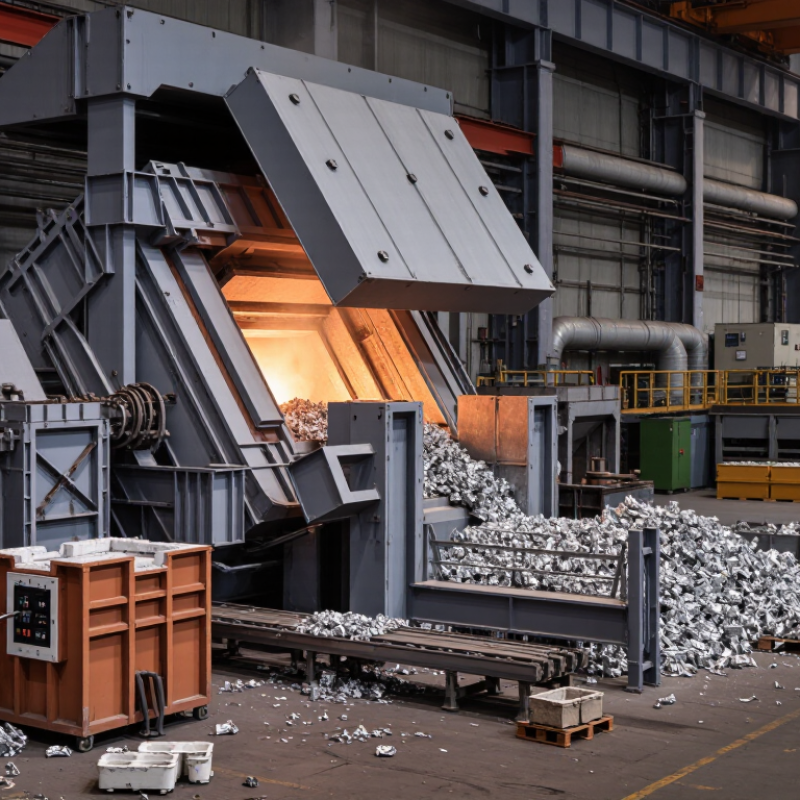
An aluminum scrap melting furnace is industrial equipment that converts sorted aluminum waste into reusable molten metal. It uses controlled heat, usually from gas, electricity, or induction, to melt chips, castings, sheets, and production offcuts. Common designs include reverberatory, rotary, and induction furnaces. Each design handles different scrap sizes, contamination levels, and production volumes.

The furnace is more than a heated chamber. Operators load prepared scrap, control temperature, remove dross, and sample the melt before casting. Poor sorting can introduce iron, oil, paint, or moisture. These impurities may reduce metal quality and create safety risks. The International Aluminium Institute reports that recycling aluminum uses about 5% of the energy required for primary aluminum production, saving roughly 95%. That figure is powerful, but real performance varies with furnace efficiency, scrap cleanliness, and melt losses. The number is not automatic.

Tips: Keep wet scrap away from the charge area. Pre-sort alloys when possible. Monitor bath temperature instead of relying only on furnace color. Record metal yield, fuel use, and dross generation every shift. Small records reveal expensive habits. A practical operator should also question whether every scrap grade belongs in the same melt.

How Does an Aluminum Scrap Melting Furnace Work?

An aluminum scrap melting furnace turns sorted metal waste into liquid aluminum through controlled heating. Operators begin by removing steel, plastic, moisture, and heavily contaminated pieces. This preparation matters because dirty scrap can create smoke, excessive dross, and unstable furnace conditions.

The furnace heats the charge gradually inside a refractory-lined chamber. Temperatures must rise above aluminum’s melting point, about 660°C, while avoiding unnecessary overheating. Burners, electric elements, or induction systems transfer heat to the metal. A thermocouple tracks the bath temperature, but readings can vary across the chamber. That detail is easy to underestimate.

Molten aluminum collects at the furnace bottom. Operators skim floating dross with a long-handled tool, then check the melt before transfer. Some processes use controlled degassing to reduce hydrogen and improve casting quality. Alloy separation remains essential. Mixed scrap may produce inconsistent chemistry, even when the surface looks clean. In practice, furnace performance depends on charge size, scrap shape, moisture control, lining condition, and operator judgment. Small mistakes can increase oxidation and energy use. The metal may appear ready before it is truly uniform.

What Benefits Does It Offer for Aluminum Recycling?

Why Choose an Aluminum Scrap Melting Furnace?

What Benefits Does It Offer for Aluminum Recycling?

An aluminum scrap melting furnace turns discarded metal into usable material again. This reduces dependence on newly mined aluminum and supports a more circular production system. In practical operations, clean scrap usually melts faster and creates fewer unwanted residues. Painted, oily, or mixed scrap needs stricter preparation. That difference matters.

Modern furnaces can improve thermal efficiency through controlled heating and insulated chambers. Less wasted heat can reduce fuel use and operating costs. Temperature monitoring also helps protect the alloy’s composition. This is important when recycled aluminum must meet consistent production requirements. Operators can adjust charging rates, melting temperatures, and holding times with greater precision. Small controls often produce meaningful improvements.

Recycling also saves valuable floor space when scrap is processed near the point of collection. Properly designed equipment can limit dust, splashing, and exposure to excessive heat. Safety still depends on trained workers, dry charge materials, and regular maintenance. The furnace is not magic. Poor sorting may lower metal quality and increase slag formation. Even experienced teams need to review their process data. Energy use, recovery rates, and material losses should be measured over time. A furnace may perform well, yet an inefficient loading routine can weaken the overall result.

Why Choose an Aluminum Scrap Melting Furnace? - What Benefits Does It Offer for Aluminum Recycling?
Data Dimension Typical Value or Range Recycling Benefit Practical Considerations
Aluminum melting temperature Approximately 660.3 °C Enables aluminum scrap to be processed at a lower temperature than ferrous metals, helping reduce thermal demand and furnace wear. Actual operating temperatures are normally set above the melting point to support heat transfer, circulation, and complete melting.
Energy required for melting Theoretical minimum: about 0.38 kWh/kg from 25 °C Provides a useful benchmark for evaluating furnace efficiency and identifying heat losses. Real energy consumption is higher because of furnace insulation, exhaust losses, scrap moisture, oxidation, holding time, and charging practices.
Scrap volume reduction Approximately 2.7 L of solid aluminum per kg Converts bulky scrap into compact liquid metal, reducing storage space and simplifying downstream casting or alloy production. The apparent volume reduction depends on scrap shape, packing density, coatings, attached materials, and dross formation.
Material recovery potential High for clean, correctly sorted aluminum scrap Allows valuable aluminum to be recovered repeatedly while reducing the need for primary aluminum production. Recovery is affected by alloy mixing, oxidation, fines, paint, oil, moisture, furnace design, flux practice, and metal handling.
Typical charge materials Castings, sheet, extrusion offcuts, turnings, and beverage cans Supports flexible recycling of production returns and post-consumer scrap streams. Turnings and lightweight scrap usually require controlled charging to limit oxidation and improve feeding safety.
Alloy flexibility Suitable for many wrought and cast aluminum alloys Enables recyclers to produce remelt ingots or molten metal for different applications. Separate sorting and chemical analysis are important because copper, silicon, magnesium, iron, and zinc levels influence alloy quality.
Metal temperature control Common process-control range: approximately 680–760 °C Stable temperature control improves melt quality, pouring consistency, and production repeatability. The appropriate temperature depends on alloy composition, casting method, holding time, and required fluidity. Excessive temperature can increase oxidation and hydrogen pickup.
Environmental advantage Recycling aluminum generally uses far less energy than primary production Reduces dependence on bauxite mining, alumina refining, and electrolytic aluminum production. The total environmental benefit depends on electricity or fuel source, transport distance, scrap preparation, furnace efficiency, and emission controls.
Process integration Melting, holding, skimming, alloy adjustment, and casting A well-designed furnace system can combine several process stages, improving material flow and reducing repeated reheating. Automation, temperature measurement, filtration, degassing, and dross management should be selected according to throughput and product requirements.
Key operating risks Moisture explosions, oxidation, dross, fumes, and cross-contamination Identifying risks helps improve operator safety, metal yield, and product consistency. Scrap should be dry and inspected before charging; suitable ventilation, protective equipment, charging procedures, and emission controls are essential.
Values are general engineering reference figures and indicative operating ranges. Actual performance depends on furnace type, capacity, insulation, fuel or electricity source, scrap composition, moisture content, operating temperature, and process control.

Which Furnace Features Affect Melting Efficiency?

Melting efficiency depends on more than furnace capacity. A well-insulated chamber reduces heat loss around the door, roof, and hearth. Accurate temperature sensors prevent unnecessary overheating. Modulating burners also matter. They match heat input to the scrap load instead of creating long, uneven flames. The International Aluminium Institute reports that recycled aluminium requires roughly 5% of the energy used for primary aluminium production. That advantage can shrink when a furnace produces excessive dross or loses heat through exhaust gases.

Scrap preparation directly affects performance. Dry, compact charges melt more consistently than loose, contaminated pieces. A properly designed charging system limits door-opening time. Rotary motion or controlled immersion can improve heat transfer, but it may also increase oxidation if poorly managed. I have seen fast melting look impressive while metal recovery quietly falls. Measuring only tonnes per hour is a mistake. Operators should track energy per tonne, melt cycle time, metal yield, dross percentage, and exhaust temperature. U.S. Department of Energy industrial assessments commonly identify insulation, combustion control, and heat recovery as key industrial efficiency measures. Still, real results depend on operating habits.

Tips: Compare furnaces using measured energy and recovery data, not advertised capacity. Check sensor calibration regularly. Keep doors closed. Review one difficult shift, too; it often reveals the real weakness.

How Can Businesses Choose the Right Furnace?

Why Choose an Aluminum Scrap Melting Furnace?

Choosing the right aluminum scrap melting furnace starts with the scrap itself. Clean extrusion offcuts melt differently from painted sheets, oily turnings, and mixed castings. Record the daily charge weight, scrap moisture, alloy range, and required pouring temperature. These details reveal the furnace capacity and heating method your operation actually needs.

A practical assessment should include fuel or electricity costs, melting speed, metal recovery, lining life, and operator safety. A furnace that looks affordable may consume more energy during frequent partial loads. Check temperature control accuracy, door design, fume extraction, and access for routine maintenance. Ask for test data, service records, and realistic performance conditions. One overlooked issue is floor space; charging equipment and cooling zones also require room. Experience matters here, but assumptions still cause expensive errors.

Tips: Compare at least three operating scenarios before buying. Measure energy use per melted ton, not only the purchase price. Inspect refractory joints and control panels during a site visit. Leave room for future production changes. A perfect forecast is impossible. That is worth admitting.

Why Choose an Aluminum Scrap Melting Furnace?

Melting-point comparison helps businesses evaluate the thermal demand and furnace design required for different scrap metals.

Aluminum has a melting point of approximately 660°C, substantially lower than copper and iron. This can support lower process temperatures and efficient recycling when the furnace is correctly matched to scrap type, required throughput, contamination level, temperature control, and energy source. Actual operating temperatures are higher than the melting point to ensure proper melting and handling.

Reference values are standard melting points for pure metals; aluminum alloys and mixed scrap may require different process settings.

“Guardian has been a tremendous help in providing storage and distribution solutions for AIR Global. We came to Guardian with a need, and they quickly found a solution for us at a very reasonable price. Our business is very demanding, especially during busy periods, and Guardian has been flexible and able to accommodate all requests with less than 48 hours’ notice. April, our main contact, has been extremely helpful in making sure our orders are shipped on time and that our inventory is accurate. I highly recommend using Guardian and look forward to continuing our relationship for many years to come.”

Matt Buffington
Director of Supply and Operations
Americas

“The Guardian Logistics Team is responsive and helpful on a consistent basis.  This removes a tremendous amount of stress and gives us incentive to route cargo that will touch your dock. Thanks for all that you do!!!”

Charles Reel
Branch Manager
Scan Global Logistics

“I recommend with great confidence, Guardian Logistics Solutions and owner, Brent Smith to whomever needs top shelf deliveries including Last Mile, White Glove, Residential and Commercial.

I have known GLS since its inception. Guardian is always looking for the right answer to solve the customer’s problem. I can, without hesitation, recommend Guardian Logistics to any company that is looking for the best service in their coverage area. They will team with you to create a solution that suits your needs and ensure you are satisfied with the outcome.”

Steven T. Nelson

“I highly recommend Guardian Logistics Solutions. The professionalism and communications offered by the team, along with speediness, cost saving solutions and attitude is a testament to the fact that this is one of the most important partners you can have in the freight movement business.

The company offers exemplary service, they continuously exceed our expectations and that of the importers, they help us service, Guardian Logistics Solutions is the best solid business partner you should add to your company.”

Ubaldo Sierra
Maersk Customs Brokers
General Manager

“Guardian Logistic Solutions is one of those rare companies who under-promise-and-over-deliver EVERY single time!”

James Burke
Manager, Sales Team
OLIMP Warehousing

“I want to thank the team at Guardian for the excellent service we have received.
The shipments have been professionally handled and freight arrives timely and in good order at a fair price. Communication is a very important part of the handling and Guardian does a great job of communication through the delivery.”

Cheri Zetrouer
Access Worldwide
Customs Brokers & Freight Forwarders

“I am very lucky to have found Guardian Logistics to help with our freight needs.  Our business is a bit unique in that we only receive a shipment every 2-3 months and we have to stick to a very strict time schedule in order to unload the delivery.  We found it virtually impossible to consistently coordinate with logistics companies to have shipments arrive on time and when they were expected. After multiple frustrating scenarios, our broker introduced us to Guardian Logistics who handled all of our shipments recently to perfection. Our shipments have arrived on time, when expected, with friendly and helpful drivers.  We will only be using Guardian moving forward for all of our shipping and freight needs. I couldn’t recommend them strongly enough!”

Trey Conrad
Owner
Patriot Power Source

“We have been working with the Guardian company for several years now and I can say without a doubt that their entire team cares about the service they provide. Their personal interest in their customers’ success makes them a standout in the world of final mile delivery.

I highly recommend Guardian for anyone requiring outstanding services in warehousing and final mile delivery programs.”

Frank Ianucilli
Director of Final Mile Operations
Werner Enterprises

“At WeFixFreight.com, client satisfaction is our main priority.  We are proud to partner with the top notch team at Guardian to bring our customers nothing but the best service when it comes to freight reworks, cross docking services, and final mile delivery.”

Bill Carlin
CEO
WeFixFreight.Com

“The Guardian Logistics staff has always been exceptional, and these days, with all the competition out there, it’s the service that matters. We appreciate all they do and look forward to continuing our business with GLS.”

Cathy Avolio
Ocean Import Manager
Mallory Alexander Int'l Logistics (NY), LLC
Back To Top