Skip to content

Why Choose PS Sheet Roll for Your Business?

Choosing the right material can affect production speed, product appearance, and day-to-day costs. Ps Sheet Roll is used in applications such as thermoformed trays, protective packaging, and display components. Its smooth surface and consistent thickness can support clean forming and a neat finish. Still, results depend on the grade, sheet design, and equipment settings.

A practical evaluation starts with the actual product. Check thickness, width, forming behavior, and how the material handles during cutting and storage. Ask suppliers for technical specifications, then test samples on your own line. Small details matter. A roll that performs well in one process may not suit another, especially when heat, shape, or load requirements change.

Cost deserves a closer look, too. Compare usable output and processing needs, not just the price per roll. Also consider packaging, storage space, and material waste. The choice is not automatic. Ps Sheet Roll may offer a useful balance of processability and presentation, but it is not ideal for every application. Careful trials and clear supplier information help businesses make a decision they can verify, rather than relying on claims alone.
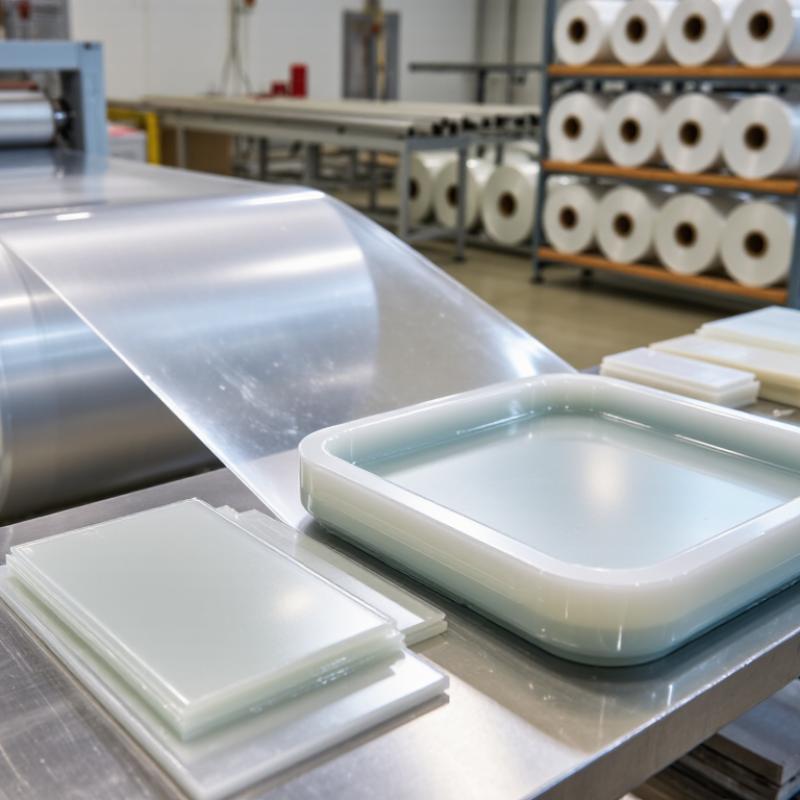
Why Choose PS Sheet Roll for Your Business?

What PS Sheet Roll Is and How It Is Produced

PS sheet roll is a continuous, flexible-length sheet made from polystyrene resin. It is commonly supplied in general-purpose or impact-modified grades. General-purpose polystyrene is typically clear and stiff; impact-modified grades are less brittle. Both can be shaped into items such as display parts and thermoformed packaging. The right grade depends on the forming method and the finished part’s strength needs.

Production begins by melting polystyrene pellets and pushing the melt through a flat extrusion die. The sheet then passes over cooled rolls, which help set its thickness and surface. It is wound into rolls after cooling and inspection. The process is controlled. Operators check thickness, edge quality, and winding tension, since small variations can cause trouble during later forming. Plastics Europe’s Plastics – the Fast Facts 2023 report estimates global plastics production at 400.3 million tonnes in 2022. That figure covers all plastics, not polystyrene alone. It provides scale, but should not be mistaken for PS demand. Buyers should confirm grade, roll width, thickness tolerance, and forming temperature with their supplier. PS is rigid and easy to process, yet can crack under impact; the trade-off deserves a practical trial.

Why Choose PS Sheet Roll for Your Business? — What PS Sheet Roll Is and How It Is Produced
Topic What It Means Business Relevance
Material definition PS sheet is a flat plastic sheet made from polystyrene. A sheet roll is sheet supplied wound on a core rather than as individual flat panels. Roll supply can suit continuous feeding and automated converting equipment, when the sheet’s thickness and stiffness allow it to be wound.
Common PS grades GPPS (general-purpose polystyrene) is typically clear and rigid. HIPS (high-impact polystyrene) contains a rubber modifier and is generally tougher and more impact-resistant, but usually less transparent. Choose the grade according to appearance, stiffness, impact needs, and the forming process. Properties vary by formulation and supplier specification.
Raw material preparation Polystyrene resin pellets are fed into an extrusion line. Colorants or other additives may be incorporated when required by the product specification. Confirm resin grade, color, and any required food-contact or regulatory documentation for the intended end use.
Melting and extrusion A heated extruder melts and mixes the resin, then pushes the melt through a flat sheet die to create a continuous web. The process supports continuous production. Sheet width and thickness should be matched to the converting equipment and finished-part design.
Cooling and thickness control The hot sheet passes through cooled rollers, which help cool, smooth, and control its thickness before it is trimmed. Consistent thickness and a suitable surface finish help ensure reliable feeding and forming. Ask for the manufacturer’s tolerances.
Winding and inspection After cooling and trimming, suitable sheet is wound onto a core. Producers may inspect dimensions, appearance, and winding quality before packing. Check roll width, length, core size, winding direction, packaging, and handling requirements before ordering.
Typical converting uses Depending on grade and specification, PS sheet can be used in thermoforming and other converting applications, including packaging and display components. Confirm that the selected grade meets the product’s mechanical, visual, processing, and applicable compliance requirements.
Roll versus cut sheet Rolls are suited to continuous lines and are easier to feed as a web. Thicker or more rigid PS sheet may be supplied flat because it is less suitable for winding. Select the supply format based on line setup, storage space, material handling, and the sheet dimensions required.
Key purchasing checks Specify grade, color or transparency, thickness, width, roll length, core dimensions, surface requirements, and permitted tolerances. Request a technical data sheet and, where appropriate, a production sample to verify compatibility with your process and finished-product requirements.

Key Material Properties That Matter to Businesses

Why Choose PS Sheet Roll for Your Business?

Key Material Properties That Matter to Businesses

PS sheet roll is valued for its low weight and smooth surface. These qualities can make handling, cutting, and printing easier on a busy production line. A clean edge matters. It can reduce rough-looking parts and extra finishing work. Stiffness also helps trays, dividers, and display components hold their shape during ordinary use. The right thickness depends on the load and design.

Impact resistance varies with the sheet grade, thickness, and temperature. A sample may perform well in a warm workshop but feel more brittle in a cold storeroom. Test it in conditions close to your actual process. That step is easy to overlook. For thermoformed parts, check how evenly the material heats and whether details stay defined after forming. Results can differ between production setups.

Moisture resistance can be useful in packaging and indoor applications, but it does not make every finished part suitable for wet or outdoor exposure. Surface scratches may also show on visible components, especially with frequent handling. Ask for technical data, then compare it with a small production trial. I would not choose on price alone. Waste from poor forming, inconsistent thickness, or a surface that needs extra finishing can quietly affect operating costs. Recycling options depend on local facilities and the final product’s material mix.

Common Uses Across Packaging, Printing, and Manufacturing

PS sheet roll is used where a lightweight, smooth plastic surface can support practical production needs. In packaging, converters may cut or thermoform suitable grades into trays, inserts, and protective components. The right thickness depends on the product’s weight, shape, and handling conditions. Test a sample with the actual packing line. Small changes in temperature or forming pressure can affect the result.

Printing businesses use PS sheet for signs, display panels, and other flat graphics. Its relatively even surface can help produce clean, consistent images, though ink adhesion and finish depend on the sheet and printing process. Confirm compatibility before a full run. A quick print test can reveal problems early. That step is easy to skip.

In manufacturing, rolls can supply cut components, equipment covers, spacers, or formed parts, depending on material grade and design requirements. Teams should check thickness consistency, flexibility, and how the sheet behaves during cutting or heating. PS is not the best choice for every environment; impact, heat, and exposure requirements need careful review. Keep sample pieces from production trials, and compare them with the finished part under real working conditions.

How PS Sheet Rolls Support Cost and Production Efficiency

For businesses that thermoform packaging or lightweight components, PS sheet rolls can simplify material handling. A continuous roll feeds directly into many production lines, reducing the need to load separate sheets between runs. Operators can set the web width and feed rate to match the forming equipment. Less interruption can mean more machine time, though the result depends on line speed and operator skill.

Cost control starts with consistency.

A stable sheet thickness helps maintain forming temperatures and reduces parts that are too thin or uneven. Check roll width, gauge, and surface condition against the product specification before ordering. A roll that fits the machine well may also reduce edge trim and leftover material. Small changes matter.

Still, a roll is not automatically cheaper: storage space, unwinding equipment, and setup time affect the total cost. A simple trial run can reveal wrinkles, feeding issues, or excess scrap before a larger purchase. Keep records of output, rejected parts, and changeover time; those figures offer a more reliable comparison than unit price alone.

Factors to Check When Selecting a PS Sheet Roll

A PS sheet roll should match the forming process, finished part, and equipment—not just the quoted price. Check the sheet’s thickness and width against your machine settings, and ask for acceptable tolerance ranges. Small variations matter. A slight thickness difference can affect heating time, part strength, and material use across a production run.

Consider the surface finish, color consistency, and clarity if the sheet will remain visible in the final product. Review the technical data for stiffness, impact performance, and forming temperature, then compare those figures with your actual operating conditions. A catalogue photo alone is weak evidence; request a sample roll and inspect it under your own lighting. Look for scratches, edge damage, or uneven winding. These details can cause handling problems.

Confirm the roll’s outer diameter, core size, and weight before ordering. They must fit your unwinder and storage space. Also ask how the material should be stored, since heat and pressure can affect the roll during handling. Specifications can look tidy on paper, but a short production trial may reveal issues a document misses. Record the settings and results, even if the first test is not perfect. That record makes supplier comparisons more useful.

“Guardian has been a tremendous help in providing storage and distribution solutions for AIR Global. We came to Guardian with a need, and they quickly found a solution for us at a very reasonable price. Our business is very demanding, especially during busy periods, and Guardian has been flexible and able to accommodate all requests with less than 48 hours’ notice. April, our main contact, has been extremely helpful in making sure our orders are shipped on time and that our inventory is accurate. I highly recommend using Guardian and look forward to continuing our relationship for many years to come.”

Matt Buffington
Director of Supply and Operations
Americas

“The Guardian Logistics Team is responsive and helpful on a consistent basis.  This removes a tremendous amount of stress and gives us incentive to route cargo that will touch your dock. Thanks for all that you do!!!”

Charles Reel
Branch Manager
Scan Global Logistics

“I recommend with great confidence, Guardian Logistics Solutions and owner, Brent Smith to whomever needs top shelf deliveries including Last Mile, White Glove, Residential and Commercial.

I have known GLS since its inception. Guardian is always looking for the right answer to solve the customer’s problem. I can, without hesitation, recommend Guardian Logistics to any company that is looking for the best service in their coverage area. They will team with you to create a solution that suits your needs and ensure you are satisfied with the outcome.”

Steven T. Nelson

“I highly recommend Guardian Logistics Solutions. The professionalism and communications offered by the team, along with speediness, cost saving solutions and attitude is a testament to the fact that this is one of the most important partners you can have in the freight movement business.

The company offers exemplary service, they continuously exceed our expectations and that of the importers, they help us service, Guardian Logistics Solutions is the best solid business partner you should add to your company.”

Ubaldo Sierra
Maersk Customs Brokers
General Manager

“Guardian Logistic Solutions is one of those rare companies who under-promise-and-over-deliver EVERY single time!”

James Burke
Manager, Sales Team
OLIMP Warehousing

“I want to thank the team at Guardian for the excellent service we have received.
The shipments have been professionally handled and freight arrives timely and in good order at a fair price. Communication is a very important part of the handling and Guardian does a great job of communication through the delivery.”

Cheri Zetrouer
Access Worldwide
Customs Brokers & Freight Forwarders

“I am very lucky to have found Guardian Logistics to help with our freight needs.  Our business is a bit unique in that we only receive a shipment every 2-3 months and we have to stick to a very strict time schedule in order to unload the delivery.  We found it virtually impossible to consistently coordinate with logistics companies to have shipments arrive on time and when they were expected. After multiple frustrating scenarios, our broker introduced us to Guardian Logistics who handled all of our shipments recently to perfection. Our shipments have arrived on time, when expected, with friendly and helpful drivers.  We will only be using Guardian moving forward for all of our shipping and freight needs. I couldn’t recommend them strongly enough!”

Trey Conrad
Owner
Patriot Power Source

“We have been working with the Guardian company for several years now and I can say without a doubt that their entire team cares about the service they provide. Their personal interest in their customers’ success makes them a standout in the world of final mile delivery.

I highly recommend Guardian for anyone requiring outstanding services in warehousing and final mile delivery programs.”

Frank Ianucilli
Director of Final Mile Operations
Werner Enterprises

“At WeFixFreight.com, client satisfaction is our main priority.  We are proud to partner with the top notch team at Guardian to bring our customers nothing but the best service when it comes to freight reworks, cross docking services, and final mile delivery.”

Bill Carlin
CEO
WeFixFreight.Com

“The Guardian Logistics staff has always been exceptional, and these days, with all the competition out there, it’s the service that matters. We appreciate all they do and look forward to continuing our business with GLS.”

Cathy Avolio
Ocean Import Manager
Mallory Alexander Int'l Logistics (NY), LLC
Back To Top