Choosing a logistics supply chain management company in China can shape delivery speed, inventory costs, and customer experience. China’s manufacturing centers, ports, and inland transport networks create many options, but capabilities vary by region and industry. A provider serving electronics exporters in Shenzhen may not suit a furniture business shipping from inland provinces.
Martin Christopher, a supply chain management expert, is often quoted as saying, “Supply chains compete, not companies.” That idea helps explain why logistics decisions reach beyond freight rates. Warehousing, customs coordination, shipment visibility, and contingency planning all affect how reliably goods move. Small details matter.
This guide examines companies operating in China and the services they offer, including domestic distribution, international freight, and integrated logistics support. It also considers practical selection criteria: geographic coverage, technology, industry experience, service transparency, and the quality of customer communication. These comparisons are not a universal ranking; the right fit depends on cargo, routes, budget, and delivery commitments. Some information may change as networks and services evolve, so readers should verify current capabilities directly with providers. A polished website is not proof of dependable execution. Look for specific evidence, such as coverage maps, operating procedures, and measurable service standards, before making a decision.
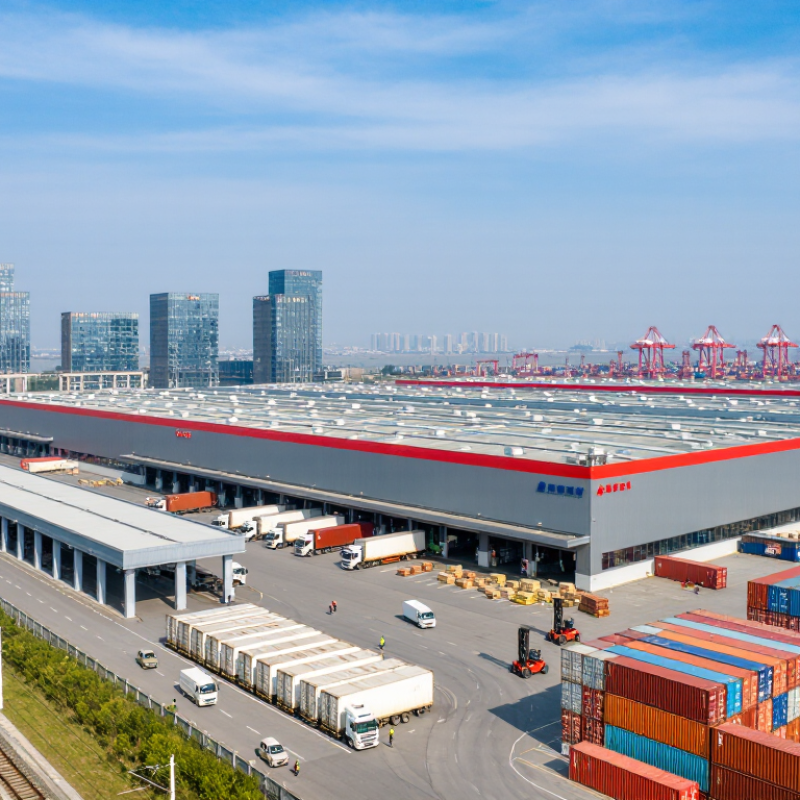
In 2024, China’s social logistics value reached RMB 360.6 trillion, according to the China Federation of Logistics and Purchasing (CFLP). This figure measures the value of goods moving through logistics systems. It is not company revenue or a direct measure of profit. The distinction matters. It reflects the scale of supply chains, from factory gates and rail yards to neighborhood delivery routes.
For companies managing these flows, scale alone is not enough. Strong operators coordinate warehousing, freight, inventory data, and delivery schedules across regions. Buyers can examine on-time rates, damage records, system visibility, and plans for seasonal surges. Ask how exceptions are reported, not only how quickly shipments move. A dashboard can look polished. Execution can still falter. The RMB 360.6 trillion figure says little about individual providers’ service quality, so compare documented results and clearly defined service levels. China’s geography and changing transport conditions make flexibility valuable, but no network performs perfectly. Delays happen, even for experienced teams; honest reporting and practical recovery plans matter more than broad promises.
Annual total social logistics value, 2020–2024 (RMB trillion)
China’s total social logistics value reached RMB 360.6 trillion in 2024, up 5.8% year over year. This economy-wide measure reflects the value of logistics activity, not company revenue or market share. Source: China Federation of Logistics and Purchasing (CFLP).
In China, supply chain management companies connect suppliers, factories, warehouses, and delivery teams. Their work often begins with demand planning: reviewing sales data, seasonal patterns, and production capacity to estimate what materials will be needed. They may coordinate orders for components, monitor supplier lead times, and flag shortages before a production line runs low. Forecasts are never perfect. A sudden sales shift can still leave too much stock in one city and too little in another.
These companies also manage the movement and storage of goods. For example, a team may arrange collection from a factory, book warehouse space, and plan delivery to a retailer or customer. At a distribution center, staff track incoming cartons, check inventory records, and organize dispatch schedules. For cross-border shipments, providers can coordinate documents, freight bookings, and handoffs with relevant service partners. Small delays matter. A missed pickup can affect several later deliveries.
Many providers use digital systems to share shipment status, inventory levels, and supplier updates with clients. This visibility helps managers make practical decisions, such as shifting stock between warehouses or adjusting delivery plans. However, software cannot replace clear communication or careful checks on data quality. Companies should confirm service scope, reporting methods, and contingency plans before relying on a provider. Some arrangements remain imperfect, especially when forecasts or supplier updates arrive late.
China’s major logistics providers serve different parts of the supply chain. A leading private express carrier is built for time-sensitive parcels and dense urban routes. An e-commerce-linked operator combines warehousing, order fulfilment, and delivery. A platform-based network coordinates partner couriers, while a state-owned ocean carrier focuses on international shipping and port connections. The national postal operator offers broad domestic reach, including less densely served areas. These models are not interchangeable.
The State Post Bureau reported 174.5 billion express parcels in 2024, up 21.5% year on year. That scale puts pressure on sorting hubs, delivery capacity, and returns handling. The China Federation of Logistics and Purchasing reported total social logistics value of 360.6 trillion yuan in 2024, a 5.8% increase. For buyers, compare delivery coverage, warehouse locations, tracking detail, and claims processes—not just headline rates. A low quote can hide slower handoffs or extra storage fees. There is a trade-off. No provider excels on every lane, and published network figures do not guarantee service at a specific address. Check recent performance data for your route before signing.
China’s State Post Bureau reported 174.5 billion parcels in 2024. That equals roughly 478 million parcels per day across the year, though actual volumes rise and fall sharply. Shopping festivals, regional holidays, and sudden weather changes can fill sorting centers faster than a daily average suggests. The number is immense. It also measures parcels, not individual shoppers or orders.
For supply chain managers, this demand tests more than delivery speed. A capable logistics partner needs accurate parcel forecasting, flexible warehouse space, reliable sorting equipment, and clear handoffs between transport teams. Picture a warehouse aisle at midnight: scanners beep, carts queue, and a delayed truck can disrupt several downstream routes. Useful performance checks include on-time delivery, damage rates, tracking accuracy, and how quickly the operator handles exceptions.
Choosing among logistics companies in China requires attention to the shipment’s route and product needs. A dense city network may suit small parcels, while remote destinations require stronger regional coverage. Ask how capacity changes during peak periods and whether tracking data is updated promptly. A polished service report is helpful, but not proof of consistent execution. Even strong networks have weak days; missed scans and late handoffs still happen.
Choosing a logistics supply chain management company in China starts with your actual delivery map. A provider may cover major coastal cities but rely on partners in inland areas. Check service locations against your factory, suppliers, and customer addresses. Ask who handles each transfer, and request typical transit times for those routes. A city list alone is not enough.
Warehousing deserves a site-level review. Compare inventory accuracy, receiving procedures, storage conditions, and order cut-off times. Ask how quickly staff can locate a sample carton and reconcile a stock difference. For digitalization, review a live tracking demonstration, not just a feature sheet. Confirm whether shipment status, inventory, and invoices connect with your systems. Costs should include storage, handling, packing, transport, and extra fees for peak periods. A low headline rate can hide expensive exceptions. No comparison is perfectly neat; service levels and fee definitions may differ.
Tips: Run a small pilot with real orders. Track on-time delivery, stock discrepancies, response times, and the final invoice. Put agreed service measures in writing, and ask for sample reports. If a provider cannot explain a charge clearly, pause and investigate. That sounds cautious, but it can prevent awkward surprises.
| Provider Type | Coverage | Warehousing | Digitalization | Cost Profile | Best Suited For | Points to Verify |
|---|---|---|---|---|---|---|
| Nationwide parcel and express network | Designed for parcel delivery across major cities and many county-level markets; service frequency and delivery times vary by route and destination. | Typically uses sorting hubs and transfer facilities; storage and inventory management may be limited or offered separately. | Shipment tracking and electronic delivery records are commonly available; confirm API access, event detail, and reporting options. | Usually priced by parcel weight, dimensions, destination zone, and service level. Remote-area, oversized-item, and additional-service fees may apply. | High-volume parcel shipping, direct-to-consumer orders, and routine domestic deliveries. | Check delivery-time commitments by postcode, parcel-size rules, claims procedures, surcharges, and peak-season capacity. |
| Integrated third-party logistics (3PL) | Can coordinate multiple transport modes and regions through one operating arrangement; actual owned and partner coverage differs by provider. | May combine storage, order fulfillment, inventory control, packing, and transport management. | May provide a warehouse management system (WMS), transport management system (TMS), inventory visibility, and system integrations. | Often combines fixed or recurring fees with activity-based charges, such as storage, picking, packing, and transportation. | Businesses seeking a single provider to coordinate several supply-chain activities. | Separate owned facilities from partner locations; review service-level agreements, inventory accuracy definitions, integration scope, and exit terms. |
| Contract warehousing and fulfillment | Coverage is tied to the locations of the contracted facilities; additional sites may require separate agreements or subcontracting. | Can include dedicated or shared space, receiving, storage, order picking, packing, returns, and value-added services. | WMS capabilities vary; confirm stock-level visibility, lot or serial tracking, order cut-off handling, and data-export options. | Common charges include storage, inbound handling, order lines or units picked, packing materials, and special handling. | Importers, manufacturers, and online sellers that need local inventory and order fulfillment. | Confirm minimum volumes, billing units, storage rules, inventory-count frequency, shrinkage liability, and peak capacity. |
| Freight forwarder and multimodal logistics provider | Arranges domestic or international movements through transport partners; route availability depends on origin, destination, mode, and current capacity. | May arrange consolidation, temporary storage, customs-related handling, or delivery to a separate warehouse. | Booking, milestone tracking, document handling, and shipment reporting may be available; tracking depth can differ by carrier and mode. | Quotes may include transport, handling, documentation, customs-related services, and other pass-through charges. | International shipments, larger freight consignments, and businesses coordinating multiple transport legs. | Request an itemized quote; clarify Incoterms, customs responsibilities, transit-time estimates, cargo insurance, and demurrage or detention exposure. |
| Cross-border e-commerce logistics specialist | Focuses on selected export lanes and destination markets; service availability, customs processes, and last-mile partners vary by country. | May offer export consolidation, origin storage, returns handling, or overseas fulfillment through partner facilities. | Often supports order-data exchange and cross-border tracking; verify marketplace integrations, customs-data fields, and delivery-event coverage. | Pricing can include international transport, customs-related handling, destination delivery, and optional fulfillment services. | Online merchants shipping orders from China to overseas customers. | Check destination restrictions, duties and taxes handling, delivery estimates, return routes, tracking handoffs, and service exclusions. |
| Regional road freight and trucking operator | Usually strongest in defined provinces, corridors, or local markets; coverage outside core areas may rely on partner carriers. | May offer cross-docking or short-term staging, but full inventory fulfillment is not always included. | Capabilities range from manual dispatch updates to digital booking and shipment tracking; confirm the operating process and data frequency. | Rates commonly depend on lane, vehicle type, shipment weight or volume, loading requirements, and waiting time. | Regional replenishment, palletized freight, factory transfers, and recurring business-to-business routes. | Validate vehicle availability, loading and unloading responsibilities, appointment rules, proof of delivery, cargo protection, and waiting charges. |
Comparison is by service model, not by named company. Cost structures and service capabilities vary by lane, shipment profile, contract, and operating arrangement; confirm current coverage and obtain an itemized quotation before selecting a provider.