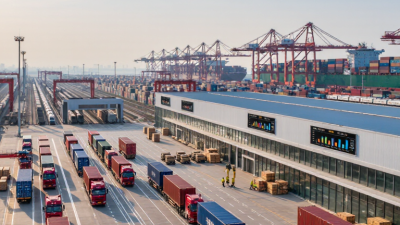
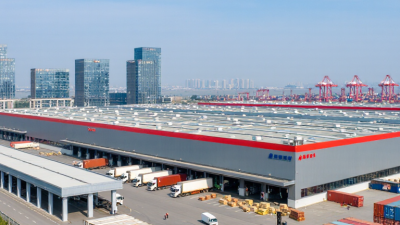
China’s logistics sector connects factories, ports, warehouses, and customers across a vast and varied market. This overview of China’s top 10 logistics supply chain management companies introduces providers that help businesses coordinate transport, storage, order handling, and information flows. The field is changing quickly. So are customer expectations.
As Professor Martin Christopher, a logistics and supply chain expert, puts it, “The goal of supply chain management is to link the marketplace, the distribution network, the manufacturing process and the procurement activity.” His point is practical: a delivery promise depends on many connected steps, not just a truck leaving a depot. A missed warehouse scan or a late port handoff can disrupt the whole plan.
The companies featured here operate in different parts of that chain. Some focus on parcel delivery; others offer freight forwarding, contract logistics, or digital coordination. Comparing them requires more than looking at size or brand recognition. Service coverage, technology, reliability, and the ability to handle peak demand all matter. Details can vary by region and customer contract.
This is not a perfect measure. Public information may not reveal every service limitation, and rankings can shift as companies invest or reorganize. Readers should check current capabilities against their own needs, such as delivery speed, warehouse locations, and shipment visibility. The aim is a useful starting point—not a substitute for due diligence.
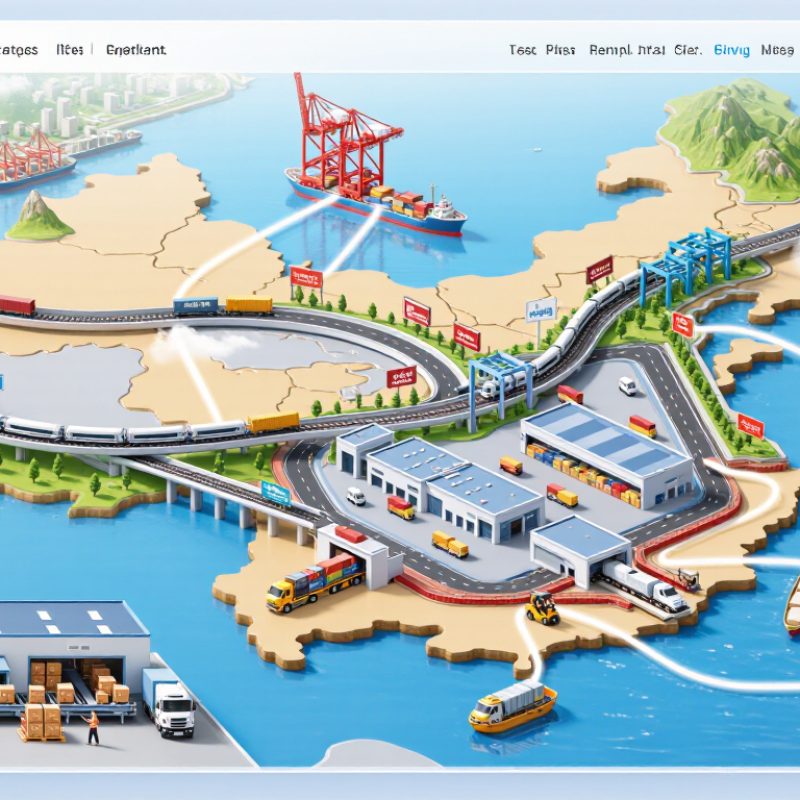
China’s logistics supply chain management covers more than moving cargo. It connects sourcing, transport, warehousing, inventory planning, order fulfilment, and returns. In practice, teams coordinate truck, rail, air, and waterway services, while managing temperature-controlled storage for food and medicine. Digital tracking helps staff see delays, stock levels, and delivery status across a shipment’s journey.
The China Federation of Logistics and Purchasing reported that national social logistics volume reached 360.6 trillion yuan in 2024, up 5.8% year on year. The State Post Bureau recorded 174.5 billion express parcels that year, reflecting the pressure on sorting hubs, last-mile delivery, and warehouse capacity. These figures show the scale of the work, but national totals can hide uneven infrastructure and service quality between regions. That matters. A shipment crossing several provinces may face different transit times, handling conditions, and data systems.
Tip: Map each handoff, from supplier pickup to final delivery. Track delays and stock discrepancies by location; a national average may not reveal the bottleneck.
Choosing China’s leading logistics supply chain management companies requires evidence beyond fleet size or warehouse count. A credible assessment should compare on-time delivery, damage rates, shipment visibility, network reach, and exception recovery. These measures show whether a provider can manage a late truck, a missed scan, or a sudden demand spike. The World Bank’s 2023 Logistics Performance Index scores China 3.7 out of 5. It ranks the country 19th among 139 economies. This is national context, not a company league table. That distinction matters.
For company-level comparison, assess audited service results over at least 12 months, including peak seasons. Check whether tracking data connects transport, warehousing, inventory, and returns in one usable view. Digital claims need proof. The China Federation of Logistics and Purchasing reported total social logistics costs of 18.2 trillion yuan in 2023, equal to 14.4% of GDP. Against this cost pressure, strong candidates should document savings without shifting delays or inventory burdens to clients. Score cybersecurity controls, contingency plans, trained staff, and emissions per shipment, not just promises. A small weakness in public reporting should lower confidence, even when operations look impressive. No scorecard is flawless; public data can be uneven. Compare similar routes and cargo types, or an easier network may appear stronger than it is.
| No. | Selection Criterion | Weight | What to Evaluate | Suggested Evidence or Data |
|---|---|---|---|---|
| 1 | Network Coverage and Reach | 15 points | Coverage of relevant domestic regions, major transport corridors, and international trade lanes; suitability for the customer’s actual origin and destination locations. | Current service-area maps, lane lists, operating locations, and documented coverage for the required routes. |
| 2 | Service Reliability and On-Time Performance | 14 points | Ability to meet agreed pickup, transit, delivery, and order-fulfilment service levels consistently. | Recent, clearly defined on-time pickup and delivery results; service-level reports; explanation of measurement periods and exclusions. |
| 3 | Technology and Shipment Visibility | 12 points | Availability of shipment tracking, operational reporting, system integration, and timely exception alerts. | Product demonstrations, sample tracking events, reporting examples, integration documentation, and system-availability records. |
| 4 | Operational Capacity and Scalability | 12 points | Ability to handle the required shipment profile and manage seasonal peaks, volume changes, and business expansion. | Documented capacity relevant to the requested service, peak-season plans, staffing approach, and business-continuity arrangements. |
| 5 | Service Breadth and Supply Chain Integration | 10 points | Fit across the services required, such as transportation, warehousing, inventory handling, fulfilment, customs support, or returns management. | Service scope, process descriptions, responsibility matrix, and evidence that the proposed services can be coordinated end to end. |
| 6 | Cost Transparency and Commercial Value | 10 points | Clarity and competitiveness of the total cost, including applicable surcharges, handling fees, and other contractual charges. | Comparable quotations, rate cards, surcharge rules, billing samples, and written descriptions of chargeable services. |
| 7 | Safety, Security, and Risk Management | 8 points | Controls for cargo protection, facility and vehicle safety, incident response, and loss or damage prevention. | Relevant operating procedures, incident data with defined periods, insurance documentation, and risk-response plans. |
| 8 | Regulatory and Customs Capability | 7 points | Ability to support the applicable documentation, customs, and regulatory requirements for the requested services and routes. | Process documentation, responsibility allocation, examples of required trade documents, and records relevant to the service scope. |
| 9 | Customer Support and Exception Handling | 6 points | Accessibility of operational support and effectiveness in resolving delays, claims, delivery issues, and other exceptions. | Support channels, escalation procedures, response-time commitments, claims processes, and anonymized case records. |
| 10 | Sustainability and Continuous Improvement | 6 points | Measurement and improvement of environmental impact and operational efficiency where relevant to the customer’s requirements. | Defined emissions or energy metrics, reporting methods, improvement targets, and documented process-improvement results. |
| Total | 100 points | Score each provider against the same service scope, time period, definitions, and evidence standard. | ||
China Top 10 Logistics Supply Chain Management Companies
Profiles of China’s Top 10 Logistics Supply Chain Management Companies
These ten profiles compare operating models rather than claim a universal ranking. China’s logistics providers serve very different needs, from factory parts moving inland to temperature-sensitive goods traveling between regional warehouses. Some coordinate transport, storage, and inventory in one service. Others focus on freight planning, contract logistics, or digital shipment visibility. The difference matters. A manufacturer may value reliable delivery windows, while an online seller may need flexible fulfillment during busy sales periods.
A useful profile looks beyond fleet size. It considers warehouse locations, delivery coverage, technology, service range, and experience with the customer’s industry. For example, a cold-chain operation needs monitored storage and clear handling procedures. An industrial provider may need to synchronize inbound components with production schedules. Public information can be incomplete, though, and service quality may vary by region. That deserves scrutiny.
Tips: Ask for recent service records, sample tracking reports, and clear escalation steps. Check whether promised coverage includes your actual routes, not just major cities. Small details count.
No profile tells the whole story. A strong provider on paper may still be a poor fit for a particular product, schedule, or warehouse location. Compare practical requirements before choosing.
China’s leading logistics supply chain companies combine transport, warehousing, and planning rather than selling a single delivery service. Their core work may include road and rail freight, inventory storage, order processing, cold-chain handling, and shipment visibility. A customer might track cartons from a factory gate to a regional distribution center, then adjust replenishment when sales shift. Useful detail matters. Reliable scans and realistic delivery windows can be more valuable than ambitious promises.
Business models vary. Some operators earn fees for each shipment or warehouse task, while others manage an integrated supply chain under longer contracts. Asset-heavy firms own trucks and facilities, giving them direct control but also higher fixed costs. Asset-light providers coordinate partner capacity and technology, which can scale quickly but may depend on consistent service from others. Many companies blend both approaches. Margins can be thin. Peak-season capacity, fuel costs, and uneven demand complicate forecasts. Even good tracking systems cannot fix inaccurate inventory data at the source. Buyers should compare service coverage, claims handling, integration options, and pricing assumptions, not just headline delivery speed. These comparisons are imperfect; lane-level performance often tells a different story from national averages.
Technology is reshaping how China’s leading logistics providers compete, from automated sorting lines to shipment-tracking dashboards. The World Bank’s 2023 Logistics Performance Index placed China 19th among 139 economies, with a score of 3.7. That ranking signals strong capability, but it does not mean every shipment moves smoothly. A missed scan or late data update can still leave a container difficult to locate.
Automation is expanding the tools available to supply chains. The International Federation of Robotics reported 276,288 industrial robot installations in China in 2023, equal to 51% of global installations. This figure covers industrial robots, not logistics robots alone, but it reflects the scale of automation investment around factories and distribution networks. On a warehouse floor, the practical gains may be visible in faster sorting and fewer manual handoffs. Still, systems can be hard to connect. That part deserves more scrutiny.
Market position also depends on trade links beyond the warehouse. UNCTAD’s Review of Maritime Transport 2024 notes that shipping carries over 80% of global trade by volume. Chinese logistics companies therefore compete through port access, inland connections, and reliable data exchange across transport modes. A polished tracking screen is useful, but it cannot fix a bottleneck at a busy loading gate. Progress is real, though uneven.